Part 1
Part 2
Art DeVany has long been an inspiration and had worked out most of the Paleo stuff years ago.
Plus he is tough....
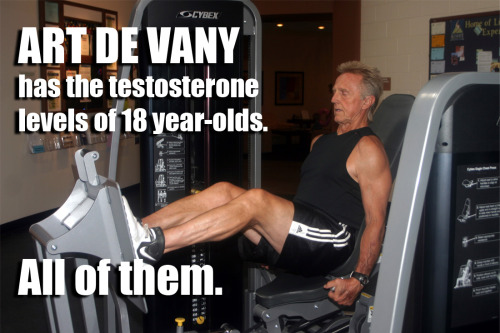
moving and eating as you were meant to.......interesting things about fitness, strength, diet and performance.
Wednesday, June 29, 2011
Tuesday, June 28, 2011
Sitting....Kelly Starrett at Google
This is superb. Kelly Starret talking about sitting.
Labels:
mobility
Struggling to write
As I said in the last post, I am just back from a week hillwalking in the Highlands. I've been spending some time writing up the week's walks on my other blog - Cairn in the Mist - where I record my walks and more.
The other thing going on is the articles that I am writing for TGO magazine - a UK backpacking and hillwalking magazine. The series is called Hillfit and I am trying to apply the sort of paleo / evolutionary fitness stuff that we talk about here to a more mainstream audience. It is quite a struggle to translate these ideas into something that actually reads well as a stand alone introductory article. I know that there is something overarching, a meta narrative (effectively the primal blueprint), but I am not sure that this is coming across in the articles.
The first one was an introduction to the philosophy. The second - yet to be published - was on interval training, mentioning Gibala's research and explaning how to keep going uphill without getting out of breath you need to build a body that burns fat more efficiently.
The next one it about the benefits of strength - when you are stonger you can do the same things with less effort and so your Cardiovascular system doesn't need to work as hard to supply the oxygen to the muscles.
What is a real struggle is writing to a strict word count. I have 500 words for a theme and then 150 to descibe the movement of the month - an exercise, mobility piece or stretch. It is a real skill to get ideas across in a limited amout of words yet still to retain a "voice", a personal style. At the moment I feel like I have lost the voice and I am coming across as journalistic and factual. As I edit down to the word limit I find myself stripping off all the adjectives that add life and personality.
Och well. Shouldn't complain - it is actually a real privelege to be getting paid to write about fascinating things.
| Looking to Skye |
The other thing going on is the articles that I am writing for TGO magazine - a UK backpacking and hillwalking magazine. The series is called Hillfit and I am trying to apply the sort of paleo / evolutionary fitness stuff that we talk about here to a more mainstream audience. It is quite a struggle to translate these ideas into something that actually reads well as a stand alone introductory article. I know that there is something overarching, a meta narrative (effectively the primal blueprint), but I am not sure that this is coming across in the articles.
The first one was an introduction to the philosophy. The second - yet to be published - was on interval training, mentioning Gibala's research and explaning how to keep going uphill without getting out of breath you need to build a body that burns fat more efficiently.
The next one it about the benefits of strength - when you are stonger you can do the same things with less effort and so your Cardiovascular system doesn't need to work as hard to supply the oxygen to the muscles.
What is a real struggle is writing to a strict word count. I have 500 words for a theme and then 150 to descibe the movement of the month - an exercise, mobility piece or stretch. It is a real skill to get ideas across in a limited amout of words yet still to retain a "voice", a personal style. At the moment I feel like I have lost the voice and I am coming across as journalistic and factual. As I edit down to the word limit I find myself stripping off all the adjectives that add life and personality.
Och well. Shouldn't complain - it is actually a real privelege to be getting paid to write about fascinating things.
Labels:
Hillfit thoughts,
TGO
Sunday, June 26, 2011
Back from the hills
I've been away in the hills for the last week, enjoying a holiday in the Northwest Highlands. That is me in the photo below.
Absolutely stunning views in the company of Steven Fallon.
Labels:
hillwalking
Wednesday, June 15, 2011
21st Century Strength: Brain-Based Training for Power Athletes.
I am never quite sure what I think of Eric Cobb's Z health (mc is a big fan and I enjoyed her seminar) Anyway, I just spotted this free 34 page pdf from him that looks worth the read. I find his thoughts on the threat response and the arthrokinetic reflex really fascinating.
21st Century Strength: Brain-Based Training for Power Athletes.
Labels:
zhealth
Turn away from the milkshake....
Labels:
paleo
You don't know squat.....
I had a good session with Colin (Edinburgh Deep Tissue Massage) last night. After working out some kinks in my legs, neck and hip flexors he was checking out my squat pattern.
One of the thing he was getting me to work on was keeping the knees out and really squatting down between my legs, rather than just sitting back. He explained that one of the keys was to keep the feet from collapsing to maintain the proper angle at the ankle. Interesting and challenging.
Kelly Starret explains similar principles and Dan John explains the goblet squat in the same terms:
Kelly explains the issue of keeping a stable arch here:
One of the thing he was getting me to work on was keeping the knees out and really squatting down between my legs, rather than just sitting back. He explained that one of the keys was to keep the feet from collapsing to maintain the proper angle at the ankle. Interesting and challenging.
Kelly Starret explains similar principles and Dan John explains the goblet squat in the same terms:
....people discover at this moment ... a basic physiological fact: The legs are not stuck like stilts under the torso. Rather, the torso is slung between the legs.(There is another good goblet squat article here)
As you go down, leaning back with arms straight, you'll discover one of the true keys of lifting: you squat between your legs. You don't fold and unfold like an accordion; you sink between your legs. Don't just sit and read this. Get up and do it!
Kelly explains the issue of keeping a stable arch here:
Tuesday, June 14, 2011
The Black Box...empiricism or processes
I have mentioned the Hillfit pieces that I am working on. Thay have got me studying a varirty of interesting things as background for the different articles. For example, Keith Norris post the other days got me reading things about the theories around muscle hypertrophy. Keith pointed to a fascinating study (abstract) which Tom Kelso summarised here.
Anyway that is not the point.
The complexities of that got me thinking. Exercise science is complicated. As you delve deeper into the biology of it all things get ever more complex. Metabolism and the cell biology is deep and difficult but also wonderful (check out this video) Muscle growth is driven by mechanical loading of the muscle, metabolic stress and muscle damage / trauma. The precise pathways get more and more complex the deeper you look.
However sometimes I wonder how much you need to understand. In the afterword to Art Devany's book Nassim Taleb talks about this idea - Evidence-based science and working with the black box. He explains that ultimately the science explaining the body keeps changing. What was once accepted wisdom changes as knowledge develops. Somtimes this change totally negates what has gone before.....yet while the explanation may switch 180 degrees, the experience is constant. Understanding the process is interesting but what is ultimately more important is applying what works.
For example if it is clear that negative reps work the lesson is to do negatives....how they work is a different issue. Whatever metabolic pathways they signal or whatever gene expression effects are apparent may be interesting.....but our suppositions about process may be totally wrong.
We are on a search for progress. Understanding the mechanisms may help but knowing what works is more important. So how do we find what works?
Here is Keith doing what works for him.....
Anyway that is not the point.
The complexities of that got me thinking. Exercise science is complicated. As you delve deeper into the biology of it all things get ever more complex. Metabolism and the cell biology is deep and difficult but also wonderful (check out this video) Muscle growth is driven by mechanical loading of the muscle, metabolic stress and muscle damage / trauma. The precise pathways get more and more complex the deeper you look.
However sometimes I wonder how much you need to understand. In the afterword to Art Devany's book Nassim Taleb talks about this idea - Evidence-based science and working with the black box. He explains that ultimately the science explaining the body keeps changing. What was once accepted wisdom changes as knowledge develops. Somtimes this change totally negates what has gone before.....yet while the explanation may switch 180 degrees, the experience is constant. Understanding the process is interesting but what is ultimately more important is applying what works.
For example if it is clear that negative reps work the lesson is to do negatives....how they work is a different issue. Whatever metabolic pathways they signal or whatever gene expression effects are apparent may be interesting.....but our suppositions about process may be totally wrong.
We are on a search for progress. Understanding the mechanisms may help but knowing what works is more important. So how do we find what works?
Here is Keith doing what works for him.....
The Hillfit Paradigm
I've already mentioned that I have got a monthly column in a UK hillwalking / backpacking magazine - TGO
It is called Hillfit. I will share some of the ideas here occaisionally. The paradigm that I am promoting is:
A template – the Hillfit Paradigm
There is science behind what I recommend, but be aware that the same data can be interpreted differently depending on the presumptions of the reader. I will present a paradigm through which to view the data, to make sense of what you see. Let’s apply a “template”: “Hillfit” : minimal, foundational and functional.
I would now call the second point Ancestral, I think.
You can probably see my influences if you have read much of the stuff on this blog over the years.
It is called Hillfit. I will share some of the ideas here occaisionally. The paradigm that I am promoting is:
A template – the Hillfit Paradigm
There is science behind what I recommend, but be aware that the same data can be interpreted differently depending on the presumptions of the reader. I will present a paradigm through which to view the data, to make sense of what you see. Let’s apply a “template”: “Hillfit” : minimal, foundational and functional.
- Minimal – getting the maximum effect from a minimum investment of time and effort. Most of us have jobs and families. Time and money are precious. We will be efficient.
- Foundational – What are we built for? How were we designed to move? Looking from the perspective of our ancestors, who for example would have walked or run but rarely jogged, many fitness programmes are too regimented and use “unnatural” moves.
- Functional – training is not an end in itself, but should facilitate your FUN! My ideas might make you stronger or increase “metabolic conditioning”, but you must apply that capacity to your skill. You need to walk! It is about the hills not the gym.
I would now call the second point Ancestral, I think.
You can probably see my influences if you have read much of the stuff on this blog over the years.
“Strength and Fitness for a Lifetime: How We Train Now” - Review
Almost a year ago now you might remember that I interviewed Fred Fornicola. Fred is a great guy - straight forward, not bound by dogma but interested in what works to get results for the average person.
He has been around the training world for some time now and has begun to reflect a little on the lessons that those years of traning have taught him.
Rather than just sit there and think about these things, Fred has recorded his experiences into a useful little book that is highly recommended.
In “Strength and Fitness for a Lifetime: How We Train Now” - Fred has brought together a series of short interviews with a group of strength coaches and trainers generally in their 40's and 50's to detail their :
There are some well known names here (Clarence Bass is always a good read and has been an inspiration for years; Dan John is in there too) - but there are also some guys of whom I'd never previously heard but who have some great experience and good ideas. People like Dan Riley and Dennis Rogers have some real wisdom to share. It is interesting to read something more from Dan Martin - I've read his stuff on the Dave Draper site before.
Of course anything that includes Bill DeSimmone is always worth reading!
A great little book and well worth the $10.
Order here
He has been around the training world for some time now and has begun to reflect a little on the lessons that those years of traning have taught him.
Rather than just sit there and think about these things, Fred has recorded his experiences into a useful little book that is highly recommended.
In “Strength and Fitness for a Lifetime: How We Train Now” - Fred has brought together a series of short interviews with a group of strength coaches and trainers generally in their 40's and 50's to detail their :
- goals;
- approach;
- training schedule; and
- sample workouts.
There are some well known names here (Clarence Bass is always a good read and has been an inspiration for years; Dan John is in there too) - but there are also some guys of whom I'd never previously heard but who have some great experience and good ideas. People like Dan Riley and Dennis Rogers have some real wisdom to share. It is interesting to read something more from Dan Martin - I've read his stuff on the Dave Draper site before.
Of course anything that includes Bill DeSimmone is always worth reading!
A great little book and well worth the $10.
Order here
Strength for health in old age
This is not really a shock, but the more that this sort of thing is recognised and promoted the better things will be:
maintaining muscle strength in old age is enormously important in order to maintain mobility and to be able to lead an independent life and manage everyday tasks independently. In the current issue of Deutsches Ärzteblatt International, Frank Mayer and colleagues from the University of Potsdam conclude that progressive strength (resistance) training counteracts muscular atrophy in old age
Low-carbohydrate, high-protein diet and cancer risk
I've pointed to stuff like this in the past. It seems that cancer cells in general have a metabolism that relies on sugar - it is anaerobic. Starve them of sugar and you starve the cancer.
I spotted this report today:
Here is the proposed mechanism:
I spotted this report today:
Eating a low-carbohydrate, high-protein diet may reduce the risk of cancer and slow the growth of tumors already present, according to a study published in Cancer Research, a journal of the American Association for Cancer Research.
The study was conducted in mice, but the scientists involved agree that the strong biological findings are definitive enough that an effect in humans can be considered.
"This shows that something as simple as a change in diet can have an impact on cancer risk," said lead researcher Gerald Krystal, Ph.D., a distinguished scientist at the British Columbia Cancer Research Centre.
Here is the proposed mechanism:
When asked to speculate on the biological mechanism, Krystal said that tumor cells, unlike normal cells, need significantly more glucose to grow and thrive. Restricting carbohydrate intake can significantly limit blood glucose and insulin, a hormone that has been shown in many independent studies to promote tumor growth in both humans and mice.
Thursday, June 9, 2011
More on sitting
John sent me a link to this interesting piece on the dangers of sitting.
There was another study about this I spotted recently too (via a Dr Eades Tweet) - Just one day of sitting, even if eating is reduced to compensate, markedly decreases insulin sensitivity
Effects of 1 day of inactivity on insulin action in healthy men and women: interaction with energy intake
Daily activity is a must.
Smoking cigarettes is the cause of so much preventable, deadly disease. But now new research shows sitting for long stretches of time may be just as dangerous.
There was another study about this I spotted recently too (via a Dr Eades Tweet) - Just one day of sitting, even if eating is reduced to compensate, markedly decreases insulin sensitivity
Effects of 1 day of inactivity on insulin action in healthy men and women: interaction with energy intake
Daily activity is a must.
Labels:
sitting
Tuesday, June 7, 2011
Sleeping more means you get less fat
perhaps....
Longer sleep duration associates with lower adiposity gain in adult short sleepers
This study suggests for the first time that shifting sleep duration from a short to a healthier length is associated with an attenuation of fat mass gain.
Labels:
sleep
Think yourself slim
I think my posts in the past about TMS have shown that I believe the mind is a massive influence on our health. We have only begun to scratch the surface of the importance of our attitudes, our subconscious and our thoughts.
Here is an interesting study that I came across via the New Scientist.
Here is the abstract of the paper:
Mind over milkshakes: Mindsets, not just nutrients, determine ghrelin response.
Objective: To test whether physiological satiation as measured by the gut peptide ghrelin may vary depending on the mindset in which one approaches consumption of food.
Methods: On 2 separate occasions, participants (n = 46) consumed a 380-calorie milkshake under the pretense that it was either a 620-calorie “indulgent” shake or a 140-calorie “sensible” shake. Ghrelin was measured via intravenous blood samples at 3 time points: baseline (20 min), anticipatory (60 min), and postconsumption (90 min). During the first interval (between 20 and 60 min) participants were asked to view and rate the (misleading) label of the shake. During the second interval (between 60 and 90 min) participants were asked to drink and rate the milkshake.
Results: The mindset of indulgence produced a dramatically steeper decline in ghrelin after consuming the shake, whereas the mindset of sensibility produced a relatively flat ghrelin response. Participants' satiety was consistent with what they believed they were consuming rather than the actual nutritional value of what they consumed.
Conclusions: The effect of food consumption on ghrelin may be psychologically mediated, and mindset meaningfully affects physiological responses to food
Here is an interesting study that I came across via the New Scientist.
IF YOU want to lose weight, convince yourself that everything you eat is highly calorific. It could lower your levels of a hunger hormone, potentially suppressing your appetite.
Alia Crum at Yale University and her colleagues gave 46 healthy volunteers the same 380-calorie milkshake but were told it was either a sensible, low-calorie choice or an indulgent, high-calorie one. The team also measured levels of ghrelin - a hormone released by the stomach when we are hungry - before and after participants drank the shake.
Ghrelin levels have been shown to spike half an hour before mealtimes and return to normal after eating.
Volunteers who thought they had indulged showed significantly greater drops in ghrelin levels than those who thought they had consumed less. The authors suggest that merely thinking that one has eaten something unhealthy can quell hunger pangs and perhaps help curb overeating
Here is the abstract of the paper:
Mind over milkshakes: Mindsets, not just nutrients, determine ghrelin response.
Objective: To test whether physiological satiation as measured by the gut peptide ghrelin may vary depending on the mindset in which one approaches consumption of food.
Methods: On 2 separate occasions, participants (n = 46) consumed a 380-calorie milkshake under the pretense that it was either a 620-calorie “indulgent” shake or a 140-calorie “sensible” shake. Ghrelin was measured via intravenous blood samples at 3 time points: baseline (20 min), anticipatory (60 min), and postconsumption (90 min). During the first interval (between 20 and 60 min) participants were asked to view and rate the (misleading) label of the shake. During the second interval (between 60 and 90 min) participants were asked to drink and rate the milkshake.
Results: The mindset of indulgence produced a dramatically steeper decline in ghrelin after consuming the shake, whereas the mindset of sensibility produced a relatively flat ghrelin response. Participants' satiety was consistent with what they believed they were consuming rather than the actual nutritional value of what they consumed.
Conclusions: The effect of food consumption on ghrelin may be psychologically mediated, and mindset meaningfully affects physiological responses to food
Labels:
mind
Monday, June 6, 2011
Stay bad assed
A great post from Craig Z Everything in Moderation - Diet
The ‘everything in moderation’ argument – which I have heard throughout my life – is the sole refrain of the underpowered. Those that lack the drive to change their situation, regardless of how much encouragement, information or horsepower you offer them.
Don’t listen to them. Never let them convince you to go nowhere.
Stay Badassed.
Sunday, June 5, 2011
Fashion
I got me one of Tom Naughton's new T Shirts.
Labels:
paleo
Thursday, June 2, 2011
New published article
The new TGO magazine is out today with another article from me.

I am told they have edited it a little so it will be interesting to see what survived and how it looks. It is on hill walking fitness and if you have hung around this blog much it will all be familiar. This first one is only introductory but the future ones will look at sprints, posture, basic strength exercises, reversing the damage done by sitting all day, being barefoot, sleep etc Each month there will be a Movement of the Month - a stretch, mobility piece or a workout.
I've had some input from my pal Colin Gordon of Edinburgh Deep Tissue Massage.
I'm quite excited about this.
I am told they have edited it a little so it will be interesting to see what survived and how it looks. It is on hill walking fitness and if you have hung around this blog much it will all be familiar. This first one is only introductory but the future ones will look at sprints, posture, basic strength exercises, reversing the damage done by sitting all day, being barefoot, sleep etc Each month there will be a Movement of the Month - a stretch, mobility piece or a workout.
I've had some input from my pal Colin Gordon of Edinburgh Deep Tissue Massage.
I'm quite excited about this.
Labels:
TGO
Sprints in my vibrams
Tuesday lunchtime I did some sprints in the new vibram five fingers that I bought on Saturday. It was a jog down to the park and then 3 x 30 second sprints with long rests - about 3 minutes to recover. The a hard 15 sec one to finish me.
Really enjoyed it and it forced a good style - movnat / pose ish.
My big problem was self consciousness. The shoes make you look like a bit of a wanker. I was really aware of some funny looks as I left the office.
I could feel it in my feet the next day too. Not injured but worked.
- Posted using BlogPress from my iPhone
Really enjoyed it and it forced a good style - movnat / pose ish.
My big problem was self consciousness. The shoes make you look like a bit of a wanker. I was really aware of some funny looks as I left the office.
I could feel it in my feet the next day too. Not injured but worked.
- Posted using BlogPress from my iPhone
Wednesday, June 1, 2011
Shoulder Stability
I learned things from this. Great stuff...and the microphone works
Labels:
mobility
Subscribe to:
Posts (Atom)

