Is there a link between the decline of smoking and the rise of obesity and diabetes? It's been suggested that with a previous "health" scare of fat being bad for you, they took it out of a lot of food and thus the flavour, and then, to give it some flavour, added sugar. This was 30 years ago. It turned out some fat was not only essential, it was good for the heart after all, but they have now given a lot of people a sweet tooth. This is why it is so appalling that there is no debate at all about smoking. Some people might be much better off smoking instead of nibbling. There are still 10 million smokers, now treated like very naughty children. It seems there is no free lunch, and the media and political elite look like the cause of it all, exaggerating constantly to people they seem to despise.

Showing posts with label sugar. Show all posts
Showing posts with label sugar. Show all posts
Tuesday, May 1, 2012
Smoking and Obesity
interesting comment in the Guardian today from the artist David Hockney on obesity....


Friday, December 23, 2011
Sugar, cancer and mitochondria
I've had stuff up here over the years (e.g. here and here)about how cancer cells seem to survive by burning sugar and not fat and so some doctors have tried to starve cancers by using a ketogenic diet, with some success.
Anyway, here is a video outlining new research into this same topic:
The research is reported here and the full article is available here
Drugs or diet, if this knowledge can help find a solution to cancer then that is good.
Anyway, here is a video outlining new research into this same topic:
The research is reported here and the full article is available here
Cancer cells tend to take up more glucose than healthy cells, and researchers are increasingly interested in exploiting this tendency with drugs that target cancer cells' altered metabolism.
Cancer cells' sugar cravings arise partly because they turn off their mitochondria, power sources that burn glucose efficiently, in favor of a more inefficient mode of using glucose. They benefit because the byproducts can be used as building blocks for fast-growing cells.
Drugs or diet, if this knowledge can help find a solution to cancer then that is good.
Wednesday, December 15, 2010
Sugar sends you mad
first of a few posts highlighting some interesting news releases over the last couple of days:
Scientist shows link between diet and onset of mental illness
It is worth reading the report....and I know it is in mice etc but the bit that caught my eye was:
UPDATE see the excellent analysis of this article at Paul's Perfect Health Diet
Scientist shows link between diet and onset of mental illness
It is worth reading the report....and I know it is in mice etc but the bit that caught my eye was:
Garner's study raises questions of how diet might be affecting other behavioral or mental illnesses such as autism, Tourette syndrome, trichotillomania and skin-picking. He said that before now, a link between diet and the onset of mental disorders hadn't been shown.Excess frutose again? Imagine.....more sugar causing disease. Whatever will they come up with next!
"What if the increase of simple sugars in the American diet is contributing to the increase of these diseases?" Garner said. "Because we fed the mice more tryptophan than in the typical human diet, this experiment doesn't show that, but it certainly makes it a possibility."
UPDATE see the excellent analysis of this article at Paul's Perfect Health Diet
Wednesday, October 6, 2010
Lustig - Sugar the bitter truth
I spotted this via Chris Masterjohn
Robert H. Lustig, MD, UCSF Professor of Pediatrics in the Division of Endocrinology, explores the damage caused by sugary foods. He argues that fructose (too much) and fiber (not enough) appear to be cornerstones of the obesity epidemic through their effects on insulin.
Monday, May 17, 2010
Sugar and cancer - more studies
I've had material on here before about the relationship between sugar and cancer. Cancer cells apparently rely on sugar to survive, so remove the sugar and you starve the cells. There have been experiments using ketogenic diets to treat cancer and other approaches using drugs to intervene down similar pathways.
I saw this in the New Scientist yesterday: Cancer's sweet tooth becomes a target
It is intersesting stuff.
The focus is all on drugs though rather than diet
I saw this in the New Scientist yesterday: Cancer's sweet tooth becomes a target
It is intersesting stuff.
Most of these efforts stem from an observation dating back to the 1930s - that cancer cells generate energy via glycolysis. This is different to the way cells normally make energy, through aerobic respiration in specialised chambers called mitochondria. Ordinary cells do use glycolysis but only if they are short of oxygen, as it is hugely inefficient, gobbling up large amounts of glucose for very little energy .
The focus is all on drugs though rather than diet
Tuesday, May 11, 2010
Pancreatic cancer: Fat protects.....Carbs damage?
I've had stuff previously on sugar and cancer
Interesting to spot this abstract which - as far as I read it - indicates that intakes of available carbohydrate, glycemic load and sucrose are associated with elevated risks for pancreatic cancer, while fat - particularly saturated fat - intake is associated with diminished risks.
Available Carbohydrates, Glycemic Load, and Pancreatic Cancer: Is There a Link?
I haven't seen the full study (does anyone have it?) so I am not sure why the abstract finishes with the statement:
Interesting to spot this abstract which - as far as I read it - indicates that intakes of available carbohydrate, glycemic load and sucrose are associated with elevated risks for pancreatic cancer, while fat - particularly saturated fat - intake is associated with diminished risks.
Available Carbohydrates, Glycemic Load, and Pancreatic Cancer: Is There a Link?
I haven't seen the full study (does anyone have it?) so I am not sure why the abstract finishes with the statement:
Rather than being causal, the short-term increase in pancreatic cancer risk associated with high available carbohydrate and low fat intake may be capturing dietary changes associated with subclinical disease.So they are saying that subclinical pancreatic cancer makes you eat more carbs and less fat!
Monday, February 8, 2010
Sugar and cancer
I've had lots of stuff here before about sugary diets and cancer - for example this here.
I usually post the simple science, the idea being that starving cancers of sugar can kill them. Other cells can be fuelled in other means but tumours need sugar, so if you cut off the supply then they struggle to grow:
Asclepius posted this morning about a new bit of research doing the rounds:
Soft drink consumption may increase risk of pancreatic cancer
That is pretty scary - 2 or more a week.....
I usually post the simple science, the idea being that starving cancers of sugar can kill them. Other cells can be fuelled in other means but tumours need sugar, so if you cut off the supply then they struggle to grow:
unlike healthy cells, which generate energy by metabolizing sugar in their mitochondria, cancer cells appeared to fuel themselves exclusively through glycolysis, a less-efficient means of creating energy through the fermentation of sugar in the cytoplasm. The theory is simple: If most aggressive cancers rely on the fermentation of sugar for growing and dividing, then take away the sugar and they should stop spreading. Meanwhile, normal body and brain cells should be able to handle the sugar starvation; they can switch to generating energy from fatty molecules called ketone bodies — the body's main source of energy on a fat-rich diet — an ability that some or most fast-growing and invasive cancers seem to lack.
Asclepius posted this morning about a new bit of research doing the rounds:
Soft drink consumption may increase risk of pancreatic cancer
Consuming two or more soft drinks per week increased the risk of developing pancreatic cancer by nearly twofold compared to individuals who did not consume soft drinks, according to a report in Cancer Epidemiology, Biomarkers & Prevention, a journal of the American Association for Cancer Research.
Although relatively rare, pancreatic cancer remains one of the most deadly, and only 5 percent of people who are diagnosed are alive five years later.
Mark Pereira, Ph.D., senior author on the study and associate professor in the School of Public Health at the University of Minnesota, said people who consume soft drinks on a regular basis, defined as primarily carbonated sugar-sweetened beverages, tend to have a poor behavioral profile overall.
However, the effect of these drinks on pancreatic cancer may be unique.
"The high levels of sugar in soft drinks may be increasing the level of insulin in the body, which we think contributes to pancreatic cancer cell growth," said Pereira.
That is pretty scary - 2 or more a week.....
Friday, January 2, 2009
Sugary diets and cancer
I've posted stuff previously (here and here) about sugar and cancer the idea being that starving cancers of sugar can kill them. Other cells can be fuelled in other means but tumours need sugar, so if you cut off the supply then they struggle to grow:
Here is another side to it. Two new studies that say that sugary diets promote gut cancer in mice by other mechanisms too:
Dietary carbohydrate source alters gene expression profile of intestinal epithelium in mice.
High Sucrose Diets Promote Intestinal Epithelial Cell Proliferation and Tumorigenesis in APC(Min) Mice by Increasing Insulin and IGF-I Levels.
unlike healthy cells, which generate energy by metabolizing sugar in their mitochondria, cancer cells appeared to fuel themselves exclusively through glycolysis, a less-efficient means of creating energy through the fermentation of sugar in the cytoplasm. The theory is simple: If most aggressive cancers rely on the fermentation of sugar for growing and dividing, then take away the sugar and they should stop spreading. Meanwhile, normal body and brain cells should be able to handle the sugar starvation; they can switch to generating energy from fatty molecules called ketone bodies — the body's main source of energy on a fat-rich diet — an ability that some or most fast-growing and invasive cancers seem to lack.
Here is another side to it. Two new studies that say that sugary diets promote gut cancer in mice by other mechanisms too:
Dietary carbohydrate source alters gene expression profile of intestinal epithelium in mice.
High Sucrose Diets Promote Intestinal Epithelial Cell Proliferation and Tumorigenesis in APC(Min) Mice by Increasing Insulin and IGF-I Levels.
Wednesday, December 10, 2008
Sugar is addictive
Just in case you missed this one:
Sugar can be addictive, Princeton scientist says
I think we knew that already
A Princeton University scientist will present new evidence today demonstrating that sugar can be an addictive substance, wielding its power over the brains of lab animals in a manner similar to many drugs of abuse
Sugar can be addictive, Princeton scientist says
I think we knew that already
Sunday, October 19, 2008
Sugar-sweetened soda is bad for your kidneys.......
The whole text of this study is available.
Here is the abstract:
Background
End-stage renal disease rates rose following widespread introduction of high fructose corn syrup in the American diet, supporting speculation that fructose harms the kidney. Sugar-sweetened soda is a primary source of fructose. We therefore hypothesized that sugary soda consumption was associated with albuminuria, a sensitive marker for kidney disease.
Methodology/Principal Findings
Design was a cross-sectional analysis. Data were drawn from the National Health and Nutrition Examination Survey (NHANES), 1999–2004. The setting was a representative United States population sample. Participants included adults 20 years and older with no history of diabetes mellitus (n = 12,601); after exclusions for missing outcome and covariate information (n = 3,243), the analysis dataset consisted of 9,358 subjects. Exposure was consumption of two or more sugary soft drinks, based on 24-hour dietary recall. The main outcome measure was Albuminuria, defined by albumin to creatinine ratio cutpoints of >17 mg/g (males) and >25 mg/g (females). Logistic regression adjusted for confounders (diet soda, age, race-ethnicity, gender, poverty). Interactions between age, race-ethnicity, gender, and overweight-obesity were explored. Further analysis adjusted for potential mediators: energy intake, basal metabolic rate, obesity, hypertension, lipids, serum uric acid, smoking, energy expenditure, and glycohemoglobin. Alternative soda intake definitions and cola consumption were employed.
Results
Weighted albuminuria prevalence was 11%, and 17% consumed 2+ sugary soft drinks/day. The confounder-adjusted odds ratio for sugary soda was 1.40 (95% confidence interval: 1.13, 1.74). Associations were modified by gender (p = 0.008) and overweight-obesity (p = 0.014). Among women, the OR was 1.86 (95% CI: 1.37, 2.53); the OR among males was not significant. In the group with body mass under 25 kg/m2, OR = 2.15 (95% confidence interval: 1.42, 3.25). Adjustment for potential mediators and use of alternative definitions of albuminuria and soda consumption did not appreciably change results. Diet sodas were not associated with albuminuria.
Conclusions
Findings suggest that sugary soda consumption may be associated with kidney damage, although moderate consumption of 1 or fewer sodas does not appear to be harmful. Additional studies are needed to assess whether HFCS itself, overall excess intake of sugar, or unmeasured lifestyle and confounding factors are responsible.
Here is the abstract:
Background
End-stage renal disease rates rose following widespread introduction of high fructose corn syrup in the American diet, supporting speculation that fructose harms the kidney. Sugar-sweetened soda is a primary source of fructose. We therefore hypothesized that sugary soda consumption was associated with albuminuria, a sensitive marker for kidney disease.
Methodology/Principal Findings
Design was a cross-sectional analysis. Data were drawn from the National Health and Nutrition Examination Survey (NHANES), 1999–2004. The setting was a representative United States population sample. Participants included adults 20 years and older with no history of diabetes mellitus (n = 12,601); after exclusions for missing outcome and covariate information (n = 3,243), the analysis dataset consisted of 9,358 subjects. Exposure was consumption of two or more sugary soft drinks, based on 24-hour dietary recall. The main outcome measure was Albuminuria, defined by albumin to creatinine ratio cutpoints of >17 mg/g (males) and >25 mg/g (females). Logistic regression adjusted for confounders (diet soda, age, race-ethnicity, gender, poverty). Interactions between age, race-ethnicity, gender, and overweight-obesity were explored. Further analysis adjusted for potential mediators: energy intake, basal metabolic rate, obesity, hypertension, lipids, serum uric acid, smoking, energy expenditure, and glycohemoglobin. Alternative soda intake definitions and cola consumption were employed.
Results
Weighted albuminuria prevalence was 11%, and 17% consumed 2+ sugary soft drinks/day. The confounder-adjusted odds ratio for sugary soda was 1.40 (95% confidence interval: 1.13, 1.74). Associations were modified by gender (p = 0.008) and overweight-obesity (p = 0.014). Among women, the OR was 1.86 (95% CI: 1.37, 2.53); the OR among males was not significant. In the group with body mass under 25 kg/m2, OR = 2.15 (95% confidence interval: 1.42, 3.25). Adjustment for potential mediators and use of alternative definitions of albuminuria and soda consumption did not appreciably change results. Diet sodas were not associated with albuminuria.
Conclusions
Findings suggest that sugary soda consumption may be associated with kidney damage, although moderate consumption of 1 or fewer sodas does not appear to be harmful. Additional studies are needed to assess whether HFCS itself, overall excess intake of sugar, or unmeasured lifestyle and confounding factors are responsible.
Thursday, August 21, 2008
Sugar fries your brain.....

Perhaps.
Here is a press release from Monash University (I'd never heard of it either. It is in Australia).
Anyway this is published in Nature - a very prestigious journal - so it must have some rigour. Basically the idea is that this guy has identified a mechanism by which eating carbs can lead to you overeating. It is not about insulin this time but rather about the way in which carbs damage appetite control
Dr Andrews found that appetite-suppressing cells are attacked by free radicals after eating and said the degeneration is more significant following meals rich in carbohydrates and sugars.
"The more carbs and sugars you eat, the more your appetite-control cells are damaged, and potentially you consume more,"
It would be interesting to read the full paper if any one has access to it?
Killer carbs -- Monash scientist finds the key to overeating as we age
UPDATE
Here is the abstract.
The gut-derived hormone ghrelin exerts its effect on the brain by regulating neuronal activity. Ghrelin-induced feeding behaviour is controlled by arcuate nucleus neurons that co-express neuropeptide Y and agouti-related protein (NPY/AgRP neurons). However, the intracellular mechanisms triggered by ghrelin to alter NPY/AgRP neuronal activity are poorly understood. Here we show that ghrelin initiates robust changes in hypothalamic mitochondrial respiration in mice that are dependent on uncoupling protein 2 (UCP2). Activation of this mitochondrial mechanism is critical for ghrelin-induced mitochondrial proliferation and electric activation of NPY/AgRP neurons, for ghrelin-triggered synaptic plasticity of pro-opiomelanocortin-expressing neurons, and for ghrelin-induced food intake. The UCP2-dependent action of ghrelin on NPY/AgRP neurons is driven by a hypothalamic fatty acid oxidation pathway involving AMPK, CPT1 and free radicals that are scavenged by UCP2. These results reveal a signalling modality connecting mitochondria-mediated effects of G-protein-coupled receptors on neuronal function and associated behaviour.
I've also skimmed the paper and would note that the press release seems to sensationalise the story a wee bit. The study is about some complex biochemistry and the idea of carbs being a problem is really only hypothesised in the discussion.
Saturday, July 26, 2008
Fructose makes you fat?
Fructose Converts Quickly to Lipids Triggering Hyperlipidemia
....Lipogenesis increased significantly when glucose was replaced with fructose on a gram-for-gram basis in energy drinks consumed by six healthy volunteers, researchers here found.
Read this bit:
Journal of Nutrition
Source reference:
Parks EJ, et al "Dietary sugars stimulate fatty acid synthesis in adults" J Nutr 2008; 138: 1039-1046.
....Lipogenesis increased significantly when glucose was replaced with fructose on a gram-for-gram basis in energy drinks consumed by six healthy volunteers, researchers here found.
Conversion of fructose to lipid occurred quickly, usually within four hours after ingestion, Elizabeth Parks, Ph.D., of the University of Texas Southwestern Medical Center, and colleagues reported in the June issue of the Journal of Nutrition.
Moreover, consumption of a high-fructose drink for breakfast increased liver-mediated fat storage after lunch, the researchers said.
"Our study shows for the first time the surprising speed with which humans make body fat from fructose," said Dr. Park. "Once you start the process of fat synthesis from fructose, it's hard to slow it down."
Read this bit:
"The message from this study is powerful because body fat synthesis was measured immediately after the sweet drinks were consumed," Dr. Parks said. "The carbohydrates came into the body as sugars, they liver took the molecules apart . . . and put them back together to build fats. All this happened within four hours after the fructose drink. As a result, when the next meal was eaten, the lunch fat was more likely to be stored than burned."
The message should not be misconstrued by people who are trying to lose weight, she continued. Specifically, they should not eliminate dietary fruits, which have high fructose concentrations.
Overeating and excess caloric consumption remain the principal drivers of weight gain and obesity, she concluded.
Journal of Nutrition
Source reference:
Parks EJ, et al "Dietary sugars stimulate fatty acid synthesis in adults" J Nutr 2008; 138: 1039-1046.
Tuesday, April 29, 2008
I don't like fruit juice
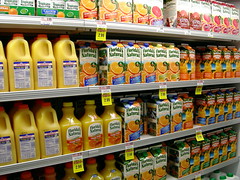
Back in January I pointed out that the Guardian had a thought-provoking piece on fruit, saying that the current focus on fruit in the diet is not necessarily healthy: The myths of fruit
I was thinking of this reading Dr Briffa's latest post:
Study links fruit juice consumption with increased risk of diabetes
Thursday, April 10, 2008
Avoid fructose to avoid diabetes?
For a while now Barry Groves has had an article on his site about the dangers of fructose
I thought of his article when I saw this abstract that noted that:
When scientists want to induce insulin resistance - a precursor to diabetes - they give rats lots of fructose. Scary. Barry Groves states: "Eat 5 portions of fruti and veg? Not if you want to avoid diabetes"
There are many good reasons to avoid the fruit sugar, fructose, but all you need is one: type 2 diabetes. And even worse that fruit itself that ubiquitous additive to many processed foods — high fructose corn syrup.
A recent study highlighted diabetes and all the other key reasons why it's a healthy idea to avoid this truly awful component of processed foods and soft drinks.
I thought of his article when I saw this abstract that noted that:
Long-term exposure of normal rats to a fructose-enriched diet or drinking water is currently used as an animal model for experimental insulin resistance.
When scientists want to induce insulin resistance - a precursor to diabetes - they give rats lots of fructose. Scary. Barry Groves states: "Eat 5 portions of fruti and veg? Not if you want to avoid diabetes"
Saturday, March 15, 2008
Energy drinks will rot your teeth.....

Popular Energy Drinks Cause Tooth Erosion, Study Shows
I was thinking of this study today while watching the 6 nations rugby matches, the cameras often showing the players slurping down bright blue (!) Powerade. I've posted before about some of the dodgy science behind these energy drinks.
Art DeVany also had something good:
You are slightly insulin resistant after a work out because growth hormone is an antagonist of insulin. Hence, any glucose that makes it into your blood stream will not be well-controlled and you will have excessive blood glucose, with all the consequences that this entails. It will be a mild form of elevated blood glucose, but it will be there nonetheless and it is to be avoided. Sports and gainer drinks are sold on the theory that exercise drains glycogen from the muscles and you must refill those stores. Nonsense. You want to drain the glycogen from your muscles, which you do through the glycolytic exercises that are part of the Evolutionary Fitness workout. One reason (and it may be the primary reason) people become insulin resistant and diabetic is because they never drain their muscles of glycogen and other energy stores. Muscle is the most insulin sensitive tissue in the body and you must have lots of it and drain it so that it retains its sensitivity and ability to soak up glucose from the blood stream. Replentishing muscle glycogen rapidly requires the ingestion of glucose in large doses. Once you compensate for the drained glycogen by refilling the muscle you lose the insulin sensitivity which the exercise produced. Athletes who supercompensate through carbohydrate loading to increase the glycogen content of their muscles, diminish their insulin sensitivity. Those who do no exercise have lower insulin sensitivity than more active individuals.
It is the progressive loss of insulin sensitivity that initiates the aging cascade. Aging becomes accelerated with diminishing insulin sensitivity as abdominal obesity begins to develop and glucose-triggered advanced glycation end products begin to accumulate. One of the main purposes of exercise is to enhance insulin sensitivity. When you ingest the gainer and replentishment drinks or attempt the supercompensation practiced by some endurance athletes (which was one of the things that started the pasta craze during the Berlin Olympics, a practice that has now been abandoned by elite athletes) you lose the sensitivity that was the objective of the exercise. You may even be worse off if you work out and practice compensation than had you just taken a walk.
The popularity of sports drinks and gainer protein supplements has a shred of physiology behind it and billions of dollars of commercial interest. These drinks and supplements rest on a reasonable physiological principle that is blown out of proportion into a vast business that has adverse health consequences. They destroy your insulin sensitivity and diminish the beneficial effects of exercise on sensitivity and total insulin action. They are also a source of excess calories that allows your growing insulin resistence to result in abdominal obesity over time. Sensitivity was one of the main objectives of the exercise in the first place. So, you nullify what is perhaps the most important benefit of the exercise. You definitely do not need the elevated blood glucose that comes from the many post work out drinks and bars that are sold out there.
Paradoxically, ingesting simple carbohydrates after a work out will cause an increase in your blood triglycerides (fats). This is because the growth hormone released by the work out releases fatty acids into the blood stream in preparation for using them as a source of energy to rebuild the muscle's energy stores and to fuel the clearance of damaged muscle cells. When blood glucose become elevated after the sports or other drink or bar, the body switches from using fat to using glucose, insulin is released in response to this and the effectiveness of growth hormone is diminished. The free fatty acids remain in suspension until the insulin response is strong enough to cause the fats to reesterfy and move back into adipose tissues. In the competition between fatty acids and glucose for scarce disposal pathways, glucose wins and the fat is left behind in the bloodstream where it can then precipitate onto the lining or enter the epythelium, with the help of insulin.
Another reason not to consume sports drinks is that they keep your sweet tooth alive and well. Sports drinks taste very sweet to someone like myself who consumes glucose so rarely that when I find it in a drink or food I am aware of it and find that it tastes peculiar and unpalatable. Small amounts of sugar produce a cloying taste response in me when they are not even noticed by others. Let's face it, every mass produced drink or manufactured food item has to be sweet in order to sell to the bulk of people whose food contains sugar in some form. They wouldn't sell if they didn't appeal to mass tastes that have already been conditioned to expect salt and sugar and fat. And it is an evolved adaptation to find glucose pleasant tasting. The brain lives on glucose for its energy and tastes evolved during a time when glucose was scarce. Take an energy-hungry brain that had to be protected during a time when glucose was scarce and you get a human animal with a strong preference for sweet substances.
Friday, October 5, 2007
Sugar is bad in many ways!

Just skimming through these recent articles from the American Journal of Clinical Nutrition, you would think that refined carbohydrates are associated with:
cancer;
loss of sight (updated 8/10/07...the Modern Forager blog has a good posting about this story); and
increases in the so-called "bad" LDL cholesterol.
Indeed, fructose is presented as a pretty dodgy thing to eat.
It is amazing that we are told to eat so many carbohydrates!
Monday, August 13, 2007
You are eating more sugar than you think!
I was going to call this post "Fat People Lie about how much they eat!"....but that may not have been helpful.
The BBC highlighted an interesting article - and also drew out the conclusions which are a little bit obscure in the abstract.
Basically, previous studies have not been able to link sugar intake with how fat people were. The problem however was that people were not being accurate in reporting how much they were eating - they didn't list all the sugar they were stuffing in (OK I'll be fair - if you are eating a dodgy diet with lots for processed food there will be a lot of hidden sugars in there).
Anyway, a new urine test was able to identify exactly how much sugar people were eating and the outcome was that it was now clear that sugar consumption and obesity are linked after all! Not really a shock.
The study is here
Epidemiologic Assessment of Sugars Consumption Using Biomarkers: Comparisons of Obese and Nonobese Individuals in the European Prospective Investigation of Cancer Norfolk
Sheila Bingham1,2,3, Robert Luben2, Ailsa Welch3, Natasa Tasevska1,5, Nick Wareham3,4 and Kay Tee Khaw3
1 Medical Research Council Dunn Human Nutrition Unit, 2 Medical Research Council Centre for Nutrition and Cancer Prevention and Survival, 3 European Prospective Investigation of Cancer Norfolk, Department of Public Health and Primary Care, University of Cambridge, and 4 Medical Research Council Epidemiology Unit, Cambridge, United Kingdom; and 5 Nutritional Sciences Research Division, Franklin Wilkins Building, King's College London, London, United Kingdom
Requests for reprints: Sheila Bingham, Wellcome Trust/Medical Research Council Building, Hills Road, Cambridge CB2 2XY, United Kingdom. Phone: 44-1223252760; Fax: 44-1223252765. E-mail: sheila.bingham@srl.cam.ac.uk
We have previously shown that urinary sugars excretion in 24 h urine collections can serve as an independent biomarker of sugars consumption. In the European Prospective Investigation of Cancer (EPIC) Norfolk study of nutrition and cancer, this biomarker in spot urines has been assessed in a cross-sectional comparison of 404 obese individuals aged 45 to 75 years with a body mass index (BMI) of >30 kg/m2 and 471 normal weight individuals aged 45 to 75 years with a BMI of <25 kg/m2. In individuals of normal weight, sucrose, protein, and vitamin C intake were positively and highly significantly related to biomarkers in spot urine or plasma (P < 0.001), but there were no significant associations between biomarkers and food intake reports in the obese. Odds ratios for a BMI of >30 were significantly elevated for urinary sucrose [trend per milligram per liter quintile, 1.13; 95% confidence interval (95% CI), 1.02-1.25; P = 0.016], and the odds ratio for urinary sucrose/fructose ratio was highly significant (trend per quintile, 1.264; 95% CI, 1.142-1.401; P < 0.001). No associations for sugars intake and obesity were found using a food frequency questionnaire, and dietary vitamin C was apparently associated with increased risk (P < 0.001) despite an inverse association for plasma vitamin C. Nutritional biomarkers of consumption can complement existing methods for assessing cancer risk from diet in epidemiologic studies. (Cancer Epidemiol Biomarkers Prev 2007;16(8):1651–4)
The BBC highlighted an interesting article - and also drew out the conclusions which are a little bit obscure in the abstract.
Basically, previous studies have not been able to link sugar intake with how fat people were. The problem however was that people were not being accurate in reporting how much they were eating - they didn't list all the sugar they were stuffing in (OK I'll be fair - if you are eating a dodgy diet with lots for processed food there will be a lot of hidden sugars in there).
Anyway, a new urine test was able to identify exactly how much sugar people were eating and the outcome was that it was now clear that sugar consumption and obesity are linked after all! Not really a shock.
The study is here
Epidemiologic Assessment of Sugars Consumption Using Biomarkers: Comparisons of Obese and Nonobese Individuals in the European Prospective Investigation of Cancer Norfolk
Sheila Bingham1,2,3, Robert Luben2, Ailsa Welch3, Natasa Tasevska1,5, Nick Wareham3,4 and Kay Tee Khaw3
1 Medical Research Council Dunn Human Nutrition Unit, 2 Medical Research Council Centre for Nutrition and Cancer Prevention and Survival, 3 European Prospective Investigation of Cancer Norfolk, Department of Public Health and Primary Care, University of Cambridge, and 4 Medical Research Council Epidemiology Unit, Cambridge, United Kingdom; and 5 Nutritional Sciences Research Division, Franklin Wilkins Building, King's College London, London, United Kingdom
Requests for reprints: Sheila Bingham, Wellcome Trust/Medical Research Council Building, Hills Road, Cambridge CB2 2XY, United Kingdom. Phone: 44-1223252760; Fax: 44-1223252765. E-mail: sheila.bingham@srl.cam.ac.uk
We have previously shown that urinary sugars excretion in 24 h urine collections can serve as an independent biomarker of sugars consumption. In the European Prospective Investigation of Cancer (EPIC) Norfolk study of nutrition and cancer, this biomarker in spot urines has been assessed in a cross-sectional comparison of 404 obese individuals aged 45 to 75 years with a body mass index (BMI) of >30 kg/m2 and 471 normal weight individuals aged 45 to 75 years with a BMI of <25 kg/m2. In individuals of normal weight, sucrose, protein, and vitamin C intake were positively and highly significantly related to biomarkers in spot urine or plasma (P < 0.001), but there were no significant associations between biomarkers and food intake reports in the obese. Odds ratios for a BMI of >30 were significantly elevated for urinary sucrose [trend per milligram per liter quintile, 1.13; 95% confidence interval (95% CI), 1.02-1.25; P = 0.016], and the odds ratio for urinary sucrose/fructose ratio was highly significant (trend per quintile, 1.264; 95% CI, 1.142-1.401; P < 0.001). No associations for sugars intake and obesity were found using a food frequency questionnaire, and dietary vitamin C was apparently associated with increased risk (P < 0.001) despite an inverse association for plasma vitamin C. Nutritional biomarkers of consumption can complement existing methods for assessing cancer risk from diet in epidemiologic studies. (Cancer Epidemiol Biomarkers Prev 2007;16(8):1651–4)
Subscribe to:
Posts (Atom)