
Showing posts with label functional.training. Show all posts
Showing posts with label functional.training. Show all posts
Monday, April 9, 2012


Sunday, January 15, 2012
Should you use weightlifting for sports conditioning?
Carrying on with the discussion of "functional" training I suppose, I came across an absolutely superb post from James Fisher, who has a blog that you really should be following. James picks apart all of the arguments that are usually presented in favour of using the Olympic lifts - power development, skill, safety - and concludes that for the the science does not really support the use of the O lifts for conditioning. If you are an Olympic lifter - fine - if you are not.....don't bother. Anyway - go and read this, it is excellent
Weightlifting for Strength and Conditioning - A Critical Analysis
The idea of simplicity and safety are key to what I recommend in Hillfit too - you need safe exercises to get stronger and then learn how to apply that strength to your sport.
Weightlifting for Strength and Conditioning - A Critical Analysis
The idea of simplicity and safety are key to what I recommend in Hillfit too - you need safe exercises to get stronger and then learn how to apply that strength to your sport.
Monday, January 9, 2012
Functional training...still a myth
I've had lots of stuff on here over the years calling into question the idea of functional training. There is no skill transfer from one movement to another. Movement skills are very specific and when you change the movement you need to develop new skills. For example in tennis using a heavier racquet would not make you able to hit harder when you switch to a ligher one - it is a different skill. You would have to learn all over again how to move with the different implement. We covered some of this in the interviews with Luke Carlson, Drew Baye and Doug McGuff.
Anyway, James Steele today pointed to a new paper that addresses all this stuff
Influence of dynamic versus static core exercises on performance in field based fitness tests.
It is worth reading the abstract that James copies. He concludes:
Anyway, James Steele today pointed to a new paper that addresses all this stuff
Influence of dynamic versus static core exercises on performance in field based fitness tests.
It is worth reading the abstract that James copies. He concludes:
As always, separate physical conditioning from skill conditioning.
Friday, November 18, 2011
Explosive training doesn't make you explosive revisited
A title like that is usually guaranteed to prompt outrage in the comments. Whenever I've had things like that up here - like this - before guys pile on with their assertions that explosive traiin has to make you explosive....look at Olympic lifters or something.
The HIT school tends to say that the key is to get stronger and then learn to apply that strength explosively if that is what you sport requires. Luke Carlson in my interview with him stated it like this:
A last question – what about explosive training? This is another tactic that often comes up – “train explosively to improve speed and power”. So we see people doing Olympic lifts, bounding, doing depth jumps. Is this just a waste of energy or is there any real benefit?
Anyway, that is just introduction.
Traditional sports science has also promoted explosive moves. However I spotted this abstract yesterday and the full paper is available here.
A Comparison of Ballistic and Non-Ballistic Lower-Body Resistance Exercise and the Methods Used to Identify Their Positive Lifting Phases.
As I read it the researchers are saying that one of the issues with the traditional approach is that the way in which the metrics were measured skewed the results. The usual methods of measuring power made the ballistic exercise seem to produce more power.
No significant differences were found in mean force or mean power between ballistic and non ballistic exercises.
Their conclusion is that
These results challenge common perceptions of Ballistic superiority for power development.
The HIT school tends to say that the key is to get stronger and then learn to apply that strength explosively if that is what you sport requires. Luke Carlson in my interview with him stated it like this:
A last question – what about explosive training? This is another tactic that often comes up – “train explosively to improve speed and power”. So we see people doing Olympic lifts, bounding, doing depth jumps. Is this just a waste of energy or is there any real benefit?
I think every athlete should train explosively; but this does not mean they should perform Olympic lifts, depth jumps, etc. Improvements in "explosiveness" are stimulated by the INTENT to move explosively; the outward demonstration of fast movement is not important (or desirable). For example, if a trainee is performing the barbell bench press, he/she should perform the initial repetitions in a slow and controlled manner. This minimizes momentum and maximizes muscle tension; muscle tension is the most important element in muscle fiber recruitment. As the lifter begins to fatigue, he/she can in fact attempt to lift the weight as fast as possible - attempt to "explode" through the weight. However, the weight will not move fast because the trainee is fatigued and the weight is heavy. However, from a motor unit/muscle fiber standpoint, the "explosive" stimulus has been provided. This approach can and should be applied to all exercises/muscle groups. If the weight actually moves fast during strength training, momentum is introduced and muscle tension is reduced (as the musculature is essentially unloaded); this is the exact opposite of the goal of strength training and the requirement for muscle fiber recruitment.
Anyway, that is just introduction.
Traditional sports science has also promoted explosive moves. However I spotted this abstract yesterday and the full paper is available here.
A Comparison of Ballistic and Non-Ballistic Lower-Body Resistance Exercise and the Methods Used to Identify Their Positive Lifting Phases.
As I read it the researchers are saying that one of the issues with the traditional approach is that the way in which the metrics were measured skewed the results. The usual methods of measuring power made the ballistic exercise seem to produce more power.
No significant differences were found in mean force or mean power between ballistic and non ballistic exercises.
Their conclusion is that
These results challenge common perceptions of Ballistic superiority for power development.
Thursday, September 1, 2011
Wisdom from Clarence Bass
Clarence has been around for such a long time that I sort of assume that everyone knows of him and - like me - waits each month for his site update. But I've found that lots of people still are not aware of him.
He has a couple of good posts this month:
 Intensity, Failure, Rep Range, Muscular Endurance, Specificity - A review of James Steele II article that I pointed to a while ago
A nice piece on cross training - Cross-Training Doesn’t Work—Unless it’s Weight Training
He has a couple of good posts this month:
A nice piece on cross training - Cross-Training Doesn’t Work—Unless it’s Weight Training
Thursday, August 25, 2011
Dan John Workout

I just wanted to point to his recent blog post Lifetime Warrior Workout where he puts some of the principles from that DVD into practice in a simple workout pdf.
Definitely worth a look. As Dan says:
It’s a very simple sheet, but it contains, in the simplest of ways, the gems of fighting age with weights and stretching.
Monday, August 15, 2011
Maffetone on weight training
I've been a fan of Phil Maffetone for a while. His philosophy of aerobic training is really useful and makes a lot of sense - moving around at a really easy pace so that you are buring fat not carbs. I'd like to spice it up with some occaisional sprints, but for most people I think his overall philosophy of health as opposed to fitness is really important.
I also think he has been ahead of his time in his approach to things like stretching, shoes and diet.
Anyway he has posted a couple of pieces recently on weight training:
Part 1
Part 2
you can go and read them yourself, but a few thoughts I had:
I also think he has been ahead of his time in his approach to things like stretching, shoes and diet.
Anyway he has posted a couple of pieces recently on weight training:
Part 1
Part 2
you can go and read them yourself, but a few thoughts I had:
- interesting how the paleo principle means different things to different folks
- his idea of real function movement - pick things up and carry them has echos of some Dan John (The old Get Up idea: Our mission? To teach everyone: 1. The Body is One Piece 2. There are three kinds of strength training: Putting weight overhead, Picking it off the ground & Carrying it for time or distance 3. All training is complementary)
- the basic routine - squats and deadlifts done for low reps with no fatigue reminds me of Pavel's basic Power to the People routine or even Barry Ross, deadlift approach)
Thursday, August 11, 2011
Riot Training!
You may be aware that there have been riots in England. I was going to write "in the UK" but as someone who live in Scotland, there is some sensitivity about this - it has been peaceful up here and we don't want to be lumped in with the animals down south....
Anyway, I think this is a joke, but if you want to be fit for some looting you might want to check out:
“Lifting for Looting” – Your exercise guide for Maximum Riot Performance.
Anyway, I think this is a joke, but if you want to be fit for some looting you might want to check out:
“Lifting for Looting” – Your exercise guide for Maximum Riot Performance.
Tuesday, August 9, 2011
Evidence Based Resistance Training Recommendations
James Steele has had a peer reviewed article published identifying what protocols can be recommended for resistance training based not on tradition or fashion but on evidence! How novel ;-)
The full article is available here and I'd recommend you to download it and have a read. It challenges some popular ideas that are out there - like plyometrics - and makes some recommendations based on what the science says.
It is good stuff - similar to the stufy here in fact!
The full article is available here and I'd recommend you to download it and have a read. It challenges some popular ideas that are out there - like plyometrics - and makes some recommendations based on what the science says.
It is good stuff - similar to the stufy here in fact!
Friday, February 19, 2010
A general skill set
This sort of follows on from the last post.
I've been thinking about this for a while, trying to integrate different threads of the things that interest me in this whole physical training world.
Where I am coming to at the moment maintains the differences I've learned about between skill and strength. Strength training is one distinct area and - while there are controversies - I tend to come down in the HIT school as explained by Doug or John.
However I am still drawn to the general athleticism and enthusiasm of people like Erwan Le Corre or Frank Forencich.
I do not see the two schools as mutually exclusive though. Where I am now is thinking of the general building of strength - intense infrequent workouts - and then learning a set of fun skills, that will also be useful in life - more regular easy practice and play.
So currently I am training weights about once a week, but also training Krav Maga once a week - skill training - and doing easy playing around with other things - sprints, hill walks, gymnastic moves, turkish get ups.
In terms of an skill set I like the Methode Naturelle set of skills: fighting, climbing, throwing, running, balance etc. It is this general skill set that I am thinking of more and more as I get older. I want to maintain strength...but I also want to practice balance, squatting, fighting etc.
There was a thread years ago on a forum I used to spend time on about "Dad fitness" someone thinking about how to train to be fit for the tasks he had as a Dad - running after kids, picking them up etc. The more I think about it now, the idea for me would be to get strong and then practice the different skills.
Hope you don't mind the ramble....
I've been thinking about this for a while, trying to integrate different threads of the things that interest me in this whole physical training world.
Where I am coming to at the moment maintains the differences I've learned about between skill and strength. Strength training is one distinct area and - while there are controversies - I tend to come down in the HIT school as explained by Doug or John.
However I am still drawn to the general athleticism and enthusiasm of people like Erwan Le Corre or Frank Forencich.
I do not see the two schools as mutually exclusive though. Where I am now is thinking of the general building of strength - intense infrequent workouts - and then learning a set of fun skills, that will also be useful in life - more regular easy practice and play.
So currently I am training weights about once a week, but also training Krav Maga once a week - skill training - and doing easy playing around with other things - sprints, hill walks, gymnastic moves, turkish get ups.
In terms of an skill set I like the Methode Naturelle set of skills: fighting, climbing, throwing, running, balance etc. It is this general skill set that I am thinking of more and more as I get older. I want to maintain strength...but I also want to practice balance, squatting, fighting etc.
There was a thread years ago on a forum I used to spend time on about "Dad fitness" someone thinking about how to train to be fit for the tasks he had as a Dad - running after kids, picking them up etc. The more I think about it now, the idea for me would be to get strong and then practice the different skills.
Hope you don't mind the ramble....
The Transfer of fitness and agility
There has been quite a lot on this blog in the past about "functional" training, particularly about whether there is much cross over in training. The basic science is that there is no strength training exercise that carries over to athletic or everyday movements. You can get stronger, but to get better at the skill you need to practice the skill. My interview with Luke Carlson covered all this.
Anyway, I spotted this study today. It seems to say that people who do lots of sport and "leisure time physical activity" and in particular play games, have better general motor ability. Obviosuly the whole causation / correlation thing comes in again (i.e. do they play more games because they have more skilled at coordination etc or do the games make them skilled) but it is interesting to reflect on. Generalism in terms of games etc benefits general athleticism? I don't know the key is to learn the skill I think and to get stronger.
Is Generic Physical Activity Or Specific Exercise Associated With Motor Abilities?
PURPOSE:: Evidence of the effect of leisure time physical activity (LTPA) modes on the motor abilities of a mature population is scarce. The purpose of this study was to compare the motor abilities of physically active and inactive men and women and to examine the associations of different exercise modes and former and recent LTPA with motor ability and various physical tests. METHODS:: The LTPA of the participants (men n=69, women n=79; aged 41-47 years) was ascertained by a modified Physical Activity Readiness Questionnaire, including questions on the frequency, duration and intensity of recent LTPA (R-LTPA) and former LTPA and on exercise modes. Motor abilities in terms of balance, agility and coordination were assessed with a battery of 9 tests supplemented with 5 physical fitness tests. Multiple statistical methods were used in analyses that were conducted separately for men and women. RESULTS:: The weekly MET hours of R-LTPA correlated statistically significantly with the tests of agility and static balance (rs =-0.275, p=.022; rs =-0.245, p=.043, respectively) among men, and with the static balance (rs =0.408), 2-km walking (rs =0.361), step squat (rs =0.355) (p
Anyway, I spotted this study today. It seems to say that people who do lots of sport and "leisure time physical activity" and in particular play games, have better general motor ability. Obviosuly the whole causation / correlation thing comes in again (i.e. do they play more games because they have more skilled at coordination etc or do the games make them skilled) but it is interesting to reflect on. Generalism in terms of games etc benefits general athleticism? I don't know the key is to learn the skill I think and to get stronger.
Is Generic Physical Activity Or Specific Exercise Associated With Motor Abilities?
PURPOSE:: Evidence of the effect of leisure time physical activity (LTPA) modes on the motor abilities of a mature population is scarce. The purpose of this study was to compare the motor abilities of physically active and inactive men and women and to examine the associations of different exercise modes and former and recent LTPA with motor ability and various physical tests. METHODS:: The LTPA of the participants (men n=69, women n=79; aged 41-47 years) was ascertained by a modified Physical Activity Readiness Questionnaire, including questions on the frequency, duration and intensity of recent LTPA (R-LTPA) and former LTPA and on exercise modes. Motor abilities in terms of balance, agility and coordination were assessed with a battery of 9 tests supplemented with 5 physical fitness tests. Multiple statistical methods were used in analyses that were conducted separately for men and women. RESULTS:: The weekly MET hours of R-LTPA correlated statistically significantly with the tests of agility and static balance (rs =-0.275, p=.022; rs =-0.245, p=.043, respectively) among men, and with the static balance (rs =0.408), 2-km walking (rs =0.361), step squat (rs =0.355) (p
Tuesday, December 1, 2009
'you are what you do' and 'practice makes perfect'
This follows on from the post I had up on motor learning a couple of days ago.
ASCLEPIUS has just posted this today which is really worth reading
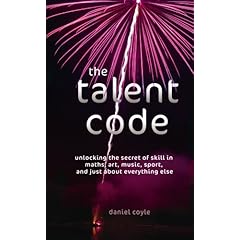
I have just finished reading Daniel Coyle's 'The Talent Code'. It adds some biology to the idea that 'you are what you do' and 'practice makes perfect'. It is no revelation that our brains are plastic and can adapt throughout life - but Coyle digs a little deeper.
I encourage you to read more
Sunday, November 29, 2009
More on motor learning.....your brain is plastic
One of the things that this blog has recorded my thoughts about recently has been the idea of skill development vs strength development. Strength development is one thing, but in order to be good at your sport or activity you need to practice the specific skills involved. There has been a lot written on motor learning which is fascinating to study. Some of the interesting stuff is of how there is little transfer between similar movements.
This area of skill development came up in today's seminar with mc - which I will write more of soon (it was excellent) - but I also came across this today which is relevant to the discussions:
Study shows new brain connections form rapidly during motor learning
When you are learning a new physical skill, you are re-wiring your brain....and to some degree this is permanent.
Interesting stuff. You need to learn the skill....but that learning gets hardwired into the brain and stays there. As mc said today, the nervous system is plastic.
This area of skill development came up in today's seminar with mc - which I will write more of soon (it was excellent) - but I also came across this today which is relevant to the discussions:
Study shows new brain connections form rapidly during motor learning
New connections begin to form between brain cells almost immediately as animals learn a new task, according to a study published this week in Nature. Led by researchers at the University of California, Santa Cruz, the study involved detailed observations of the rewiring processes that take place in the brain during motor learning.
When you are learning a new physical skill, you are re-wiring your brain....and to some degree this is permanent.
"It's a remodeling process in which the synapses that form during learning become consolidated, while other synapses are lost," Zuo said. "Motor learning makes a permanent mark in the brain. When you learn to ride a bicycle, once the motor memory is formed, you don't forget. The same is true when a mouse learns a new motor skill; the animal learns how to do it and never forgets."
Interesting stuff. You need to learn the skill....but that learning gets hardwired into the brain and stays there. As mc said today, the nervous system is plastic.
Monday, November 23, 2009
Explosive moves don't make you explosive...
This keeps coming up - for example in a comment on the last post from Dan:
Some science actually says something different. For example:
The whole paper is there for download.
See what it says:
There are other similar studies. For example this guy's thesis or this outstanding analysis and review of the literature:
After an extenive survey of the relevant studies the paper concludes:
Also, Olympic lifters traditionally have some of the highest vertical leaps recorded and they do mostly explosive movements. It would seem that Luke has an opinion that is not supported by much of the industry when he says that cleans are actually sending the body a signal to go slower to something like that. Everything I have read about explosive movements says that they help the body recruit more motor units and increase rate coding.
Some science actually says something different. For example:
EXPLOSIVE EXERCISES IN SPORTS TRAINING: A CRITICAL REVIEW
This paper reviews evidence relating to the effectiveness and safety of explosive exercises, such as Olympic style weight lifting, other weight training exercises performed at a fast cadence, and plyometric exercises, that are commonly used in the strength and conditioning training of athletes. Contrary to popular belief and the practices of many athletes, the peer-reviewed evidence does not support the view that such exercises are more effective than traditional, slow and heavy weight training in enhancing muscle power and athletic performance.
In fact, such exercises do not appear to be any more effective in this regard than weight training at a relatively slow cadence, and some evidence suggests they are less so.
Also, such explosive exercises do not transfer well (if at all) to athletic performance on the sports field, and present a significant injury risk. Therefore, such exercises should not be recommended in the strength and conditioning training of athletes, except those who need to learn the specific skill of lifting heavy weights fast, such as Olympic lifters and strongmen.
The whole paper is there for download.
See what it says:
- explosive moves are no better than standard slow repetitions
- they might actually be worse
- they present an injury risk
- the do not transfer over to the skill anyway.
There are other similar studies. For example this guy's thesis or this outstanding analysis and review of the literature:
After an extenive survey of the relevant studies the paper concludes:
In summary, there is very little evidence cited in the Position Stand to support the claim that explosive, multiple-set protocols are required to enhance the ability to produce power (Table 10), or enhance specific sport skills or functional ability.
Friday, November 20, 2009
Tuesday, November 10, 2009
The world would be a better place if geekiness met physicalness and thoughtfulness regularly!
Interview with dr mc schraefel - kettlebells, z health and more!
For quite a while now I have been reading the fascinating blog (begin 2 dig) of someone who was only iden tified as “mc”. mc (a he or she - for a while I wasn’t sure) addresses physical culture and movement issues with a depth that you rarely come across. With some tenacity she really researches in depth and then explains her findings clearly so you can apply them. It is a fantastic resource. I was very happy to find out that my friend Rannoch (whom I also interviewed here) is hosting mc for a seminar at the end of the month. Rannoch suggested that I do an interview to dig a little more into mc and her approach.
I think you will like this interview - we go through some interesting material and - as ever - mc puts things in a clear way with great enthusiasm.
mc, I’ve been reading your material for a while now and it will be great to be able to meet you. I’m looking forward to the seminar.
Can you tell us something of your background, both athletically and academically?
If you had to summarise your key area of interest, what would it be?
I started this blog to record and index bits and pieces of information that I came across that were interesting to me, but it has developed a bit from there.
Why do you blog? What is your blog there for?
Your blog has a lot of material on Z Health. I have read a lot about Z Health over the last few years and it is often presented almost as a miracle panacea. I bought the basic Neural Warm Up Level 1 DVD and it just seemed to be a bunch of mobility drills. Must admit to a bit of cynicism. What am I missing?
How did you first come across Z health?
What are the major benefits it has brought you?
Some of it seems like magic or voodoo – with prescriptions on which way to look etc. Is there a simple principle behind it all that you could summarise?
Turning away from Z health, what brought you to this whole physical training world? Those of use who spend a lot of time reading about this stuff can seem quite “geeky”!
Why kettlebells? I find it amusing to watch the sectarian debates around kb lifting styles. It becomes almost theological. What do you think drives this? Science or business? What I mean is that there is cash in all this, the need to preserve market share.
Do you have any views on the idea of functional training? There is quite a debate out there around the transferability of skill. Much of what I have been reading indicates that we should train muscles of strength then train the skills for our sport or particular movements, but not to confuse the two, i.e. punching while holding weights isn’t the best way to strengthen your punching muscles plus it will mess up the motor patterns / patterns involved in punching. Transfer seems quite limited. Then we have those who talk of functional moves – e.g. the hip snap of a kb swing will help your vertical jump. Where do you stand?
In terms of diet you promote Precision Nutrition. Why?
What is your take on all the primal / evolutionary fitness movements that have arisen recently? (MovNat for example)
You have embraced vibram five fingers. What difference have they made to your health?
I am increasingly aware that there is more to fitness than movement. Where do you see other aspects of a well rounded life coming in? Things like social relationships, general outlook on life, stress management.
What can we expect at an mc seminar? What will I learn?
Finally, I know that there are a lot of people who read this blog who are not particularly gifted athletes – just average guys with jobs, worries and family responsibilities. How should we integrate training with everyday life?
For quite a while now I have been reading the fascinating blog (begin 2 dig) of someone who was only iden
tified as “mc”. mc (a he or she - for a while I wasn’t sure) addresses physical culture and movement issues with a depth that you rarely come across. With some tenacity she really researches in depth and then explains her findings clearly so you can apply them. It is a fantastic resource. I was very happy to find out that my friend Rannoch (whom I also interviewed here) is hosting mc for a seminar at the end of the month. Rannoch suggested that I do an interview to dig a little more into mc and her approach.I think you will like this interview - we go through some interesting material and - as ever - mc puts things in a clear way with great enthusiasm.
mc, I’ve been reading your material for a while now and it will be great to be able to meet you. I’m looking forward to the seminar.
Me too on all those points.
Can you tell us something of your background, both athletically and academically?
Sure but it’s pretty boring. i grew up in a sports friendly family where learning to bike, throw a ball, swim and skate were considered basics (Canada, skating, eh?). This was pretty much the same with the kids I went to school with. I ran with the cross country team in grad school, and it’s only since being in the UK that I haven’t biked on roads at all. This place scares me to death. Toronto, New York, no problem. Rural England. No way. The bike is on a training stand. I ride or row in the safety of my living room.
Academically, I hold an interdisciplinary PhD supervised in Computer Science where my main areas are Human Computer Interaction & Web Science. A great honour andhappiness for me is that about a year ago I was awarded a Senior Research Fellowship by the Royal Academy of Engineering to look at how designing to support quality of life might help scientists (and others) enhance creativity, innovation and discovery. A lot of the certifications I’ve been doing around health, fitness, nutrition, well-being, movement all feed into that research goal: how do we design our information systems to better support what we do so we spend less time managing information and more time making the world a better place?

If you had to summarise your key area of interest, what would it be?
Well being; quality of life
I started this blog to record and index bits and pieces of information that I came across that were interesting to me, but it has developed a bit from there.
Why do you blog? What is your blog there for?
I write stuff to try to make sense of things. I post the articles that result from this process because I reckon that there may be folks who have similar questions but not the time/inclination to do all the heavy lifting to get at some sense of an answer. This is why I rely on authors I trust in other areas to apply their knowledge to other things of interest to me and where I’ve trust they’ve put in the time to frame the thoughts they have.
His work is always based on blends of the research, experts, and research literature. He’s a model of inquiry and walking the talk. (CH - great stuff - I also first found out about a lot great stuff - from Art DeVany to kettlebells via Clarence Bass)
Your blog has a lot of material on Z Health. I have read a lot about Z Health over the last few years and it is often presented almost as a miracle panacea. I bought
the basic Neural Warm Up Level 1 DVD and it just seemed to be a bunch of mobility drills. Must admit to a bit of cynicism. What am I missing?Wow, that makes me sad. (CH:sorry!) All that stuff on the blog and you’re still feeling cynical? What do I need to revise? I’d like to know what you’ve read that makes z-health seem like a miracle, too.
And yet I can kinda see how one might get that impression of “incredible results” because of where Z-health is focused. The framing of z-health is to get as fundamental as we can with what happens inside of us. The nervous system/brain connection is at the leading edge of this understanding, so z-health asks how does the nervous system work? Knowing that how can we work with that?
In brief the nervous system works fundamentally as a governor of our survival, detecting threat or no threat, threat or no threat. As soon as there’s a detection of threat, the body starts a response process to enhance survival. That may be releasing stressor hormones for fight or flight, or starting up an inflammation process for healing, or simply shutting down full power to a muscle or setting up a pain cry so bad we have to go all foetal. The goal of z-health is therefore threat modulation.
Now as to those mobility drills, it turns out that there are some great ways to talk with the nervous system via movement. We’re designed to move. We have joints in our bodies for a reason. So by moving the joints actively we are sending loads of all clear/no threat signals to the nervous system. As we move joints, we are also sending a very rich map of where we are in space to give the body increased options about how it can respond to a threat: the more joints perceived as richly mobile, the more responses to avoid an incident. The internet is sort of like this process: if an email message can’t get through via one route because it’s busy, another one is used. More options are better.
To make this practical, let me take evil shoes as an example. A quarter of the joints in our bodies are in our feet. When we wear shoes their range of motion is reduced tremendously because many shoes have very thick and very rigid soles: they may only slightly bend at the ball of the foot, and not really twist easily. As a consequence, messages that would be coming to the brain about where our foot is in space at any given time goes down. There’s just not as many points of information firing back to the brain to say where every little joint is moving. Consequently there is less information the brain can use to keep us out of trouble if it senses we’re stumbling. If the only joints its getting rich signals from are the ankles as opposed to the tarsals, metatarsals, falanges, what’s it going to do? There was a study out this summer that said no kind of sneaker mitigated the incidence of foot injuries in the context of the army’s training.
No kidding: all these high tech sneakers do the same things: cut off our optimal signalling.
The foot is one common example of what happens at every joint in our body. One of the challenges for many people is moving the bones in their upper spine back and forth or side to side. This means the back that should move in segments acts like a unit that’s not functioning optimally, so some other body part that is takes up the slack. Eventually pain will result. RSI, carpal tunnel syndrome, tennis elbow are all examples more times than not of movement related compensations, joints that aren’t moving through their range of motion.
A lot of pain is movement based. Fix the movement, open up the signalling around the joints, give the body more of its options, and a way to map out where we are and what we’re doing in space, well being is enhanced.
So z-health can seem pretty miraculous in the context of someone who’s had say a lot of manual therapy for a back problem, or has had what feels like chronically tight hip flexors, and they do a simple drill with a z-health person and suddenly they feel ok; they can move again; pain’s gone. Our nervous system – some of the fibres – is sending signals at 300mph, and responds immediately and exactly to what we’re doing. So yes change can be that fast. When we do it for ourselves, we’re triggering off thousands more nervous systems signals than when someone manipulates us, so we also really amp up our body’s ability to learn and hold that new pattern.
Now as for that r-phase dvd seeming like a lot of mobility drills, what you find when getting together with a coach (even though this is all in the manual, sometimes it helps to be shown), is the precision of the movements is important. It’s sort of one of the things that’s distinct about z-health. Hitting the target is a big part of getting the benefit of this signalling. Moving the joints at different speeds comes into this process, too. And finally, R-phase is the movement fundamentals. It’s designed for folks to go into i-phase as soon as possible. I-phase gets out of r-phases neutral stance and into a more template approached to movement where we practice the drills in loaded positions, for example, in a lunge with both feet at 45 degrees, and the head titled – a la catching a ball while running. Again the focus is on precision of these core movements translated to more challenging, realistic planes of action. It’s why I call i-phase where we “train for the sprain” – prepping the bod for weird positions by practicing that mobility.
How did you first come across Z health?
When I was learning kettlebells, the trainer I went to started off class going through what I later learned was the Neural Warm Up 1. I’d seen something similar on a kettlebell DVD and thought well this is interesting. I asked what this stuff was, and then went to follow up on it online. I saw that there were no z-health certs in Europe and reached out with Rannoch to see if the z-health team would be interested in coming to Edinburgh to do a European cert. Happily, they were.
What are the major benefits it has brought you?
Personally, better performance.
In working with people I am making a difference with clients in a way I did not imagine possible before.
A lot of folks I see now are fed up. They come to see me with a hinky shoulder or sore back or painful knee as part of an issue inhibiting their athletic performance, and they have tried everything else – repeatedly – and so they’re about ready to try anything else rather than surgery. Some folks have already had surgery and are still not feeling great.
The thing is, they leave more mobile and more pain free than when they come in – and it sticks. It’s not something that stops a day later. They can keep using the tools they get with our sessions to take care of themselves better. I stand amazed. Our bodies, our nervous systems are just that amazing. It will be nice to get to a point of not being the last resort ☺
This is not something I ever imagined being able to do as a coach: help folks move better leading to hurting less or to hurting not at all.
Some of it seems like magic or voodoo – with prescriptions on which way to look etc. Is there a simple principle behind it all that you could summarise?
Threat modulation.
Once you get that we’re wired for survival and that everything in us is geared to survival – to perceiving and responding to threat, then the voodoo goes out and the “obvious” science comes in.
The eye position stuff, by the way, is related to the nervous system again with respectto our visual systems. We talk about joint mobility and awareness of where we are in space. That’s proprioception. And it’s third in our way of perceiving the world. First is visual, second is vestibular, third is proprioceptive. So by finding out by assessment if someone may have an issue with looking in a particular direction, and working with that, problems that seem intractable just treated with movement can suddenly open up. Z-Health really tries to respect how we’re designed. As an engineer, that’s appealing.
Turning away from Z health, what brought you to this whole physical training world? Those of use who spend a lot of time reading about this stuff can seem quite “geeky”!
We have bodies. They function better when they move.
As an engineer, I like to understand that function and how to enhance it. As a scientist, when something’s bust and there’s no principled hack to fix it, I like to be able to get fundamental enough to start looking for solutions. It’s geeky.
The world would be a better place if geekiness met physicalness and thoughtfulness regularly!
Why kettlebells? I find it amusing to watch the sectarian debates around kb lifting styles. It becomes almost theological. What do you think drives this? Science or business? What I mean is that there is cash in all this, the need to preserve market share.
cui bono, eh?
People have to make a living.
That said, I guess one of the most challenging things around any activity is getting information one can trust. Now I’m really interested in the fact that we’re these big brains creating worlds as if we don’t have bodies, but when we still have bodies. That’s part of my gig: how design computer information systems that have morerespect for our physicality and how taking account of that may impact our creativity/quality of life and so on. But not everyone wants to spend big chunks of their time learning anatomy and physiology. We just want a workout program we can trust. So who do we trust? How do we assess trust-ful-ness when it comes to our bodies?
For me, as a science geek, I like to see assertions supported, claims backed up. That’s why I like Bass because that’s what he does, and since Bass respects Tsatsouline, I go see Tsatsouline’s work. And wow, how bout that, same thing: in all Tsatsouline’s texts, there’s practical experience of multiple experts, large cohorts who have field tested the work, and science that can be checked and validated as credible (not all folks who claim to use science pass that last check). So ok, I’m going to put some risk into trusting that there’s something solid here, give it a go. That’s what I’ve found with this approach to kettlebelling anyway.
Now this doesn’t mean that to say that I go for the “well it works for me so it’s good enough” as a sufficient rationale for something. How do we know that it’s working optimally as opposed to sufficiently or just ok? I used to think my hugely expensive high end hyper structured trainers were the absolute best thing in the world for me – especially when they had their custom orthotics in them. Did my back still hurt? Yes. Did I get faster or feel any different? No. My gait did look less ducky but was the core issue addressed? No. But man I was sold on those sneakers. Until I got some better information. And tested it. And got rid of all the squishy inflexible trainers I had. Do I feel better? Way. Now I’m not putting that down to just changing shoes. But it certainly seems to be part of a package of well being benefits.
Let me also say that one of the things I really like about z-health is the test it mentality. Check everything immediately. Z-health provides tools for a person to do these self-checks, too. Here’s an easy one: check the range of motion of your shoulder before you try something. Go do whatever it is you wanted to check. Check your range or motion again. Good? The Same? Worse? I like it. It’s science.
Do you have any views on the idea of functional training? There is quite a debate out there around the transferability of skill. Much of what I have been reading indicates that we should train muscles of strength then train the skills for our sport or particular movements, but not to confuse the two, i.e. punching while holding weights isn’t the best way to strengthen your punching muscles plus it will mess up the motor patterns / patterns involved in punching. Transfer seems quite limited. Then we have those who talk of functional moves – e.g. the hip snap of a kb swing will help your vertical jump. Where do you stand?
Let’s unpack this a bit. Modern functional training, like swiss balls, started in rehab to help people get back and up and running at whatever it was they had to do. Functional training for sport is more equated with sport specific training. And now functional training in general is something about training specifically to support “activities of daily life” if you look at Plisk of the NSCA or the ACE statement on same.
So on the one side there’s this training for every day life as part of so-called functional training, and then there’s the early gladiator drills seen as the first version of “functional training” or what’s previously been called “sport specific training” – like not asking pitchers to throw rocks as part of their training because yes indeed it will mess up their pitching. The activities of daily life version, however, sounds like celebrating compound movements with free weights to me, and may just be a way to communicate to more folks the value of getting a resistance program happening, and to think about things like “the core” rather than just bicep curls or jogging. It’s a model. Sometimes models are helpful. At least this one respects that we move.
I actually like the Russian model of athletic development divvying up General Physical Preparedness and Sport Specific Training (Sif’s Super Training is a great reference here). And indeed, sports Canada is going this way, too in terms of youth development with sport/athletics. Far more experienced and knowledgeable people than I have shown pretty compellingly that these distinct approaches have value. Most of us benefit from GPP work, which can include a lot of compound & dynamic work with free weights.
What’s crazy cool is to talk with some of the sport training coaches who have also certified in z-health and their prep work with their athletes now is not only muscular but visual and vestibular. For example one coach uses visual training drills for swimmers with them doing vision ( as opposed to eye sight) training drills in the pool with them, and these have a demonstrable impact on performance. You wouldn’t think that vision has a lot to do with swimming performance, but there’s that threat modulation thing again. That model seems to work every time. This approach gets to a different level than functional vs specific to say what let’s the athlete be as effective and as efficient as possible when we consider the whole athlete?
With respect to the KB and vertical jump: to my knowledge when I’ve seen the two discussed, it’s been about the plyometric effect of the overspeed eccentrics of using a lighter kb to whip the kb down and then power that up that’s been hypothesized as part of why swing work has done better than plyo depth jumps in one unpublished study. On the other hand, a lot of that effect may have to do with threat modulation, too: one can get in way more reps with a kb swing than repeatedly jumping off a box; far less taxing on our systems it seems.
In terms of diet you promote Precision Nutrition. Why?
I’ve written about this lately. Very few of us have any real baseline understanding of what works for us how in terms of the food we eat. We don’t really know ourselveswith respect to food. Precision Nutrition is focused around eating habits first rather than calories. That’s used as a vehicle to get to a place where we can know that first and foremost we’re consistently getting a basic set of required foods into us for a good nutritional balance. From there, we can use that basis as a platform from which to test other things.
One of the big things tested for example is carb tolerance. So rather than saying starchy carbs bad, Berardi’s approach is: hold off starchy carbs to when we know they’re really needed – after workouts. Do this regularly for a month so we have a clean slate, and then see what happens after that if you have some starchy carbs at other times. It may be that Person A can totally handle them but Person B cannot. As a science geek, this get to a baseline then based on that knowledge, experiment makes so much sense. It’s a great way to get to know yourself with respect to food. I think we all deserve getting that self-knowledge around our nutrition. Otherwise, we’re simply lead by external proposals: starchy carbs bad; eat once a day, only eat fat from grass fed beef. Well ok, in what universe and for whom do these prescriptions make optimal sense?
So I used to be pretty religious about PN as a practice. Now, as said, it’s a really great way to get some core nutritional understanding about ourselves and to learn how to adjust foods for our goals. Another part of PN that I like is that it also spends quality time on how to monitor progress for body comp related goals. And likewise, as I’ve said in reviews, its forum is filled with experts who participate in discussions. I don’t know of a better place to get answers to nutrition queries based on science and experience without being dogmatic. A number of folks I respect there have been exploring intermittent fasting or eating only when hungry, and so on. But they’re all doing it from this fundamental base of knowing themselves around food, and PN has played a role there. Right now I’m going through my first ever bulking phase. Normally if I saw these numbers going up on the scale I’d panic. But (a) I know how to assess what of that is fat and what’s muscle progrees and (b) I know how to come back from this process. And that’s because of the approaches I’ve learned more at PN than doing various coaching/training certifications. It’s the full meal deal. And I haven’t even started about the expert training advice available there.
What is your take on all the primal / evolutionary fitness movements that have arisen recently? (MovNat for example)
Movement is good. It’s not about posture and being static it’s about being mobile. We’re designed to move. I’m not up on any claims in this space beyond seeing the vids that are lovely and make me think Hawaii must be a nice place to live if you can afford an ocean view. I get very wary of anyone trying to associate “primal” or“primitive” with anything we do. It’s like trying to find some authority in what we simply cannot know from the records we have. Yes we may have been stronger because of our hunter gatherer past; and sure Roman Soldiers hoofed it for eons. But so what? People in those cultures likely had about as much say in how their social infrastructure evolved as people today and so they adapted to the demands and resources of the People in Charge at the time.
We adapt to our environments, immediately and exactly.
Rather than looking at mystifying and reifying some romanticized version of the Noble Savage, it’s far more challenging to look at our current environments and say “how did we get to this place? Is this what we want? Is this what is good for us?” What is, to borrow again from Eric Cobb, the logical conclusion of this path?
Maybe it doesn’t matter if we’re weaker than a Neanderthal because we’re what we need to be for what we have designed now. But is what we have now what we want? I mean isn’t it silly that we have to invent routines and workouts, and set time aside to workout when we have a decreasing need for our embodiment? What does that tell us about what’s important to us and our voice in discussions about how we’re evolving? It seems so contradictory. At bottom, what’s the agenda in reaching back to our ancestors as faster or stronger?
You have embraced vibram five fingers. What difference have they made to your health?
As above.
Freeing my feet; getting with good mobility work to keep all my joints mobile and functioning, the consequence seems to be life is just easier. Seriously.
I am increasingly aware that there is more to fitness than movement. Where do you see other aspects of a well rounded life coming in? Things like social relationships, general outlook on life, stress management.
The question I ask my students is do you know what makes you happy? Do you know what is your heart’s desire? Is it what you’re doing right now? If not, why not? Where does what you’re doing right now fit in to that desire? How do you know this?
I wrote a lot over the spring about my experience with Getting Rid of Crap Around Goals. I’ve found, for myself, that letting go of stuff I supposedly “want” opens up a far wider field of view to enable better everything.
What can we expect at an mc seminar? What will I learn?
It’s the little things at the Z-KB one coming up with Rannoch. At the last seminar we did on z-health meets kettlebells, just about everyone had some experience with the basic kb moves we did: the swing, Turkish get up, and squats. But by doing some mobility work ahead of the kb work, and seeing how to apply some of the neurological principles that we cover at the start of the workshop, we tune up these familiar moves into something that at the very least will feel refreshed, better, stronger, smoother. Little things like eye movement we find can have a potent effect.
The idea is that while we model these techniques in some kb moves, folks will also see how they can apply this work and assess its benefit in the rest of their strength/health practice.
Finally, I know that there are a lot of people who read this blog who are not particularly gifted athletes – just average guys with jobs, worries and family responsibilities. How should we integrate training with everyday life?
Wow there are a lot of ways to answer that. My motivation to stay fit, since I have this body, goes back to Steven Covey’s discussion of why he works out every morning: it’s not about the reps; it’s about principles & what’s important. For me, being healthy, is fundamentally about being there for my family (and staying as far out of the ministrations of the NHS as possible). Consider the alternatives. We all know that there are huge costs on ourselves and families from health related problems, and that good nutrition, rest and exercise are pretty much the best defence for just about anything.Thank you too! See you at the end of the month....
On the plus side, we’re incredibly robust. We don’t have to change everything in our lives at once. If we drink lots of carbonated beverages or juice we can say “four days from now” (it’s good to plan) “I am not going to have my 5pm juice. I shall have water instead.” Just that one change. One less can of stuff a week. We might try planning one less meal in the car a week or one less snack in front of the tv a week. A promise to chew the food in our mouths a few more times at least once today. See how it tastes then. By building up small changes we develop a platform for success.
Likewise, if a person can do nothing else today, we can move something. Our eyes move because of the 6 main muscles attached to them. Sitting reading this, one could pause and move their eyes as far to the left and as far to the right as possible. Likewise diagonally and up and down. We could take our hands off our keyboards and move each finger individually in circles as large as possible clockwise then counter clockwise. Sitting at a desk we can tilt our ankles to the outside and the inside. We can stand up and sit down. Several times. We can turn our heads side to side.
We don’t have to do it all at once. That we start to let ourselves get some actions towards these new habits is key. Getting with a good health coach can be time and money well spent to help build a plan that will work and sustain those goals.
Thank you very much for the opportunity to connect with Conditioning Research. I am a huge fan of your blog.
Sunday, October 18, 2009
Sport Specific / functional training

There has been some debate here in the past on "functional training" - e.g. Luke's Carlson's interview here.
Rob from Mountain Athlete has some good comments today:
QUESTION
I have started your 2 weeks of strength training for skiing... pretty cool!!
I would have maybe one recommendation/question. I got an ACL reconstruction about 18 months ago and the quad on which I had surgery is still a little smaller than the other one (on the inside side of the leg). Now, I can do everything I was doing before without even thinking about it, but sometime it feels like something is still not moving right (a lot of "poping" and tendonitis feeling). One exercise that I discover recently is the "pistol" (single legged squat). It is a great exercise for me because it trains each leg separately, it is surprisingly hard and it works a LOT on the balance and the stability of the knee. Furthermore, I found that it improved the way my injured leg is now absorbing the impact after jumping...
Anyway, I think it could be a great exercise to include in your ski workout program... Do you have any thought on this exercise?
Also, if you have any thought on getting the muscle mass of my injured leg back, please let me know?
Regards!
- A.
ANSWER
I think the pistol exercise is mostly a circus trick .... what I mean by that is it's not strength dependent. Once you "figure it out" balance wise, or through bunches of practice, the athlete can do it. But I question its transferrabilty. In other words, does doing pistols make you good at doing anything other then pistols?
I don't argue that it takes bunches of balance and stability, and I'll have athletes with injuries do single leg squats.... but only if they can't do double leg.
Also, I question the single limb theory in general -- that somehow training single limbs individually increases overall strength.
Finally, I don't believe in training "balance" in the gym using pistols, BOSU balls, foam pads, etc. I feel this is an inefficient use of gym time. First, again, I question the transferability of gym balance skills to the real world.
Skiing balance, in this case, is very sports specific - it's really a technical skill that is most efficiently "practiced" by skiing.
The gym is best used, in my opinion, for strength and conditioning. I want to send my athletes to the slopes strong, with the understanding that their technical skiing skills will be rusty. But if they are strong, they won't need to use those vital first few weeks of ski season just getting in ski shape - they can get right to working on their technical skills. The earlier they can work on their technical skills and wash away the rust, the faster they can begin to improve those skills.... and thus become better skiiers.
Just like the gym is an inefficient place to "practice" technical skills, the ski slope is an inefficent place to "train" strength and conditioning. The best use of the slope is to practice technique.
Add mass to your legs? Lift heavy. Drink 2-3 protein shakes/day.
- Rob
Thursday, September 17, 2009
Stick to the basics...
Some of Rannoch's comments on recent posts have got me thinking.
He is right. So much of what you read is written as if the average trainee is an elite athlete training for the national championships.
In general that is not true. Most of us are just average guys wanting to keep fit and healthy. We want to be better than average but we also are not elite.
We do not need the routines of the champions. We need to move more, to do the basics and get better at basic movements.
Here are the comments, which are worth a post of their own:
On Craig Ballantyne
Whilst CB's sales pitch is relentless, here offers simple effective methods for average people. And this is the key.
You talk about training enrgy systems and training geared towards specific activities. well I am afraid that applies to a very small percentage of folks out there. In fact ,if I were to identify one thing that stops people making progress it is trying to adhere to routines and protocols that are beyond the average persons reach.
Most people don't have a basic foundation from which to build general fitness and well-being, yet they gravitate to the programs offered in the fitness mags that promise radical results in 28 days.
In truth, the average person will seem greater returns from a simple bodyweight program, done consistently with intensity.
If you are not an athlete, the fastest route to injury and over training is to train like one.
Think general, think foundation. Once you have that nailed we can talk specifics.
On functional training
Good stuff as always Chris. The danger here is we are entering into high performance territory. For those looking to shave milliseconds or add millimetres, the devil really is in the details.
The sports scholarship culture in the US has created an entire industry round perfromance measurement. As a result everyone is under the microscope. In turn these measures become an industry standard of sorts.
But for the other 99% looking to improve their pick up basket ball game,hit the pads a little harder or simply be fit for purpose we will always come back to the general stuff. If for no other reason than it leaves us time to do the specific activity we choose.
Basics are only boring if you can't do them. Otherwise they are the key so sophisticated performance. That is the irony.Marc also commented:
People sweat bullets trying to do a one arm push up when they don't have the physical control to do 30 crisp regular push ups. Master the later and the the former becomes possible.
Martial arts is another tgreat example. People get bored so they look for novelty. then they wonder why a guy with nothing more than a solid jab can run rings around them.
There is nothing without foundation.
If you are not getting results, chances are you just aren't training the basics consistently and hard enough.

Our teacher always told people that what you saw him do is just the basics/foundation executed very very well. He would then say in his broken english, all of you stink because your basics still stink ;-)
(By the way, my interview with Rannoch is here)
Wednesday, September 16, 2009
more on functional training
If you have followed this blog for a while you'll have seen the discussions of "functional training". The High Intensity Training position more or less is that there is no such thing. Everything is specific. You can develop strength and fitness, but the sports specific skills must be developed separately by practising those skills - i.e. bench presses will make you stronger but to be a better puncher you must punch well.
Luke went through all this in the interview here.
Vern Gambetta had a good piece on his blog today on this area:
General or Specific
Luke went through all this in the interview here.
Vern Gambetta had a good piece on his blog today on this area:
General or Specific
Jay Johnson asked me to comment on balancing specificity and generality in training. Jay is a middle distance and distance coach, but I will broaden this to include all events and all sports.
Obviously the highest degree of specificity of training and the most direct transfer occurs when you do the activity itself. Frankly this is where training has advanced significantly over the last sixty years. We realized that staying highly specific would result in diminishing returns. We need to balance the actual activity with other training tasks that would improve the actual activity. This is where a fundamental disconnect began. As time progressed, especially in the last twenty years we have progressed down a path of just doing work, doing exercises that looking like the sport or event, but that we overloaded and slowed down to the point where they had no transfer. I think the distortion and misuse of the Mach drills is a good example. They are not technique drills. They are drills that break the stride cycle into its component parts in order to strengthen through a full range of motion and improve dynamic flexibility. If done correctly they have a high degree of specificity in terms of special strength development and flexibility. Certainly better transfer that riding a bike or using a stair stepper for a runner.
To me it comes down to similar or same.
Similar is OK, but you need to understand what you are trying to accomplish. I like to think of it this way
1) The actual activity
2) First Derivative – similar or big component parts, no compromise on speed of movement
2) Second Derivative – Similar not attempting to replicate the speed of the movement, probably with some resistance
3) Third Derivative – very far removed, any similarities are coincidental.
In laying out a training program I try to balance all three. They all need to be there during all phases of the training year, just with a different emphasis. I think a good example of this is what I read of Roger Federer’s training. They always touch on fundamental movements and they always play tennis.
What I think has happened especially in the last twenty years is that there has arisen an emphasis on general work to get them fit. Fit for what?
Just making them tired does not make them better. This is alarming trend in middle distance and distance training where too much mindless circuit work is justified as “general strength.” I maintain that that is just work, work that could be better planned and sequenced to specifically strength the movements that would make them better runners.
As usual I am quite outside the norm on this, but I have seen it done better. Look at Coe’s training. The high school runner Peter Callahan who ran 4:05.2 in the mile this year used the “general work” very wisely. We need to wake up and realize that it is not about exercises and making them sore and tired it is about preparing for their race or sport.
Thursday, September 3, 2009
Things are actually quite complicated
This is an interesting looking discussion paper.
Lack of adequate appreciation of physical exercise's complexitiescan pre-empt appropriate design and interpretation in scientific discovery.
I've not read the whole thing, but this statement stood out in the abstract:
The paper is challenging this idea of an exercise pill - this concept that a drug could be developed to mimic the beneficial effects of exercise.
The authors object:
We are more complex systems - there are lots of interactions going on when we exercise. You cannot separate out single elements and expect to understand the whole.
This may sound complex but I think there is also a simplicity about this. We need to move, to exercise. The movements and the exercise can be simple but the effects on our bodies may be quite complex and indeed may be predicated on complex systemic interrelationships.
Lack of adequate appreciation of physical exercise's complexitiescan pre-empt appropriate design and interpretation in scientific discovery.
I've not read the whole thing, but this statement stood out in the abstract:
Normal physiological processes are dynamic, integrated, periodic, and therefore, it is difficult to define normal physiological function by looking at a single time point or single process in a non-stressed subject.
The paper is challenging this idea of an exercise pill - this concept that a drug could be developed to mimic the beneficial effects of exercise.
The authors object:
The concept of an "exercise pill/exercise mimetic" demonstrates an inadequate appreciation for the complexities in integrating cell, tissue, organ, and systems during both acute disruptions in homeostasis by a single bout of exercise, and longer-term chronic adaptations to different types of exercise such as resistance and endurance.
We are more complex systems - there are lots of interactions going on when we exercise. You cannot separate out single elements and expect to understand the whole.
This may sound complex but I think there is also a simplicity about this. We need to move, to exercise. The movements and the exercise can be simple but the effects on our bodies may be quite complex and indeed may be predicated on complex systemic interrelationships.
Subscribe to:
Posts (Atom)