Showing posts with label injury. Show all posts

Sunday, April 29, 2012

Flexibility and Injury

I've been busy recently with work and that meant I had forgotten to post a link to this excellent piece by Colin Gordon of Edinburgh Deep Tissue Massage on Flexibility and injury:

When we talk about the need for improved flexibility in injury prevention we are not talking about the need to develop the range of movement demonstrated by a gymnast merely that we have the normal range of movement for our joints....
If we are to tackle flexibility issues fully with we need to think beyond simply stretching, in any form, as to why we lack ROM within a joint but that whilst stretching will not prevent injury, there is no evidence that it does, there is no reason not to utilise various stretching type techniques to help regain our normal range of motion.

Go and read the whole thing

Saturday, December 17, 2011

Congruent Exercise 3: Injuries are to be avoided

One of the basic precepts in Bill DeSimone's Congruent Exercise (I'd encourage everyone to get a copy) is that :

"The absolute first priority for anyone training with weights should be to avoid a catastrophic injury."

Bill notes that this should be obvious, but points to a series of tragic and disabling accidents that have left people dead or disabled.

I thought this when reading some on the weird thing that is T Nation the other day.  It is a set of tales of catastrophic injuries including a powerlifter who shatters his spine while his pals laugh and triceps torn while benching, trying to present these dangers as acceptable, things to be overcome in a macho drive to success.    Actually it comes across as stupid.  Why the hell glory in disabling movements?
strange.


As I have said before:  KEEP IT SAFE

Saturday, December 10, 2011

Myths of the ITB

Someone asked me via Twitter yesterday if I could help to find anything on the ITB and in particular anything that would indicate against stretching it.  Not sure when I became the internet guru, but I was intrigued and did a quick search.  I should really have referred her to Colin

Anyway, what I found was this article:

Iliotibial Band Syndrome (ITBS) Myths

One of the myths it points to is this:

It’s the result of a tight ITB, so stretching to elongate the ITB is called for. WRONG: the ITB is a very thickened band of fascial tissues that is impliable. Unlike tendon and muscle tissue, the ITB cannot be permanently lengthened by stretching. Stretching can temporarily increase the length of the ITB by 5%, but this apparent change is probably due to a stretching of the two muscles that actually control tension on the ITB, the tensor fasicia latae and the gluteus medius. Tension on the ITB during running results partly from the contraction of these muscles, but when they are weak it appears to result from the downward collapse of the opposite hip when one leg is planted (which stretches the ITB over the hip, increasing tension.

Makes sense really.

So, if you suffer from ITBS that you cannot shake or which keeps coming back… Strengthening and stabilizing your core during running and modifying your gait to improve tracking of your knees and feet is probably your best bet in the long run. Everything else is a band-aid.

Any comments?

Saturday, July 24, 2010

Sit-up Training Versus Core Stabilization Exercises

Last year Drew Baye pointed to a long article called The Myth of Core Stability. It is an interesting read amid all the current fashions of training. Part of the conclusion was as follows:

Weak or dysfunctional abdominal muscles will not lead to back pain Tensing the trunk muscles is unlikely to provide any protection against back pain or reduce the recurrence of back pain.Core stability exercises are no more effective than, and will not prevent injury more than, any other forms of exercise.

Core stability exercises are no better than other forms of exercise in reducing chronic lower back pain.

I think there is definite value in targeted and tailored prehab and rehab work of the sort I sometimes point to - e.g. as discussed by Colin - but that article did get me thinking.

I thought of it again when I saw this:

Effects of Traditional Sit-up Training Versus Core Stabilization Exercises on Short-Term Musculoskeletal Injuries in US Army Soldiers: A Cluster Randomized Trial.


Background The US Army has traditionally utilized bent-knee sit-ups as part of physical training and testing. It is unknown whether the short-term effects of a core stabilization exercise program (CSEP) without sit-up training may result in decreased musculoskeletal injury incidence and work restriction compared with traditional training.......

.......Of the 1,141 soldiers for whom complete injury data were available for analysis, 511 (44.8%) experienced musculoskeletal injuries during training that resulted in work restrictions. There were no differences in the percentages of soldiers with musculoskeletal injuries. There also were no differences in the numbers of days of work restriction for musculoskeletal injuries overall or specific to the upper extremity. However, soldiers who completed the TEP and experienced a low back injury had more days of work restriction: 8.3 days (SD=14.5) for the TEP group and 4.2 days (SD=8.0) for the CSEP group.


I know there are limitations to this study, bu it is not really a ringing endorsement of core stabilisation training.

Tuesday, October 13, 2009

Supervised strength training is more effective

This is interesting. Supervised strength training is more effective. I think it ties in with things I've thought about and written before about the social aspect of training. That is one thing anyway.

Another thing it may imply is that in some circumstances you do need expert help. Having someone plan your training and particularly your rehabilitation work is often essential. I've read a lot about this stuff, but when I'm injured I look for expert help.

Monday, May 25, 2009

Wear and Tear

Wear and tear. The progressive damage caused by repetitive movements. This is not the main topic of Doug McGuff's talk here but it is one that is really important to me now. I'm 41 and being injury free is now very important. Professionally I can't afford days off right now. Yet I sometimes think that some of my training over the years how damaged me rather than protected me.


I don't want to get all wimpy and scared of movement, but I do want to be aware of the positive and negatives.

Saturday, May 9, 2009

Weight Training wrecks shoulders?

This is an interesting looking one.

They compared people that trained with weights with a set of controls who didn't.

  • The weight trainers were less mobile. They had decreased mobility when compared with the control group for all active range of motion measurements except external rotation.
  • The weight trainers had strength imbalances. Presumably there was a lack of balance between the pushing and pulling muscles, reading between the lines - people tend to do lots of pushing and little pulling....which leads to such strength imbalances.
So, weight trainers are
predisposed to strength and mobility imbalances as a result of training. The imbalances identified have been associated with shoulder disorders in the general and athletic population; thus, these imbalances may place RWT participants at risk for injury.

It is true. Even forgetting the weights some people train with hundreds of pushups and no balancing pulling moves. This will lead to problems.

It is ironic that those who are training are those who may end up less mobile and on their way to shoulder injuries due to muscle imbalances.

Shoulder joint and muscle characteristics in the recreational weight training population.

Shoulder disorders attributed to weight training are well documented in the literature; however, a paucity of evidence-based research exists to describe risk factors inherent to participation. Shoulder joint and muscle characteristics in the recreational weight training (RWT) population were investigated to determine specific risk-related adaptations that may occur from participation. Ninety participants, men between the ages of 19 and 47 (mean age 28.9), including 60 individuals who participated in upper-extremity RWT and 30 controls with no record of RWT participation, were recruited. Active range of motion (AROM), posterior shoulder tightness (PST), body weight-adjusted strength values, and agonist/antagonist strength ratios were compared between the RWT participants and the control group. Statistical analysis identified significant differences (p < 0.001) between the groups when analyzing shoulder mobility. The RWT participants had decreased mobility when compared with the control group for all AROM measurements except external rotation, which was greater. Strength ratios were significantly greater in the RWT group when compared with the control group (p < or= 0.001), implying agonist/antagonist muscle imbalances. The findings of this investigation suggest that RWT participants are predisposed to strength and mobility imbalances as a result of training. The imbalances identified have been associated with shoulder disorders in the general and athletic population; thus, these imbalances may place RWT participants at risk for injury. Common training patterns are biased toward large muscle groups such as the pectorals and deltoids but neglect muscles responsible for stabilization such as the external rotators and lower trapezius. Exercise selection that mitigates strength and mobility imbalances may serve to prevent injury in this population. Clinicians and strength and conditioning professionals should consider the biomechanical stresses and adaptations associated with RWT when prescribing upper-extremity exercises

Thursday, March 5, 2009

Core Training

Core training helps rehabilitate injuries but does not seem to improve athletic performance.....

A further confounding factor is that because of the differing demands on the core musculature during everyday activities (low load, slow movements) and sporting activities (high load, resisted, dynamic movements), research performed in the rehabilitation sector cannot be applied to the sporting environment and, subsequently, data regarding core training programmes and their effectiveness on sporting performance are lacking. There are many articles in the literature that promote core training programmes and exercises for performance enhancement without providing a strong scientific rationale of their effectiveness, especially in the sporting sector.
Interesting

Optimizing performance by improving core stability and core strength


.

Wednesday, December 10, 2008

Warm up....sport specific moves prevent injury

Girls who spent 20 minutes before soccer practice focusing on exercises aimed at improving strength, awareness, and neuromuscular control sustained 29% fewer lower-extremity injuries than those who did not warm up, Torbjørn Soligard, a Ph.D. student at the Norwegian School of Sport Sciences here, and colleagues reported online in BMJ.

The warm up started with running exercises at slow speed combined with active stretching and controlled contacts with a partner. The running course included six to ten pairs of cones (depending on the number of players) about five to six metres apart (length and width). The second part consisted of six different sets of exercises; these included strength , balance, and jumping exercises, each with three levels of increasing difficulty. The final part was speed running combined with football specific movements with sudden changes in direction.


The full paper is available below and is well worth a read.

Comprehensive warm-up programme to prevent injuries in young female footballers: cluster randomised controlled trial


Abstract

Objective To examine the effect of a comprehensive warm-up programme designed to reduce the risk of injuries in female youth football.
Design Cluster randomised controlled trial with clubs as the unit of randomisation.

Setting 125 football clubs from the south, east, and middle of Norway (65 clusters in the intervention group; 60 in the control group) followed for one league season (eight months).

Participants 1892 female players aged 13-17 (1055 players in the intervention group; 837 players in the control group).

Intervention A comprehensive warm-up programme to improve strength, awareness, and neuromuscular control during static and dynamic movements.

Main outcome measure Injuries to the lower extremity (foot, ankle, lower leg, knee, thigh, groin, and hip).

Results During one season, 264 players had relevant injuries: 121 players in the intervention group and 143 in the control group (rate ratio 0.71, 95% confidence interval 0.49 to 1.03). In the intervention group there was a significantly lower risk of injuries overall (0.68, 0.48 to 0.98), overuse injuries (0.47, 0.26 to 0.85), and severe injuries (0.55, 0.36 to 0.83).

Conclusion Though the primary outcome of reduction in lower extremity injury did not reach significance, the risk of severe injuries, overuse injuries, and injuries overall was reduced. This indicates that a structured warm-up programme can prevent injuries in young female football players.

Wednesday, November 19, 2008

Back Rehab

This is (another) interesting video from Rob's Mountain Athlete.


It shows
Coach Corrin Berg doing some post-rehab work with someone who has a lower back injury.


The exercise is one I've seen in Gray Cook's Athletic Body in Balance book. Download some of his articles here.


Thursday, October 30, 2008

Safety - Do no Harm.....

I've raised this idea before but I've been thinking about it a bit more. Do no harm!

Training should enhance your life and your performance rather than exhaust or injure you. Sure, train hard. But do not go mad and hurt yourself. I have been there myself. Pushed and pushed and ultimately injured myself creating issues that are still problems for my training.

When it comes down to it, most of you reading this are not elite athletes. We are normal guys with jobs and family and other commitments. Whatever we do should not be detracting from our lives. We need simple appropriate routines that will deliver health and improved performance within the context of the rest of our lives.

Anyway, I've read a few things recently that have put some pieces together around this stuff:

Rannoch made some great points:

So many of us weekend warriors kid ourselves as we thumb through the latest routines in the glossy fitness mags (they're no slouches, they've cottoned on, they even speak a little of our language but you know they are still whoring for the man) as we surf the sites of the extreme performance junkies, egging ourselves on to try that oh so hard routine that makes grown pentathletes hurl in their hightops. Well, you know what? Leave 'em to it. I have priorities and blowing a gasket and messing with my immune system is not high on the list.

Live to fight another day. We are not all cut out to be Ironman. Anyway, those suckers look pretty sick to me.


Then there was this Israeli study. "Increasing numbers of adults are pursuing amateur athletics during their leisure hours. But we've found worrying indications that this activity –– when not done properly –– may have negative effects on the musculoskeletal system,"


All ball sports should be played with caution, Dr. Ratzon advises, including sports like golf, basketball, tennis and squash. "Your body is meant to work in a certain way," says Dr. Ratzon. "If you jump for the tennis ball while twisting your back, you put too much stress on your body because it's an unnatural movement."

Stretching before playing sports is an obvious prevention method against long-term damage. But people should take other measures to keep their bodies fit. If you play baseball, tennis, or golf, Dr. Ratzon suggests that you balance this asymmetrical activity by alternating the use of your right and left arms before, during and after the game, at home or at the office.

"There is really a long list of things people should integrate into their mindset when playing amateur sports," says Dr. Ratzon, an expert on the risks of physical recreation. Other factors such as noise, poor weather, and lack of proper rest should also be considered, she says.

People should avoid stressing about their amateur sports activities, notes Dr. Ratzon. If they get anxious when they don't find time for the team each week and shut out other important aspects of their life, such as time with the family, the stress can exacerbate a predisposition to chronic health problems.

Friday, September 19, 2008

More on balance training

We have spoken about balance before, particularly thinking about how it can help to prevent injuries to the ankle and knee.

Here is another new study which points in the same direction.

Balance training can of course be very simple. It might sound a bit daft, but I stand on one leg as I put my socks on each day and also as I take a pee.


Balance Training Improves Function and Postural Control in Those with Chronic Ankle Instability.

Purpose: The purpose of this randomized controlled trial was to determine the effect of a 4-wk balance training program on static and dynamic postural control and self-reported functional outcomes in those with chronic ankle instability (CAI).

Methods: Thirty-one young adults with self-reported CAI were randomly assigned to an intervention group (six males and 10 females) or a control group (six males and nine females). The intervention consisted of a 4-wk supervised balance training program that emphasized dynamic stabilization in single-limb stance. Main outcome measures included the following: self-reported disability on the Foot and Ankle Disability Index (FADI) and the FADI Sport scales; summary center of pressure (COP) excursion measures including area of a 95% confidence ellipse, velocity, range, and SD; time-to-boundary (TTB) measures of postural control in single-limb stance including the absolute minimum TTB, mean of TTB minima, and SD of TTB minima in the anteroposterior and mediolateral directions with eyes open and closed; and reach distance in the anterior, posteromedial, and posterolateral directions of the Star Excursion Balance Test (SEBT).

Results: The balance training group had significant improvements in the FADI and the FADI Sport scores, in the magnitude and the variability of TTB measures with eyes closed, and in reach distances with the posteromedial and the posterolateral directions of the SEBT. Only one of the summary COP-based measures significantly changed after balance training.

Conclusions: Four weeks of balance training significantly improved self-reported function, static postural control as detected by TTB measures, and dynamic postural control as assessed with the SEBT. TTB measures were more sensitive at detecting improvements in static postural control compared with summary COP-based measures.

Tuesday, June 24, 2008

Training Volume and Injury Risk


An assessment of training volume in professional rugby union and its impact on the incidence, severity, and nature of match and training injuries.

This study looked at the way in which training influenced injuries for professional rugby (union) players.

Some interesting findings:

  • Higher training volumes did not increase the incidence of match or training injuries. However, higher training volumes did increase the severity of match injuries, particularly during the second half, and consequently resulted in a significant increase in the number of days' absence due to match injuries. So training more didn't necessarily lead to more injuries .....but it meant that when there were injuries they were worse.
  • The least number of days lost due to injuries occurred during weeks of intermediate training volumes. So there was a "sweet spot" / goldilocks position of just enough training where there was a reduction in injuries.
  • Training volume was not correlated with final league position. What does this mean? The best teams do not train the most! They train smarter and possibly harder
  • Fitness testing, defence, and rucking and mauling components were identified as being very high- or high-risk training activities. Ok I can understand that rucking, mauling and defence were high risk.....but so is fitness testing! Interesting. Fitness testing as a high risk activity - that should prompt some thoughts about the nature of fitness testing. As we have said before....Do no harm!

Wednesday, April 2, 2008

Pulled hamstring?

Vern Gambetta makes some interesting points about the causes of hamstring injuries:

Based on my observations over the years here is my take on the hamstring pull situation in baseball and for that matter other sports. Too much emphasis on static stretching in warm-up. Warm-up to stretch, do not stretch to warm-up.

Flexibility of the hamstring is basically a non factor in hamstring pulls, it is dynamic hip flexibility that is important. You don't get that wallowing around on the ground in pregame stretch. Lack of sufficient warm-up. The current rage in warm-up does not involve enough movement, way too much at walking tempo, you need to build the warm-up in a crescendo to top speed sprints.

Another reason is too much emphasis on linear running mechanics, very little on turns. The hamstring is a transverse plane muscle that is stressed when running a curve and on deceleration. There is too much strengthening using non functional exercises in prone and supine positions.
Read more here

Thursday, February 28, 2008

shock news...stretching doesn't help prevent sore muscles


We have looked at this before in the post "stretching doesn't prevent sore muscles" Now it appears that the New York Times has caught on......

The Claim: Stretching Can Prevent Soreness and Injury

Stretching — long promoted as a way to prevent injury, to reduce soreness and to speed post-exercise recovery — may not fulfill its promise. Over the years, scientists have found that stretching before or after a workout has little effect on either risk of injury or what is commonly known as delayed onset of muscle soreness, the discomfort that comes a day or more after challenging physical activity.

Of course readers of this blog now know how to prevent sore muscles ;-)

Wednesday, February 27, 2008

How to avoid sore muscles!

Delayed Onset Muscle Soreness

Delayed onset muscle soreness (DOMS) is the pain or discomfort often felt 24 to 72 hours after exercising and subsides generally within 2 to 3 days. Once thought to be caused by lactic acid buildup, a more recent theory is that it is caused by tiny tears in the muscle fibers caused by eccentric contraction, or unaccustomed training levels. Since lactic acid disperses fairly rapidly, it could not explain pain experienced days after exercise, and some concentric-only exercises produce lactic acid, but rarely produce DOMS

Well that is what Wiki says. But we have all experienced it, even - dare I say it - enjoyed it. I used to feel that it was a sign that I had really trained hard and had stimulated growth.....masochist to the last.

The thing is I am not sure that such soreness is necessarily good. Certainly for those of a less obsessive / masochistic tendency it can put them off exercise all together. Soreness itself is maybe a warning a sign of tissue damage, a signal of injury rather than health....

So how do we prevent DOMS?

I just spotted this new study that seems to indicate that DOMS can be prevented by using a certain training protocol: Aerobic cardioacceleration immediately before each set of resistance exercise It is hard to tell from the abstract, but presumably that means a brief sprint or whatever to get the heart rate up.

The conclusions was that this protocol rapidly eliminates DOMS during vigorous progressive resistance training in athletes.

That is quite a big conclusion!

Is anyone out there going to try this and see if it works? I wonder how it applies to things like interval weight training? I did an interval session of kettlebell snatches the other day and my heart rate got really high throughout the session.....but I was still sore the next day!

Anyway, here is the abstract:


Elimination of delayed-onset muscle soreness by pre-resistance cardioacceleration before each set.

We compared delayed-onset muscle soreness (DOMS) induced by anaerobic resistance exercises with and without aerobic cardioacceleration before each set, under the rationale that elevated heart rate (HR) may increase blood perfusion in muscles to limit eccentric contraction damage and/or speed muscle recovery. In two identical experiments (20 men, 28 women), well-conditioned athletes paired by similar physical condition were assigned randomly to experimental or control groups. HR (independent variable) was recorded with HR monitors. DOMS (dependent variable) was self-reported using Borg's Rating of Perceived Pain scale. After identical pre-training strength testing, mean DOMS in the experimental and control groups was indistinguishable (P > or = 0.19) for musculature employed in eight resistance exercises in both genders, validating the dependent variable. Subjects then trained three times per week for 9 (men) to 11 (women) weeks in a progressive, whole-body, concurrent training protocol. Before each set of resistance exercises, experimental subjects cardioaccelerated briefly (mean HR during resistance training, 63.7% HR reserve), whereas control subjects rested briefly (mean HR, 33.5% HR reserve). Mean DOMS among all muscle groups and workouts was discernibly less in experimental than control groups in men (P = 0.0000019) and women (P = 0.0007); less for each muscle group used in nine resistance exercises in both genders, discernible (P < 0.025) in 15 of 18 comparisons; and less in every workout, discernible (P < 0.05) in 32% (men) and 55% (women) of workouts. Most effect sizes were moderate. In both genders, mean DOMS per workout disappeared by the fourth week of training in experimental but not control groups. Aerobic cardioacceleration immediately before each set of resistance exercises therefore rapidly eliminates DOMS during vigorous progressive resistance training in athletes.

Monday, February 25, 2008

Football and broken bones....


If you live in the UK - and are a sports fan - you can hardly fail to be aware of the horrendous injury suffered by Eduardo de Silva this weekend.

All I remember is when I looked down at my foot it had turned the other way....

The Arsenal player was tackled in the 3rd minute of a match against Birmingham on Saturday in what initially appeared to be a late but not a serious challenge. However, the reaction of all players on the pitch spoke volumes about the seriousness of the injury. They were all sickened by the severity of the broken leg which Eduardo suffered.

If you have the stomach for it - and watching it on TV made me feel queasy - you can see a photo here which illustrates the severity of the injury.

Thankfully, it looks like the player will recover and play again, but such injuries do not always heal: David Busst had to retire from the game after a compound fracture go infected with MRSA and he ended up with much tissue damage, as he explained in the Guardian today.

I was thinking about this incident a fair bit - maybe because it was so horrific. I also had a look on pubmed for relevant studies.

I read a couple of abstracts which were actually a bit depressing:

Tibia and fibula fractures in soccer players - this study looked at the incidence of the injury suffered by Eduardo and worryingly noted that shin guards were not that good at guarding the shin! (A more recent study however does seem to indicate that there is value in using shin guards and that they have reduced the incidence of serious injury)

We've mentioned before that playing soccer is an excellent way to get fit - it is a sprint type activity with lots of balance work - and more effective than a jogging programme. However, all sports carry risks. Soccer is often characterised as a non contact sport when compared to rugby or american football, but it is not as you can see from the pictures of Eduardo.

It is great to watch, but I think we need to be aware of the dangers. If you are after fitness, there may be other, safer ways to achieve your goals.

Then again, life is full of risk and maybe the lesson is that we need to accept that too. Our current lifestyle is too safe, too protected as it is. Maybe we need to get out and move and play our sports, accepting the risks that go with the benefits?

Thursday, January 3, 2008

Eating more fat protects runners from injury.


This is a really interesting piece of research. The whole article is currently available here, but I'll copy the abstract below.

In an age in which we are still given the impression that a low fat diet is healthy, it is interesting to read this research. The scientists looked at the diets of some female runners and found that fat intake was the best dietary predictor of injury. The less fat you were consuming, the more likely you were to get injured. They discuss some possible explanations for this - e.g. a low fat diet means that you may not be getting enough fat soluble vitamins such as vitamin A or K. If you have read this blog much you will appreciate that I am a cholesterol sceptic but this is more evidence that the low fat brigade need to think again. interestingly Dr Eades had a challenging post on cholesterol today :

The take-home message from this study is that you don’t really have to worry about the extra cholesterol you might be getting in your low-carb diet. Your body will deal with it nicely. And if you want to go up on the cholesterol by, say, eating a few more eggs, not only will your body compensate, but it will throw in some extra HDL in the bargain.

Anyway, back to the runners, the conclusion of the study was that:

A lower daily fat intake and lower percentage of total energy from fat were associated with increased injury risk among competitive female runners. Lower Energy intake and lower energy availability approached, but did not reach, a significant association with overuse injury in this study. By documenting these risk factors, it is hoped that future research will continue to investigate their role in injury development, thus leading to better strategies to predict and reduce running injuries in women

Don't drop the fat!

Fat intake and injury in female runners

Background
Our purpose was to determine the relationship between energy intake, energy availability, dietary fat and lower extremity injury in adult female runners. We hypothesized that runners who develop overuse running-related injuries have lower energy intakes, lower energy availability and lower fat intake compared to non-injured runners.

Methods
Eighty-six female subjects, running a minimum of 20 miles/week, completed a food frequency questionnaire and informed us about injury incidence over the next year.

Results
Injured runners had significantly lower intakes of total fat (63 + 20 vs. 80 + 50 g/d) and percentage of kilocalories from fat (27 + 5 vs. 30 + 8 %) compared with non-injured runners. A logistic regression analysis found that fat intake was the best dietary predictor, correctly identifying 64% of future injuries. Energy intake and energy availability were not associated with injury in this study.

Conclusions
Fat intake is likely associated with injury risk in female runners. By documenting these associations, better strategies can be developed to reduce running injuries in women.

Thursday, October 18, 2007

Stretching won't prevent sore muscles

We have talked about stretching before on this blog:

Not before exercise;
It can improve strength/endurance and flexibility;
Concentrate on the tight muscles; and
It can improve joint stability at the knee and so help prevent knee injuries.
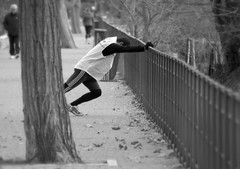

Here is another thing to bear in mind: Stretching before or after exercise does not prevent muscle soreness.

Many people stretch prior to or after engaging in physical exercise. Usually the purpose is to reduce the risk of injury, reduce soreness after exercise, or enhance athletic performance. Or that is what they will tell you if you ask them. Or maybe they just do it because everyone else does it.

Researchers looked at 10 relevant randomised trials looking at the effect of stretching before or after physical activity on muscle soreness. The studies produced very consistent findings - there was minimal or no effect on the muscle soreness experienced between half a day and three days after the physical activity. (The effects of stretching on other outcomes such as injury and performance were not examined in this review.)

"The best available evidence indicates stretching does not reduce muscle soreness. However there are other justifications for stretching," they wrote. "Some evidence suggests that once muscle soreness has developed stretching may provide a transient relief of soreness: some people stretch to reduce risk of injury, others stretch to enhance athletic or sporting performance, and yet others stretch because it gives them a sense of well-being. The current review does not provide any evidence of an effect or otherwise of stretching on risk of injury, performance, or well-being."


(If you are interested in some good articles on stretching and flexibility, look at Bryce's material here, or consider buying his booklet: "A Mighty River of Steel".)


Stretching to prevent or reduce muscle soreness after exercise

Background
Many people stretch before or after (or both) engaging in athletic activity. Usually the purpose is to reduce risk of injury, reduce soreness after exercise, or enhance athletic performance.

Objectives
The aim of this review was to determine effects of stretching before or after exercise on the development of post-exercise muscle soreness.

Search strategy
We searched the Cochrane Bone, Joint and Muscle Trauma Group Specialised Register (to April 2006), the Cochrane Central Register of Controlled Trials (The Cochrane Library 2006, Issue 2), MEDLINE (1966 to May 2006), EMBASE (1988 to May 2006), CINAHL (1982 to May 2006), SPORTDiscus (1949 to May 2006), PEDro (to May 2006) and reference lists of articles.

Selection criteria
Eligible studies were randomised or quasi-randomised studies of any pre-or post-exercise stretching technique designed to prevent or treat delayed-onset muscle soreness (DOMS), provided the stretching was conducted soon before or soon after exercise. To be eligible studies must have assessed muscle soreness or tenderness.

Data collection and analysis
Methodological quality of the studies was assessed using the Cochrane Bone, Joint and Muscle Trauma Group's methodological quality assessment tool. Estimates of effects of stretching were converted to a common 100-point scale. Outcomes were pooled in a fixed-effect meta-analysis.

Main results
Of the 10 included studies, nine were carried out in laboratory settings using standardised exercise protocols and one involved post-exercise stretching in footballers. All participants were young healthy adults. Three studies examined the effects of stretching before exercise and seven studies investigated the effects of stretching after exercise. Two studies, both of stretching after exercise, involved repeated stretching sessions at intervals of greater than two hours. The duration of stretching applied in a single session ranged from 40 to 600 seconds.

All studies were small (between 10 and 30 participants received the stretch condition) and of questionable quality.

The effects of stretching reported in individual studies were very small and there was a high degree of consistency of results across studies. The pooled estimate showed that pre-exercise stretching reduced soreness one day after exercise by, on average, 0.5 points on a 100-point scale (95% CI -11.3 to 10.3; 3 studies). Post-exercise stretching reduced soreness one day after exercise by, on average, 1.0 points on a 100-point scale (95% CI -6.9 to 4.8; 4 studies). Similar effects were evident between half a day and three days after exercise.

Authors' conclusions
The evidence derived from mainly laboratory-based studies of stretching indicate that muscle stretching does not reduce delayed-onset muscle soreness in young healthy adults.