Monday, May 31, 2010

Steroids and heart attacks

Acute cardiovascular response in anabolic androgenic steroid users performing maximal treadmill exercise testing.
chronic administration of high doses of Anabolic Androgeic Steroids (355.4 +/- 59.47 mg.wk) lead to hemodynamic and metabolic response impairment. In conclusion, the chronotropic significant incompetence in the current study was reflected by an exaggerated hemodynamic response to exercise. Furthermore, the findings suggest that nonusers of AAS showed increases in VO2max when compared to the AAS group. Therefore, this study provides a contraindication to AAS use, especially in those at increased risk of cardiovascular events.


So, they make you more prone to heart attacks plus they stop you improving your VO2mx.

A weekly session of negative only exercise has good effect....

here is one for the HIT boys: "only 30 min of eccentric exercise per week for eight weeks was sufficient to improve health risk factors".


A Weekly Bout of Eccentric Exercise Is Sufficient To Induce Health-Promoting Effects

Abstract
PURPOSE:: The effects of chronic eccentric-only versus concentric-only exercise on muscle physiology and blood biochemistry were investigated. METHODS:: Twenty women performed on an isokinetic dynamometer a concentric (n = 10, age 21.0+/-0.4 years, body fat 22.0+/-0.9%) or an eccentric (n = 10, age 20.0+/-0.3 years, body fat 23.2+/-0.7%) exercise session using the knee extensors of both lower limbs once a week for eight subsequent weeks. Muscle function (isometric, concentric and eccentric peak torque, range of movement and soreness) was evaluated before, immediately after and 48h postexercise in each one of the eight training weeks. Body fat, resting energy expenditure (REE), lipid and carbohydrate oxidation rate as well as blood chemistry measurements (lipid, lipoprotein and apolipoprotein profile, glucose, insulin, glycosylated hemoglobin and creatine kinase) were examined before and 48h post-exercise at the first and eighth week of training. RESULTS:: Acute eccentric exercise increased REE and fat oxidation at week 1 (12.7% and 12.9%, respectively) and at week 8 (0.7% and 2.8%, respectively). Chronic eccentric exercise increased resting REE and fat oxidation at week 8 compared to at week 1 (5.0% and 9.9%, respectively). Acute eccentric exercise improved blood lipid profile at week 1 and week 8. Chronic eccentric exercise improved resting blood lipid profile at week 8. Acute eccentric exercise increased insulin resistance at week 1 but not at week 8. Chronic eccentric exercise decreased resting insulin resistance at week 8. CONCLUSION:: It is reported for the first time that only 30 min of eccentric exercise per week for eight weeks was sufficient to improve health risk factors.

Fitness Geeks / Nerds

This raised a smile

(more here) This is certainly true in the fitness / health world. Especially among the blogs. It made me think of something I read on the Moynihan Institute recently which was riffing on how divorced this subculture is from the rest of the world. The things we obsess about are just off the radar to most people:

Are you a member of the fitness glitterati?

05/11/10
Chances are that if you reading this that you are a member of the fitness glitterati. It’s kind of like being a new ager. New agers never admit to being new age or even liking things of a new age nature. Their lives are simply so intertwined with new age mumbo jumbo that they can’t distinguish otherwise. It’s called denial.

You most likely fancy yourself as a regular guy that just likes to train and doesn’t want to deal with all the bullshit that goes on in modern day gyms. This may be true but this is the standard prerequisite to becoming a member of the fitness glitterati. I realized that I was indeed a member of the glitterati when talking with a family member the other day. I would say she is knowledgeable about fitness. She was a competitive athlete in college at an elite level and stays fit currently.

I knew something was wrong when I was talking about certain health and fitness issues in a very matter of fact way and she was looking at me like I was mad. I took for granted that she knew what I was talking about. We develop our world view based on those we surround ourselves with. In one study when college grads were asked to estimate the percentage of Americans with college degrees they routinely responded that 60%-70% had degrees. They were astonished that the actual percentage was well under 30%. In their world most people had college degree. We gravitate towards people like ourselves.

Well I and presumably you have done the same thing. We spend out days discussing the next big thing or some new study on the various fitness forums. We forget that most people are unaware of most of this crap - and yes most of it is crap. Most people don’t workout and are generally unaware of what they are doing to their bodies. They simply don’t care. Those that do train generally still train like quasi body builders with their body part splits and cardio days. They might do some yoga, Pilates, spinning class or some boot camp bullshit.

The vast majority of people that train are deeply entrenched in the bourgeois camp. They eat low fat and think breakfast cereal is healthy. When they train they actually wear shoes with a lot of support and they almost never train outdoors unless its cardio day and they are out jogging or cycling. Every thing about their training is so 2007. They are quite simply squares.

We on the other hand glitter. We transcend bourgeois values. To us these people are the Hoi Polloi, rabble, Philistines. Here are some things that are a must among our crowd this year. Simply everyone that matters is either doing them or in some case no doing them.

No one sits anymore. As I am writing this I am standing in front of my makeshift workstation. We all know that sitting is bad for you even worse than smoking cigarettes. Sitting is so 2008.

The other day I walked by a 24 fitness and guess what I saw? Throngs of people were jogging on treadmills. But wait it gets better. They were wearing shoes! Actual running shoes! I mean really, who wears shoes anymore? How tacky. Everyone knows that these days it’s barefoot or at the very least a pair of Vibrams.

Can you believe that there are people that still eat grains? I mean the other day I saw a guy eating a bagel. What is this the 80s? And how embarrassing is it when some rube asks you if you are eating low carb? No one says ‘low carb’ anymore. It’s Paleo. We eat Paleo not low carb. Low carb is for fat guys in t-shirts and Bermuda shorts named Jimmy.

You really know your in Palookaville when you walk into a gym and 2/3 of the guys are bench pressing? Don’t they know benching in non functional and that a guy that snatches 45 pounds is really stronger than a cat a that benches 500. Geez. No one benches anymore simply no one.

We may not bench or do barbell curls anymore but we do Olympic lift. Sure our numbers are paltry and our form is suspect. We may even be doing more damage than good but that’s not the point is it? The point is that were not benching anymore and we’re doing something that Hoi Polloi doesn’t which makes us better than them. And in the end isn’t being better than everyone else what it’s all about?

And what really distinguishes the glitterati from the rabble is our post modern approach to bodybuilding. We don’t body build even though we in actuality body build. We eschew bodybuilder even though we are in fact bodybuilder. Crossfit is the personification of this madness. They shroud their objectives with terms like functional, tactical and warrior. They spout off platitudes about being athletes and other bullshit when in actuality all they want to do is find acceptable venues where they can strip off their shirts and show off their 6 packs like a bunch of ************.

It’s not easy being member of the glitterati. It takes effort and hours way from your job, family and other responsibilities that most people put first. I’m mean the volume on has to keep up with. This week it’s 5/3/1 next week 99-trx-z, The Gaymes, Art DeVany doing Smith machine squat…ad nauseam. It ain’t an easy job but somebody’s got to do it.

Sunday, May 30, 2010

Competitive rope climbing

mc points to this video - competitive rope climbing (full article here)


953 lb Raw Deadlift


Andy Bolton pulling 432.5 kg

Skipping (or jump rope for the yanks)

Krav Maga sessions usually start with skipping, so I though I'd point to some resources on skipping:

Here is a basic intro


But the master - as usual is Ross. Check out these videos and the articles here and here.


Wednesday, May 26, 2010

Brief exercise reduces impact of stress on aging

I've pointed to research in the past on the effect of different types of exercise on cell aging, as measured by telomere length( for example - Marathons make your muscles old). As usual, things are quite complex.

Anyway, there is some new research just published that
Vigorous physical activity appears to protect those experiencing high stress by buffering its relationship with telomere length.
Chronic psychological stress is responsible for a range of health problems, but it seems that it even has an effect at a cellular level right in the DNA. Exercise however can reduce its negative impacts:

In the study, 62 post-menopausal women – many of whom were caring for spouses or parents with dementia -- reported at the end of each day over three days the number of minutes of vigorous physical activity in which they had engaged. Vigorous activity in the study was defined as "increased heart rate and/or sweating.'' They also reported separately their perceptions of life stress that they had experienced during the prior month. Their blood's immune cells were examined for telomere length.

Results support the UCSF-led discovery six years earlier in premenopausal women that psychological stress has a detrimental effect on immune cell longevity, as it relates to shorter telomeres. The new study showed, however, that when participants were divided into groups – an inactive group, and an active group (i.e., they met federal recommendations for 75 minutes of weekly physical activity) – only the inactive high stress group had shorter telomeres. The active high stress group did not have shorter telomeres. In other words, stress predicted shorter telomeres in the sedentary group, but not in the active group.

There is more in the report here.

Tuesday, May 25, 2010

Is fish oil really good?


I regularly take fish oil having read a lot of material about its benefits over the years.

The New Scientist has an article this week that indicates that it might not be all it is cracked up to be.....Omega-3: Fishy claims for fish oil

Brain boosting

Claim: fish oil supplements significantly improve reading, spelling and behaviour

Current thinking: a systematic review of all studies found insufficient evidence to identify any effect. The largest study to date reported no effect on cognitive function in later life


Then again, the New Scientist is notorious for supporting whatever is the Conventional Wisdom.

A week of physical inactivity has similar health costs to smoking a packet of cigarettes

This one caught my eye!


Google knows everything, so we tried ‘What is the health cost of a week of physical inactivity compared with the health cost of cigarette smoking?’ 915 000 results provided no clear answer. PubMed, on the other hand, was concise. Two results but no help. What is your guess? Does a day of physical inactivity affect your health like just a couple of smokes (no big deal), or like a packet of 20? How much physical inactivity damages health as much as a carton of cigarettes?

Personal Healthcare utilisation attributable to physical inactivity=US$300 annually
Given Google's lack of help, we reused some backs of envelopes. It is really not hard. The US population in 1999 was 272 million. The percentage inactive ranged from 29% to 48%, depending on your source. You could use both of these numbers for a sensitivity analysis, but let's be optimistic: 29%=79 million inactive Americans in 1999. These folks racked up $24 billion in healthcare costs in 1999.1 So, the annual per person cost of physical inactivity was US$300. Easy.

Personal Healthcare utilisation attributable to smoking=US$1600–1800 annually
What does JAMA tell us about US data for smoking?2 3 In 1998, smoking-attributable personal healthcare medical expenditures were $75.5 billion. For each of the approximately 46.5 million adult smokers in 1999, these costs represent $1623 in excess medical expenditures.2 3 More helpful than Google. This cost is supported by a different source; in 1999, smokers in California incurred direct costs of $1799 (54% of $3331). We ignore the indirect costs of smoking for this discussion—the loss of productivity associated with premature deaths. The important ratio is that a smoker's attributable healthcare cost of US$1600–1800 is five to six times that of an inactive person, all things being equal. Quick common sense check—smoking inflicts greater healthcare costs than being sedentary for 24 hours.4 This makes sense. All good so far.

Comparing the healthcare burden of physical inactivity with that of smoking
So there we have it—physical inactivity is only a fifth or a sixth as bad as smoking. Or 17–20% of what a smoker suffers with every cigarette. Good news really! Be inactive with impunity! The average smoker consumes 16 cigarettes a day.5 Dividing 16 smokes by 5 or 6 equals 3 cigarettes a day. Thus, physical inactivity costs mirror a convenient packet of 20 in a week. To reiterate, we propose that a week of physical inactivity is like one packet of 20 cigarettes with respect to personal health costs. But back-of-the-envelope calculations are just that—a starting-point to launch a discussion. We look forward to detailed analyses by expert economists. And what about a website where one can confess to recent days of inactivity and see a phial fill up with an appropriate dose of black ‘tar’—right in front of our eyes!

Some amazing handbalancing

Sunday, May 23, 2010

Thursday, May 20, 2010

Vitamin B3 is making you fat.....


This one caught my eye today.

If you pick up any packet of cereal you find it is enriched with vitamins:

Ingredients

Maize, Brown Sugar (Sugar, Molasses), Peanuts (7%), Sugar, Honey (2%), Barley Malt Flavouring, Salt, Niacin, Iron, Vitamin B6, Riboflavin (B2), Thiamin (B1), Folic Acid, Vitamin B12.

Some Chinese scientists have just done a study indicating that Niacin can mess up insulin sensitivity....and make you fat

A research team from China examined the role of excess nicotinamide in glucose metabolism using co-loading of glucose and nicotinamide test. They proved that excess niacin intake-induced biphasic response, i.e., insulin resistance in the early phase and hypoglycemia in the late phase, may be a primary cause for the increased appetite in obesity. Their study will be published on May 21, 2010 in the World Journal of Gastroenterology.

The study also revealed for the first time that the obesity prevalence among US children and adolescents increased in parallel with the increase of the per capita niacin consumption with a 10-year lag, in which niacin fortification-induced sharp increase in niacin contents in grain products may play a major role. Reducing niacin intake and facilitating niacin elimination through sweat-inducing physical activity may be a key factor in the prevention and treatment of obesity.
I've not been able to access the full article yet but I certainly think there are some interesting implications there. Especially the last bit - exercise and sweating is healthy too in that it gets rid of excess niacin.

Tuesday, May 18, 2010

Monday, May 17, 2010

No problem with red meat

This study has hit the news today. Interestingly the element that is being focussed on is that preserved meat may be a problem rather than the finding that

Red meat intake was not associated with CHD or diabetes!
Despite what we keep getting told....there is no problem with red meat.


Abstract: Red and Processed Meat Consumption and Risk of Incident Coronary Heart Disease, Stroke, and Diabetes Mellitus. A Systematic Review and Meta-Analysis

Background—Meat consumption is inconsistently associated with development of coronary heart disease (CHD), stroke, and diabetes mellitus, limiting quantitative recommendations for consumption levels. Effects of meat intake on these different outcomes, as well as of red versus processed meat, may also vary.

Methods and Results—We performed a systematic review and meta-analysis of evidence for relationships of red (unprocessed), processed, and total meat consumption with incident CHD, stroke, and diabetes mellitus. We searched for any cohort study, case-control study, or randomized trial that assessed these exposures and outcomes in generally healthy adults. Of 1598 identified abstracts, 20 studies met inclusion criteria, including 17 prospective cohorts and 3 case-control studies. All data were abstracted independently in duplicate. Random-effects generalized least squares models for trend estimation were used to derive pooled dose-response estimates. The 20 studies included 1 218 380 individuals and 23 889 CHD, 2280 stroke, and 10 797 diabetes mellitus cases. Red meat intake was not associated with CHD (n=4 studies; relative risk per 100-g serving per day=1.00; 95% confidence interval, 0.81 to 1.23; P for heterogeneity=0.36) or diabetes mellitus (n=5; relative risk=1.16; 95% confidence interval, 0.92 to 1.46; P=0.25). Conversely, processed meat intake was associated with 42% higher risk of CHD (n=5; relative risk per 50-g serving per day=1.42; 95% confidence interval, 1.07 to 1.89; P=0.04) and 19% higher risk of diabetes mellitus (n=7; relative risk=1.19; 95% confidence interval, 1.11 to 1.27; P<0.001). Associations were intermediate for total meat intake. Consumption of red and processed meat were not associated with stroke, but only 3 studies evaluated these relationships.

Conclusions—Consumption of processed meats, but not red meats, is associated with higher incidence of CHD and diabetes mellitus. These results highlight the need for better understanding of potential mechanisms of effects and for particular focus on processed meats for dietary and policy recommendations.

Sugar and cancer - more studies

I've had material on here before about the relationship between sugar and cancer. Cancer cells apparently rely on sugar to survive, so remove the sugar and you starve the cells. There have been experiments using ketogenic diets to treat cancer and other approaches using drugs to intervene down similar pathways.

I saw this in the New Scientist yesterday: Cancer's sweet tooth becomes a target

It is intersesting stuff.

Most of these efforts stem from an observation dating back to the 1930s - that cancer cells generate energy via glycolysis. This is different to the way cells normally make energy, through aerobic respiration in specialised chambers called mitochondria. Ordinary cells do use glycolysis but only if they are short of oxygen, as it is hugely inefficient, gobbling up large amounts of glucose for very little energy .

The focus is all on drugs though rather than diet

Sunday, May 16, 2010

Central Florida Exercise & Nutrition Seminar - with some of my favourite writers and trainers!

I wish I was in Florida....


If you have followed this blog for any length of time you will have noticed certain names popping a few times. I have interviewed Doug McGuff and Bill DeSimone and have a great respect for them and their writings. I have pointed to Drew Baye's materials often and he is a great trainer and writer. Mark Sisson has done a lot to promote the sort of approach with which I sympathise on thios blog - especially in his primal blueprint and he often sends visitors this way.

Well Anthony has done an amazing job in pulling together those speakers for a small conference he is putting on in Orlando Florida July 22nd-25th.

There are more details here and you can sign up through this link

Tuesday, May 11, 2010

A mouthful of carbs improves exercise performance....but don't swallow!

Having carbs in your mouth even if you can't taste them or even if you don't swallow improves exercise performance.

Oral carbohydrate sensing and exercise performance.


Weird.

Pancreatic cancer: Fat protects.....Carbs damage?

I've had stuff previously on sugar and cancer

Interesting to spot this abstract which - as far as I read it - indicates that intakes of available carbohydrate, glycemic load and sucrose are associated with elevated risks for pancreatic cancer, while fat - particularly saturated fat - intake is associated with diminished risks.

Available Carbohydrates, Glycemic Load, and Pancreatic Cancer: Is There a Link?

I haven't seen the full study (does anyone have it?) so I am not sure why the abstract finishes with the statement:

Rather than being causal, the short-term increase in pancreatic cancer risk associated with high available carbohydrate and low fat intake may be capturing dietary changes associated with subclinical disease.
So they are saying that subclinical pancreatic cancer makes you eat more carbs and less fat!

Monday, May 10, 2010

Sort out the diets of the elderly

I am increasingly aware of how poor (according to my standards) the diet of lots of old people is. The ones I know seem to take in too much cake, bread, pasta, biscuits, sweets, soups and too little meat, eggs and dairy. They have been brainwashed by too much conventional wisdom to avoid fat and therefore they are getting too little protein and fat.

There is an interesting report here that old people who consume a higher level of dietary protein are less likely to suffer hip fractures than those whose daily dietary protein intake is less.

In addition to increased dietary protein, Dr. Hannan says regular exercise to build stronger muscles and better balance, as well as other falls prevention strategies, such as reducing hazards in the home, can help protect seniors against falls and hip fractures.

Cycling and bone loss

I think I've had something up about this before (just checked and it was a couple of years ago....). OK - few of us will cycle at the levels of a professional in terms of the hours in the saddle, still it is interesting to bear in mind if you are thinking about exercising to maintain bone density. Cycling is not the best choice.

Then again....of course it isn't: we were designed to move around on two feet not on a bike. (Another one for the paleo concept?)

Bone Status in Professional Cyclists

Professional cycling combines extensive endurance training with non weight-bearing exercise, two factors often associated with lower bone mineral density (BMD). Therefore BMD was measured with dual-energy x-ray absorptiometry in 30 professional road cyclists (mean (SD) age: 29.1 (3.4) years; height: 178.5 (6.7) cm; weight: 71.3 (6.1) kg; %fat mass: 9.7 (3.2)%; V˙O2max: 70.5 (5.5) ml·kg−1·min−1) and in 30 young healthy males used as reference (28.6 (4.5) years; 176.5 (6.3) cm; 73.4 (7.3) kg; 20.7 (5.8)%). Adjusting for differences in age, height, fat mass, lean body mass, and calcium intake by ANCOVA, professional cyclists had similar head BMD (p=0.383) but lower total body (1.135 (0.071) vs. 1.248 (0.104) g·cm−2; p<0.001), arms (0.903 (0.075) vs. 0.950 (0.085), p=0.028), legs (1.290 (0.112) vs. 1.479 (0.138); p<0.001), spine (0.948 (0.100) vs. 1.117 (0.147) g·cm−2; p<0.001), pelvis (1.054 (0.084) vs. 1.244 (0.142), p<0.001), lumbar spine (1.046 (0.103) vs. 1.244 (0.167), P<0.001), and femoral neck BMD (0.900 (0.115) vs. 1.093 (0.137), p<0.001) compared to reference subjects. Professional cycling appears to negatively affect BMD in young healthy and highly active males, the femoral neck being the most affected site (−18%) in spite of the elevated muscle contractions inherent to the activity.

Training leads to decreases in markers of inflammation

Both aerobic and strength training, seem to lead to lower levels of systemic inflammation, apparently due to strength increases and loss of fat.


The effect of aerobic versus strength-based training on high-sensitivity C-reactive protein in older adults


Increased levels of inflammatory markers, namely, high-sensitive C-reactive protein (hs-CRP), have been associated with several chronic diseases including atherosclerosis, type 2 diabetes and hypertension. Forty-five women and men aged >64 years participated in the study and were randomly assigned to two exercise intervention groups and a non-exercising control group. The participants assigned to the exercising groups followed a 16-week exercise protocol based either on aerobic training (AT) or strength training (ST) followed by a further 16 weeks off-training period. The control group (C) remained sedentary throughout the study. Evaluation of body mass, BMI, waist circumference, aerobic endurance, lower-body strength, upper-body strength, triglycerides, total cholesterol, LDL-cholesterol, HDL-cholesterol and hs-CRP were performed at baseline, after 16 weeks (post-training for the exercise groups) and at 32 weeks (follow-up). Both, AT and ST groups significantly increased functional fitness at the end of the exercise programs when compared to baseline values. hs-CRP concentrations were maintained throughout the study for the C group, while decreasing 10% at 16 weeks and 51% at 32 weeks for the AT group. In the ST group the hs-CRP concentrations decreased by 11 and 39% at 16 and 32 weeks, respectively. Decreases in hs-CRP concentrations were statistically significant for the AT and ST groups at the 32-week evaluation when compared to baseline. Reduction in hs-CRP concentrations seemed to be associated with strength gains and adiposity loss.

interval training - boosts anaerobic and aerobic performancea

Nothing earth-shattering here - another study that indicates that sprint training has broad benefits:

10 or 30-s sprint interval training bouts enhance both aerobic and anaerobic performance


These data indicate that 10-s (with either 2 or 4 min recovery) and 30-s SIT bouts are effective for increasing anaerobic and aerobic performance
.

Saturday, May 8, 2010

Back to normal


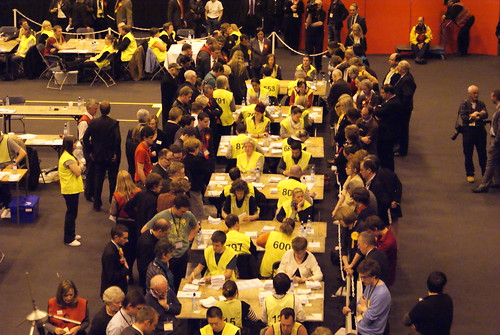
Well the election is over. It has been absorbing me for the last few months and I am exhausted. The count went on until about 5am in Edinburgh and I'd been up for 24 hours at that stage.


I hope there will now be a bit more time for normal life - rest, training, these blogs. (I am in both photos above by the way.....the crowded one shows the recount in Edinburgh South. By that time - about 4:15am - my back was killing me.) This idea of overnight counts is not rational.....

Monday, May 3, 2010

Exercise in the outdoors


I had a post on this a little while ago (Get your greens). Interesting to see another similar study reported in the BBC.


It all makes a lot of sense. This is what we are built for - movement in a real outdoor, stimulating environment makes you happier.

There is a good press release here:

“You get a very substantial benefit from the first five minutes. We should be encouraging people in busy and stressed environments to get outside regularly, even for short bits of time,” says Pretty. After that, increased green exercise continues to add benefit, but with decreasing returns. However, a full day of activity causes another spike in the level of benefit. Both healthy people and those with mental health disorders benefited, with the mentally ill showing the strongest improvement in self-esteem.


What is the Best Dose of Nature and Green Exercise for Improving Mental Health? A Multi-Study Analysis
Green exercise is activity in the presence of nature. Evidence shows it leads to positive short and long-term health outcomes. This multistudy analysis assessed the best regime of dose(s) of acute exposure to green exercise required to improve self-esteem and mood (indicators of mental health). The research used meta-analysis methodology to analyze 10 UK studies involving 1252 participants. Outcomes were identified through a priori subgroup analyses, and dose−responses were assessed for exercise intensity and exposure duration. Other subgroup analyses included gender, age group, starting health status, and type of habitat. The overall effect size for improved self-esteem was d = 0.46 (CI 0.34−0.59, p < 0.00001) and for mood d = 0.54 (CI 0.38−0.69, p < 0.00001). Dose responses for both intensity and duration showed large benefits from short engagements in green exercise, and then diminishing but still positive returns. Every green environment improved both self-esteem and mood; the presence of water generated greater effects. Both men and women had similar improvements in self-esteem after green exercise, though men showed a difference for mood. Age groups: for self-esteem, the greatest change was in the youngest, with diminishing effects with age; for mood, the least change was in the young and old. The mentally ill had one of the greatest self-esteem improvements. This study confirms that the environment provides an important health service.