I train and eat well so that I can be fit enough to walk to places where I can have views like this. I train to have more fun...and when it is easy to walk for 8 hours and climb these tops it is more fun.
This was the view yesterday looking towards Knoydart from Sgurr Mor in Glen Kingie on a perfect day in the West Highlands
There was a good review paper recently about the evidence for the relationships between physical activity and exercise and the brain and cognition. The full paper is avalable. Interesting stuff.
It also links to the ideas of the excellent book The Body Has a Mind of Its Own which I might have mentioned previously, a superb book that mc pointed me towards.
I should also mention that Becoming Bulletproof provides a nice explanation of these ideas too.
I have been meaning to mention this book that I bought and read a couple of weeks ago.
The Gnoll Credo is a novella which is a thinly disguised polemic about the need for humans to recognise their true nature as hunters and what that means for how we should live and think, what our society should be like.
He builds the story around an anthropologist's encounters with a gnoll - a humanoid hyena - in a fantasy world of orcs and elves. The gnoll explains and illustrates the Gnoll Credo...a set of 10 Commandments (12 actually) for carnivore hunters, explaining their society works and how their minds work.
“We are born and we die. No one cares, no one remembers, and it doesn’t matter. This is why we laugh.”
That is the basis of the Credo, an apparently nihilistic yet strangely life affirming set of assertions. It made me think of the Fuck It philosophy (another book that I am enjoying just now).
The Gnoll is a hunter and that defines its life and outlook. You get the impression that the author also thinks that this is the way that humans should be. There are hints that - as Erwan Le Corre says - we are zoo humans, too far removed from our nature, our reality.
It may not be the best piece of literature that you will ever read, but if you are interested in paleo diets or evolutionary fitness, it is worth your time and money. Don't get me wrong, it is a well written book and the characters - particularly the Gnoll Gryka - are very well developed and there is some nice emotional insight into the main human character. However, it is what the metaphor tells you about yourself that is challenging.
Paleo diets are one thing but we need to see them in a broader philosophical context. We may be designed to eat a certain diet....but what does that mean for how we are designed to live and to relate to each other. How can we be happy? What does the paleo principle mean for us in terms of our relationships, our happiness, our spirituality?
The author is blogging in a rather more usual paleo blogger style at Gnolls.org where he is sharing some good science
Over the years I have spent (often more accurately wasted) a lot of money on books and DVDs on fitness, weight-training, diet and self defence. I am intrigued by the sales copy (will this contain the secret that will turn me into a great athlete?) and then too often disappointed by what I get in response to my Paypal payment. I can cope with poor presentation or production but if the information is lacking or derivative then I am very disappointed and frustrated.
However...when I ordered Dan John's new DVD's (and I paid for these, these were not free copies for review) I was pretty confident that I would not be disappointed. You feel like you can trust Dan....he is a "good guy."
Dan John is solid, reliable and sensible and his material is as well. He speaks from experience - from his own success in sports - and from coaching athletes. He has a background as a teacher too - always a good quality in a coach - so he knows how to get a message across, explaining things clearly and in straightforward language and concepts.
Intervention
What is intervention? It is a 3-disc DVD set, a 3.5 hour lecture from Dan which gives his philosophy of coaching. It provides the tools, the conceptual framework that he uses to address the needs of clients - be they young athletes or 50 somethings looking to regain function. You get an insight into how Dan analyses an individual and using some simple filters gives a prescription for their training.
I like material that builds up like this, that shows you the basic principles, the foundations then bit by bit constructs an elegant and rational structure. It is all beautifully logical - each item builds bit by bit to give a coherent approach.
A lot of this stuff is already out there if you follow material that Dan has published in earlier articles (check out the compilation of them here) or in his book Never Give Up but in this series of DVDs you get a consistent philosophy, all the elements of Dan's approach woven together, so that you can see how each element of his thinking relates to the rest. I came away from watching this lecture feeling like I had learned a lot: armed with a toolkit of techniques that could let me train myself more effectively and also to train anyone else whatever their needs. It also has the feeling of being slightly "obvious" - you "know" all this stuff but somehow you never connect the dots.
That being said there is a lot of new stuff here - some of the patterning moves and symmetry exercises are very fresh.
The DVD's are good in themselves, but also included in the package are a bunch of other files. There is an mp3 of the entire lecture - I listened to this on a long car journey before watching the DVDs - the whole thing is transcribed onto pdf, so you can read it at your leisure, and all the handouts that Dan uses are provided too. There is also a booklet - Expanding on Intervention - in which Dan develops the ideas that he has introduced in the lecture. Also included is a pdf - already available here - giving the warmups, routines and moves that Dan and his pals use in their regular park workouts at Coyote Point, all of which make more sense now I've watched the DVDs.
I have learned a lot from this material and if you have any interest in improving your fitness, health and performance then I would recommend these DVDs.
Here are some samples
You will get the idea that I like this material! You can buy your set here
We combine evidence from in vitro and in vivo experiments to formulate a perspective on obesity aetiology that emphasises metabolic flexibility and dietary composition rather than energy balance. Using this model, we question the direction of causation of reported associations between obesity and sleep duration or childhood growth. Our perspective generates new hypotheses, which can be tested to improve our understanding of the current obesity epidemic, and to identify novel strategies for prevention or treatment.
Does anyone have the full paper? UPDATE - thanks to the peopel that sent the paper including That Paleo Guy and Paul Jaminet. Thanks guys
Squatting is a movement that we all need for everyday activity and one of the purist expressions of health. If your patients can’t squat or can’t squat without pain then this MUST be addressed, and addressed just as closely as the primary reason they first presented to you. To no one’s surprise this particular athlete had difficulty recruiting her glutes and therefore was utilizing her poor hamstrings as the primary mover instead – a recipe for hamstring strains and continued pain.
A closer look into how your patients move might just reveal that their troubling squat pattern is the underlying cause to the problem that brought them in to see you in the first place
This is something that Colin Gordon has spoken to me about.
"What people don't need to do is take in two extra litres a day," says Goldfarb. "You're going to take in two litres a day based on your diet and thirst sensation. What [bottled water companies] are really asking people to do is take in four or five litres, because they're already taking in two or three as coffee, tea, soft drinks, fruit, alcoholic beverages – that's all water. This notion is a marketing ploy."
It is interesting how certain ideas surface at the same time. Last week I receieved a copy of Ken Bob Saxton's book, Barefoot Running Step by Step. I've followed him a little for years and it was strange to watch the barefoot movement boom recently with vibrams etc.
Anyway, KenBob stresses that it is not enough to have minimal shoes - barefoot means barefoot. Proprioception - the sense of your body's position in space - is driven by the feet and shoes blunt that sense.
Gut hormones are released before and after a meal to initiate and terminate food intake. The authors measured gut hormone release after a palatable tasty meal before and after rats exercised in running wheels. In rats with a lot of running wheel experience, consuming a tasty meal led to increased blood levels of an inhibitory feeding hormone, amylin. After the meal, the same rats showed a more rapid rebound of a stimulatory feeding hormone, ghrelin. The authors also demonstrated that compared to sedentary control rats, exercise-experienced rats decrease their food intake more robustly after treatment with CCK, a gut hormone that limits meal size.
This is not really news anymore, but the studies are coming.....
Lack of physical exercise is often implicated in many disease processes. However, sedentary behavior, or too much sitting, as distinct from too little exercise, potentially could be a new risk factor for disease. The August issue of the American Journal of Preventive Medicine features a collection of articles that addresses many aspects of the problem of sedentary behavior, including the relevant
I've had stuff here before about stretching usually saying that it is a waste of time.
I spotted a new review - well the abstract anyway. It agrees that static stretching can negatively impact performance but concludes:
The detrimental effects of static stretch are mainly limited to longer durations (≥60 s) which may not be typically used during pre-exercise routines in clinical, healthy or athletic populations. Shorter durations of stretch (<60 s) can be performed in a pre-exercise routine without compromising maximal muscle performance.
In this context, ........... ADF (alternate day fasting) , might help to reduce pathological hypertrophy stimuli and to rescue an important cardioprotective pathway, possibly opening new preventive and therapeutic perspectives in age-related heart failure.
Most of my thought is shaped by the principles of POSE though and Romanov's key fundamental that we are mainly trying to deal with and work under gravity. His piece on Pose walking technique has been useful and is similar to the ideas of MovNat.
This abstract looks interesting (and I know it is rats...and you really need to read the whole study....)
Benefits from calorie restriction while maintaining decent protein intake. I wonder if they would get the same benefits from IF (intermittent fasting)?
I saw this ebook by Tim Anderson
and Mike McNiff mentioned in a post by Dan John I have great respect for Dan so I stumped up the $7 via Paypal and got myself a copy of Becoming Bulletproof.
Somes I get a bit fed up by the macho rhetoric that can be applied to training books - they want us all to be renegade....tactical.....warriors.....men among men......but in this case bulletproof just means resilient, maintaining function.
I am very impressed. It is a relatively quick read but there is a lot of material in here. It ties in some ideas from several sources that I have pointed to over the years and binds them together around some simple concepts and movements.
If you have followed some of the people and concepts that I have pointed to over the years you will recognise much of the ideas, but there were new things to me and the basic simple set of moves that they recommend are almost obvious given the conceptual framework that they build.
There are elements here that are similar to things I've read from Z health, Gray Cook, Pavel and others as well as the fascinating ideas of neuroplasticity that I have read about in Spark which I head about from Frank Forencich (who I interviewed here)
I would also say that the neuroplasticity ideas that they explain makes sense of some of the whole MovNat approach of Erwan Le Corre.
Anyway I do not want to give too much away, but I totally recommend this book. Check it out.
Welcome to the Natural Running Center. Our overall message is simple: Learn, Evolve, Run! With the information, education, and expert advice you will find on this site, it’s our hope and mission that all runners, beginners or veterans, fast or slow, the formerly injured or those hoping to get back in the game, will learn about the health and performance benefits of minimalist, natural, and even barefoot running. On the educational front, it’s also our responsibility to be as neutral and impartial as possible with our recommendations and knowledge that we will be sharing. These are exciting times in the footwear, sports medicine, and running world. The Natural Running Center hopes to makes sense of all this “newness,” and provide a safe, injury-free path for runners everywhere.
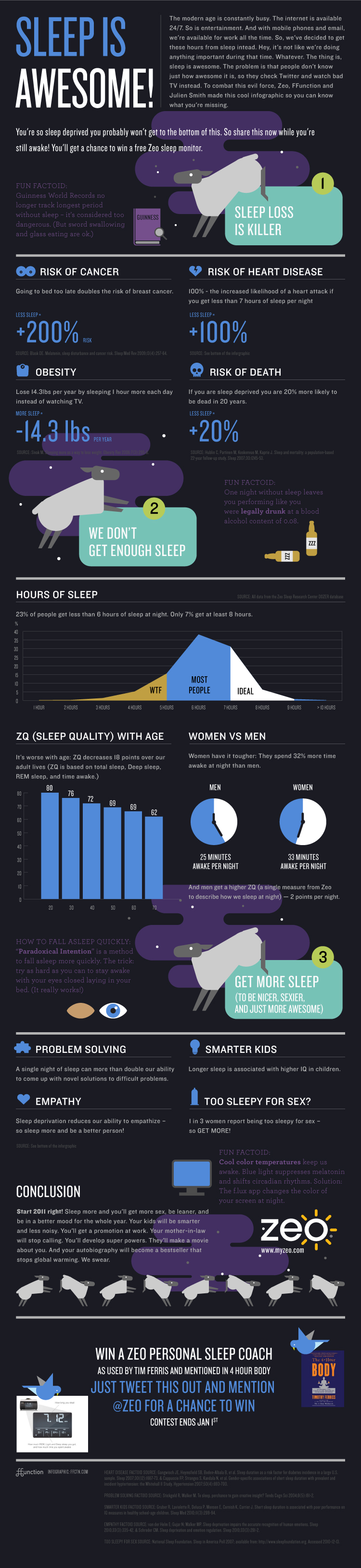
In this modern world, our eyes are flooded with light well after dusk, contrary to our evolutionary programming. Scientists are just beginning to understand the potential health consequences.
Lat year I installed Flux on my Mac to control the light it gives out in the evening.
The whole paleo movement is very restricted in its view. There is a desire to recreate in some way the paleo diet. Attempts are made at mimicking the Palaeolithic milieu with respect to exercise and movement patterns too.
But it’s more than just immunity. Two recent studies have found strong associations between dirt and mental performance. Mycobacterium vaccae is a natural soil bacterium that appears to increase cognitive performance in rodents, probably by affecting the serotonin system. It also appears to elevate mood, similar to the effect of an anti-depressant.