Richard has also mentioned his admiration of minimal shoes.

Thursday, April 30, 2009
Erwan Le Corre - barefoot
We have previously discussed barefoot running. Here is Erwan Le Corre of MovNat (who I recently interviewed) doing just that
Richard has also mentioned his admiration of minimal shoes.
Richard has also mentioned his admiration of minimal shoes.


Monday, April 27, 2009
Fermentation (not alcholic....) of food.
Fermented food
OK, as you may have noticed this blog is often just a record of things that I come across which I find interesting - generally in the area of fitness, conditioning and diet.
Here is something I've been thinking and reading about a bit recently: the idea of fermented food - think yoghurt, kefir, sauerkraut, pickles - being uniquely healthy.
I think I first came across this idea in Sally Fallon's book Nourishing Traditions, much of which is predicated on the work of Weston Price (who made an extensive study of traditional diets in the 1930s, diets unadulterated by modern processing and diets consumed in societies where there were few of the diseases of civilisaiton). Fallon has a good article on Lacto-Fermentation if you want to learn more.
Stephan has discussed fermentation a bit on his blog:
Seth Roberts - Healthy bacteria
What has realy got me thinking about this has been some of the musings of Seth Roberts. Seth has a fascinating blog built really on his practice of self experimentation (big pdf download)
Anyway one of his recent theories is the Umami Hypothesis.
Also here:
Rotten Fish
His theory is consistent with a lot of the ideas of Stephan and Fallon; they also line up strongly with the hygiene hypothesis.
Seth has a series of fascinating posts of this topic - fermented food - which are well worth skimming through.
Roberts also points out that Steffanson - a hero of my friends in the zero carb world - found that Eskimos would eat a lot of rotten - fermented - fish, and he himself ended up enjoying the dish:
Pickled Mammoths
Linking this back to the whole evolutionary fitness, palaeolithic hunter gatherer diet is this:
I came across something interesting about fermentation in the latest National Geographical. The cover story is about the discovery of a baby mammoth in Siberia. Although when found it was free of the ice it hadn’t decayed. On examination it was found that it had been “pickled” just through being in the water and thus preserved.
This was noticed by one of the researchers who noticed the pickled smell as he was doing the dissection. It reminded him of experiments that he had done to see whether primitive hunter gatherers could have preserved meat in this way. He submerged meat in a pool of water and found it was naturally pickled by the bacteria present. Hence his theory that hunters could have killed large prey (mammoths) and then preserved / fermented / pickled the meat for a long period after:
It is covered here:
Also here
So it is plausible that pickled meat - meat preserved through the same process of lacto fermentation that produced yoghurt or sauerkraut - is an ancient food......
What am I doing?
In the last week I have started eating some live yoghurt, kefir - when I can get it - and some genuine sauerkraut. I'll see how it goes.
OK, as you may have noticed this blog is often just a record of things that I come across which I find interesting - generally in the area of fitness, conditioning and diet.
Here is something I've been thinking and reading about a bit recently: the idea of fermented food - think yoghurt, kefir, sauerkraut, pickles - being uniquely healthy.
I think I first came across this idea in Sally Fallon's book Nourishing Traditions, much of which is predicated on the work of Weston Price (who made an extensive study of traditional diets in the 1930s, diets unadulterated by modern processing and diets consumed in societies where there were few of the diseases of civilisaiton). Fallon has a good article on Lacto-Fermentation if you want to learn more.
Stephan has discussed fermentation a bit on his blog:
Healthy grain-based African cultures typically soaked, ground and fermented their grains before cooking, creating a sour porridge that's nutritionally superior to unfermented grains. The bran was removed from corn and millet during processing, if possible. Legumes were always soaked prior to cooking.
These traditional food processing techniques have a very important effect on grains and legumes that brings them closer in line with the "paleolithic" foods our bodies are designed to digest. They reduce or eliminate toxins such as lectins and tannins, greatly reduce anti-nutrients such as phytic acid and protease inhibitors, and improve vitamin content and amino acid profile. Fermentation is particularly effective in this regard. One has to wonder how long it took the first agriculturalists to discover fermentation, and whether poor food preparation techniques or the exclusion of animal foods could account for their poor health.
Seth Roberts - Healthy bacteria
What has realy got me thinking about this has been some of the musings of Seth Roberts. Seth has a fascinating blog built really on his practice of self experimentation (big pdf download)
Anyway one of his recent theories is the Umami Hypothesis.
the idea that evolution shaped us to like umami taste, sour taste, and complex flavors so that we will eat more harmless-bacteria-laden food, which improves immune function. (I pompously call this the umami hypothesis.) It seemed so likely to be true that I started eating more fermented foods: miso, kimchi, yogurt, buttermilk, smelly cheese, and wine. To avoid stomach cancer and high blood pressure, I later cut back on miso, kimchi, and smelly cheese.
There have been other changes, too:Bacteria and viruses from other humans pose a threat. This is why we find fecal matter so offensive. It’s why hand-washing by doctors matters. But I believe plant-grown and dirt-grown bacteria are harmless because the substrates are so different than conditions inside our bodies. As for meat-, fish-, and dairy-grown bacteria, I don’t think they are very dangerous. Has anyone gotten food poisoning from yogurt? I keep in mind how much stinky fish the Eskimos ate. Maybe I should do some controlled rotting experiments — leave meat at room temperature for varying lengths of time before cooking and eating it.
- After buying meat or fish, I don’t try to get home quickly to put it in the fridge
- I don’t worry that eggs have been in the fridge for 3 weeks
- When buying eggs and other perishables, I don’t try to get the freshest
- I don’t worry about leaving milk out
Also here:
My idea that we like umami tastes, sour tastes, and complex flavors so that we will eat more bacteria-laden food (which nowadays would be fermented food) is saying that we need plenty of these foods. Why else would evolution have tried so hard to make us eat them? The implication is they should be part of every diet, like Vitamin C. When someone deficient in any vitamin begins eating that vitamin, the deficiency symptoms go away very quickly, within a few weeks, usually. The changes are easy to notice. So the details of what Tucker observed - the speed and size of the improvements — support my general idea that there is a widespread deficiency here that can be easily fixed.
Rotten Fish
His theory is consistent with a lot of the ideas of Stephan and Fallon; they also line up strongly with the hygiene hypothesis.
Seth has a series of fascinating posts of this topic - fermented food - which are well worth skimming through.
Roberts also points out that Steffanson - a hero of my friends in the zero carb world - found that Eskimos would eat a lot of rotten - fermented - fish, and he himself ended up enjoying the dish:
I had become as fond of raw fish as if I had been a Japanese. I like fermented (therefore slightly acid) whale oil with my fish as well as ever I liked mixed vinegar and olive oil with a salad. But I still had two reservations against Eskimo practice; I did not eat rotten fish and I longed for salt with my meals.
There were several grades of decayed fish. The August catch had been protected by longs from animals but not from heat and was outright rotten. The September catch was mildly decayed. The October and later catches had been frozen immediately and were fresh. There was less of the August fish than of any other and, for that reason among the rest, it was a delicacy - eaten sometimes as a snack between meals, sometimes as a kind of dessert and always frozen, raw.
In midwinter it occurred to me to philosophize that in our own and foreign lands taste for a mild cheese is somewhat plebeian; it is at least a semi-truth that connoisseurs like their cheeses progressively stronger. The grading applies to meats, as in England where it is common among nobility and gentry to like game and pheasant so high that the average Midwestern American or even Englishman of a lower class, would call them rotten.
I knew of course that, while it is good form to eat decayed milk products and decayed game, it is very bad form to eat decayed fish. I knew also that the view of our populace that there are likely to be "ptomaines" in decaying fish and in the plebeian meats; but it struck me as an improbable extension of the class-consciousness that ptomaines would avoid the gentleman's food and attack that of a commoner.
These thoughts led to a summarizing query; If it is almost a mark of social distinction to be able to eat strong cheeses with a straight face and smelly birds with relish, why is it necessarily a low taste to be fond of decaying fish? On that basis of philosophy, though with several qualms, I tried the rotten fish one day, and if memory servers, like it better than my first taste of Camembert. During the next weeks I became fond of rotten fish.
Pickled Mammoths
Linking this back to the whole evolutionary fitness, palaeolithic hunter gatherer diet is this:
I came across something interesting about fermentation in the latest National Geographical. The cover story is about the discovery of a baby mammoth in Siberia. Although when found it was free of the ice it hadn’t decayed. On examination it was found that it had been “pickled” just through being in the water and thus preserved.
This was noticed by one of the researchers who noticed the pickled smell as he was doing the dissection. It reminded him of experiments that he had done to see whether primitive hunter gatherers could have preserved meat in this way. He submerged meat in a pool of water and found it was naturally pickled by the bacteria present. Hence his theory that hunters could have killed large prey (mammoths) and then preserved / fermented / pickled the meat for a long period after:
It is covered here:
Tikhonov knew that no one would be more excited by the find than Dan Fisher, an American colleague at the University of Michigan. Fisher is a soft-spoken, 59-year-old paleontologist with a bristly white beard and clear green eyes who has devoted much of the past 30 years to understanding the lives of Pleistocene mammoths and mastodons, combining fossil studies with some very hands-on experimental research.
Curious to know how Paleolithic hunters managed to store mammoth meat without spoilage, Fisher butchered a draft horse using stone tools he’d knapped himself, then cached the meat in a stock pond. Naturally preserved by microbes called lactobacilli in the water, the flesh emitted a faintly sour, pickled odour that put off scavengers even when it floated to the surface. To test its palatability, Fisher cut and ate steaks from the meat every two weeks from February until high summer, demonstrating that mammoth hunters might have stored their kills in the same way.
Also here
Based on previous experiments aimed at understanding how Paleolithic hunters stored meat from large animal kills, Fisher believes Lyuba was naturally pickled in lactic acid produced by microbes called lactobacilli. The pickling would have protected her body from decomposition, and the sour smell likely deterred scavengers.
So it is plausible that pickled meat - meat preserved through the same process of lacto fermentation that produced yoghurt or sauerkraut - is an ancient food......
What am I doing?
In the last week I have started eating some live yoghurt, kefir - when I can get it - and some genuine sauerkraut. I'll see how it goes.
Saturday, April 25, 2009
Logical Fallacies and Exercise.
Good stuff - we are evolved for survival not truth.....
these logical issues are really interesting to think through. I did 3 years of logic at university and there was some analysis of arguments like this.
One thing I remember was this idea of the material conditional: if A then B, usually expressed s A=>B. For example if it is raining, the grass will be wet.
One thing to be aware of though is that it doesn't go in the other direction: just because the grass is wet doesn't mean it is raining. You can't argue from the effect to the cause.
Just because athlete X trains with plyometrics or bands or kettlebells or whatever doesn't necessarily mean that those things are responsible for his success or his physique.
these logical issues are really interesting to think through. I did 3 years of logic at university and there was some analysis of arguments like this.
One thing I remember was this idea of the material conditional: if A then B, usually expressed s A=>B. For example if it is raining, the grass will be wet.
One thing to be aware of though is that it doesn't go in the other direction: just because the grass is wet doesn't mean it is raining. You can't argue from the effect to the cause.
Just because athlete X trains with plyometrics or bands or kettlebells or whatever doesn't necessarily mean that those things are responsible for his success or his physique.
Eating at night is for fatties.....
I thought this was of interest. With all the usual warnings about association not equalling causation, Night Eating - defined as 25% of daily food intake after the evening meal and/or awakening at least once per week to eat - is much more common in the obese.
I wonder is there is some relation here to Intermittent Fasting. Such behaviour removes even the short fast that is there for most after the evening meal.
Prevalence of Night Eating in Obese and Nonobese Twins
I wonder is there is some relation here to Intermittent Fasting. Such behaviour removes even the short fast that is there for most after the evening meal.
Prevalence of Night Eating in Obese and Nonobese Twins
The aim of this study was to assess the prevalence of night eating (NE) and associated symptoms in a population-based sample of Swedish twins. A total of 21,741 individuals aged 20–47 years completed a questionnaire in 2005/2006. NE was defined as 25% of daily food intake after the evening meal and/or awakening at least once per week with eating episodes. The prevalence of NE was 4.6% in men and 3.4% in women. Among obese men and women, the prevalence was 8.4 and 7.5%, respectively. Men and women with NE had 3.4 and 3.6 times higher risk of binge eating compared to individuals without NE. The risk of sleep-related problems was 1.6–3.4 times higher in men and 2.5–3.3 times higher in women with NE compared to those without NE. This epidemiological study has estimated the prevalence of NE in a twin population. It revealed that NE is 2.5 and 2.8 times more common in obese men and women compared to normal weight men and women. Furthermore that NE is associated with binge eating and sleep-related problems.
.
Hip Mobility Drill
from Mountain Athlete.
Looks good for the hip flexors (and glutes) which get tight if you sit behind a desk for most of the day
Looks good for the hip flexors (and glutes) which get tight if you sit behind a desk for most of the day
General Conditioning, Specificity and Funcitonal training
There have been some great comments on this debate on recent posts. Please make sure that you read the comments if you are interested in this stuff. Thanks to everyone for their comments.
In particular John Sifferman's comment pointing to his post: Specificity in Training - How much carry-over does weight lifting have in real life? Will your time under the iron help you on the field, on the mat, or in the ring? is really worth reading.
I hope he doesn't mind re re-posting it here:
In particular John Sifferman's comment pointing to his post: Specificity in Training - How much carry-over does weight lifting have in real life? Will your time under the iron help you on the field, on the mat, or in the ring? is really worth reading.
I hope he doesn't mind re re-posting it here:
I have read numerous studies that have concluded that specific weight lifting activities have very little, if any, carry-over to athletic activities. It sounds crazy, I know. Believe me, I was pretty skeptical when I started reading these research abstracts myself. How could getting stronger hinder an athletes performance? Isn’t it the biggest, strongest, fastest athletes that are always the best? These questions were racing through my mind, and I had to ask myself, “how much does my training help me perform?”
I read research testing bench pressing strength and it’s applicability to football linebackers. I read research testing 10RM squats and its impact on high jumpers. I read a LOT of research, and what I found shocked me. In every research study that I dug up, there was very little, if any, carry-over to sports performance from weight training. Let me say that again. Lifting weights did NOT have an impact on sports performance.
That fact hit me like a lead brick. I had been lifting weights since I was 11 years old - and there was no way I wanted to think that all my work wouldn’t transfer to a better athletic performance in any activity.
Once the dust of confusion settled, and I decided to take an objective look at everything I knew at the time, something suddenly began to make sense. It all became clearer when I was told “everything is an act of conditioning.” The second half of that is that “all conditioning is specific to the activity performed” for conditioning.
Said another way, everything we do will condition us SPECIFICALLY for a given activity. Now this begins to make more sense. If you want to get better at pullups, do pullups. If you want to squat more, keep adding more weight to the bar and training with it. If you want to be a better boxer, practice your jabs, hooks, and footwork. But don’t perform the best deadlift program in the world and expect it to help you wrestle any better. To get better at anything, to have your training carry over to your life, you need to PRACTICE specifically for those activities.
Now, I still believe that such a thing as “general conditioning exists.” However, in order for it to transfer over to a better performance, in life or sport, it must be specific to that activity. Sure, I can get in generally better shape for dancing by dancing more, or doing cardio training that will help my VO2 MAX improve.
However, you cannot run, swim, or bike all the time and expect it to help you row on a crew team. Even if you’re well conditioned for a triathlon, put yourself into a different activity like rowing or powerlifting, and your conditioning will be zero for that activity.
And it’s also impossible to train for anything and everything. We just can’t do it all. Some fitness systems were created to train for everything, for the unknown. What you get every time is a group of people that are very well conditioned for a certain activity, or activities, and very poorly conditioned for anything outside of the context of that fitness system.
So, we must choose the principle of specificity instead of just doing general training. That’s the take-home message. I hope to explore this topic more in the future as my own understanding continues to evolve. Of course, I would be welcome to a discussion, please leave your comments below.
Friday, April 24, 2009
Bike Tricks in Edinburgh
I like this because - like the parkour one I posted recently - it is based in the city in which I live. Some great skills here and as I was watching I was spotting some familiar places!
Comments on the functional training debate
Here and at Keith's Theory to Practice site there has been some debate recently about the whole issue of functional training. This is an issue dealt with in Doug McGuff's Body by Science and something I explored a bit more in my interview with Luke Carlson.
A reader (Noel) of both Keith's TTP blog and this one sent us both a comment which he agreed I could reproduce here:
I answered thus:
I really enjoy such feedback and am grateful to Noel for it. I must admit that I still think people are not quite understanding what the HIT/BBS position is. There is always a reaction when something challenges the orthodoxy.
I think that Noel's comment about Luke Carlson re the squat and deadlift is wrong. We are back to specificity. Squatting and deadlifting with weight will make you stronger. Agreed. But they are different skills from squatting to take a dump or bending over to lift something up. The motor patterns are unique and specific. The stronger muscles from the deadlift will help but you the motor patter from deadlifting will not. That I think is the point.
A reader (Noel) of both Keith's TTP blog and this one sent us both a comment which he agreed I could reproduce here:
Fellas,
The recent posts about the BBS/super slow movement have irked me to the extent that I am compelled to write this email. While on the macro level I don't really care what they espouse, I don't think their claims are getting the critical examination they deserve.
Let me crudely characterise the debate as consisting of two sides: machine based, super slow, one set of failure based on published research (Dr McGuff) versus free weights, 5 reps or less, multiple sets based on coaching experience (Rip). I'm not suggesting Dr McGuff and Rip are in direct opposition (I don't know if they even know of one another), but I want to use two exemplars to discuss this issue. I
hope we can all agree these guys are experts, and they hold viewpoints that are contradictory. No one has the time to be knowledgeable in all fields, so normally we defer to experts. When the experts disagree it is time to examine the primary evidence more closely. The key thing here is our standard of proof: how strong must the evidence be before we accept it as true?
Now the BBS guys lean on the published literature. I went to PubMed, did a search for "resistance training one set failure" and the first relevant hit I found was:
http://www.ncbi.nlm.nih.gov/pubmed/17369792?ordinalpos=2&itool=EntrezSystem2.PEntrez.Pubmed.Pubmed_ResultsPanel.Pubmed_DefaultReportPanel.Pubmed_RVDocSum
METHODS: Twenty-one women were divided randomly into 2 groups: Group 1 (n=10) performed a single set of the leg press exercise once per week, while Group 2 (n=11) performed a single set of the leg press exercise twice per week for a period of 8 weeks. Throughout the duration of the study, an amount of resistance was utilized that allowed for a single set of 6 to 10 repetitions to muscular failure.
This seems to back up their claims -- but it is extremely weak evidence! 21 people is tiny, and 8 weeks is very short. Consider this: would you use a drug that had been tested on 21 people? I did a search for drug trial sizes (and perhaps Keith can say more here) and it seems a small trial is of the order of 300 people. Technically the
statistical power of this study -- that is, its ability to show an effect if there is one -- is very low.
To see the problems this study might have, imagine you had two groups of people, both of whom can lift 100kg on some exercise, with a standard deviation of 5kg. Imagine one group trains with protocol A, and the other with protocal B. After a year the group on A can lift 250kg +/- 12.5kg and the group on B can lift 200kg +/- 10kg (so group A gained 1.5x the strength and group B gained 1x the strength). The
difference in average strength is well outside 3 standard deviations, so this should be a very significant result.
Now what do you see after 8 weeks, assuming linear gains?
Group A: Mean = 100kg + [100kg * (8/52) * 1.5] = 123kg
Std. Dev. = 5kg + [5kg * 8/52 * 1.5] = 6.2kg
Group B: Mean = 100kg + [100kg * (8/52) * 1] = 115kg
Std. Dev. = 5.8kg
The difference in means is well within two standard deviations -- not a significant result. So see how the short duration of the study has made a significant result seem insignificant.
(This is fairly informal. If someone wants to calculate the actual p-values assuming, say, a population of infinite size [and therefore the t-distribution becomes the normal] that would be informative and more persuasive than my argument.)
(Also, see this:
http://www.ncbi.nlm.nih.gov/pubmed/14971985?ordinalpos=1&itool=EntrezSystem2.PEntrez.Pubmed.Pubmed_ResultsPanel.Pubmed_DiscoveryPanel.Pubmed_Discovery_RA&linkpos=4&log$=relatedreviews&logdbfrom=pubmed
This quantitative review indicates that single-set programs for an initial short training period in untrained individuals result in similar strength gains as multiple-set programs. However, as progression occurs and higher gains are desired, multiple-set programs are more effective.)
I'm not a researcher in the field of exercise science (or kinesology or whatever you want to call it) but a lot of the published research I have seen is of this type. This does not meet my standards of proof.
Now consider the evidence Rip has. It would be rejected by the BBS guys as it doesn't meet the criteria for publication: it doesn't control for variability, it isn't statistically analysed and so on. That doesn't mean it isn't evidence though. From his writing Rip
strikes me as a very methodical and very experienced guy. I must admit I am more inclined to believe him, based on his experience training hundreds of people over long periods, than I am to believe claims based on what I perceive as very weak published literature.
Finally, I want to address Chris' interview with Luke Carlson.
"Q: What do you make of Crossfit?...
A: It is entertaining to me that the three movements that all humans allegedly engage in just happen to be historically popular Olympic and Power lifts!"
Two things. First my understanding is that the term "functional movement" is used by Crossfit to mean a movement that carries over to other activities. It doesn't mean that movement mimics other activities.
I would think anyone could see that deadlifting and squatting are core movements. I guess Luke has never picked anything off the floor, or taken a dump.
"The vast majority, if not every HIT advocate that I know utilizes twisting/rotational movements. We use the MedX Core Torso Rotation machine - a $7,000 machine that targets the muscles involved in rotation of the trunk. This exercise is included in the working scripts for all of our clients."
The Crossfit orthodoxy here is that training midline stabilisation -- the ability to resist twisting -- is key. I did a little test with myself, throwing punches. It seems that I flex my obliques to avoid twisting so as to better transfer power from my hips to my upper body. I'm not trained at punching, but this way felt much better than
deliberately twisting my midsection out of line with my hips.
This response is also highlights an issue that I haven't seen anyone address yet -- these guys are not impartial. I don't need a $7000 machine to train my obliques, but the equipment manufacturers and the gym owners that have invested in them would like me to believe I do. In fact this is one of the primary reasons I dislike the BBS movement -- they want to make the trainee dependent on the gym to workout. In
contrast a barbell set is dead cheap, and free weights, be they iron, a rock, or a baby, can be used anywhere. I'd rather be self sufficient and teach people to be the same.
Finally, let me address safety:
First, there is lack of evidence to support machines being safer than free weights:
http://www.exrx.net/WeightTraining/Safety.html
Let's also look at the injury rate, from the same site: 0.0035 injuries per 100 hours. Imagine I'm a real gym rat and hit the gym 5 days a week for an hour. That's 5 hours a week, or 260 hours a year, or 13000 hours over 50 years. With that injury rate I would expect 0.455 injuries over my lifetime of training. Worried?
Well, I'd better do some real work.
Regards,
Noel
I answered thus:
NoelKeith has put his own response up HERE
thanks for the email. ....... A couple of things:
- What I put up on the blog tends to reflect what I'm currently interested in / what I'm reading about myself. Sometimes there will be a spate of posts on posture. Sometimes it is about intervals. At the moment I'm reading alot and thinking about this functional training debate so that is what is getting posted. I'm glad that other people read the blog and like it but ultimately it is driven by my current interests.
Would you be happy if I posted your email on the blog to add to the debate?
- Re functional stuff / deadlifting / squats - if Crossfit's point is about "carryover" effects of certain moves the HIT peopel woudl say that there is no carryover from one move to another - they are all different. Moves must be trained specifically. It is the strength that carries over as I understand it.
Cheers
I really enjoy such feedback and am grateful to Noel for it. I must admit that I still think people are not quite understanding what the HIT/BBS position is. There is always a reaction when something challenges the orthodoxy.
I think that Noel's comment about Luke Carlson re the squat and deadlift is wrong. We are back to specificity. Squatting and deadlifting with weight will make you stronger. Agreed. But they are different skills from squatting to take a dump or bending over to lift something up. The motor patterns are unique and specific. The stronger muscles from the deadlift will help but you the motor patter from deadlifting will not. That I think is the point.
Wednesday, April 22, 2009
Paleo / Primal Exercise
Methuselah has done it again (his last one was an excellent discussion of diet) this time about exercise
intense, brief, infrequent....
intense, brief, infrequent....
Tuesday, April 21, 2009
Revisiting this idea of functional training

Recently I read Doug McGuff's book Body by Science and was subsequently fortunate enough to interview him.
One of the areas of his thinking that I found fascinating and challenging was his view of "functional training". He drew a sharp distinction between exercise - which would increase your strength - and skill training which would make you better at applying that strength. This idea was revisited in some further posts (for example here, here and here) and generated some interesting comments. Reading around the subject a bit more one of the people that I came across was Luke Carlson, CEO of DiscoverStrength. His website has an excellent discussion of this area, including a paragraph on why "functional" strength training is a fallacy! Keen to learn more about this whole area I contacted Luke and asked if I could interview him on this subject of "functional training". Graciously he agreed to answer my questions. This is a good interview - hope you enjoy it and learn from it as I did.
Luke, can you give my readers a little background on yourself? What is your background in fitness training?
I went to the University of Minnesota and studied Kinesiology. As a sophomore, I began working on the Minnesota Vikings Strength and Conditioning staff under Steve Wetzel; from that experience, a number of other opportunities came my way. A typical day during my sophomore year was training Viking players from 6:30am until 10:30am; going to class from noon to 3 or 4pm; driving over to a local college to run the football strength program until 5 or 6pm and then driving to a local personal training studio to train clients in the evening. By my Junior year I had accepted a job at one of Minnesota's largest high schools to run the strength and conditioning program; I did this and worked part-time with the Vikings until I graduated. Upon graduation, I immediately started a masters degree in exercise physiology at the the University of Minnesota under world-renowned physician and exercise scientist Arthur Leon MD. I also took a position as the strength and conditioning coach of a different large high school in Minnesota. I spent two years in that position and at the time, our program was considered the largest high school strength and conditioning program in the country. On a typical day in the summer over 500 athletes would go through closely supervised or 1-on-1 workouts. During this time period I also had the opportunity to co-author two books - "The Female Athlete: Train for Success" and "Mapping you Retirement" (I did a chapter on exercise). After two years in that position, I began the planning stages for a business venture. This was a two-year process that culminated with the founding of Discover Strength; a training facility dedicated to the implementation of evidence based resistance training programs. This May marks the 3rd anniversary of Discover Strength's opening. So over the last 10 years, I have had the opportunity to directly supervise the training of hundreds of individuals including NFL football players, college athletes, High School athletes of every sport, Olympic distance runners, professional dancers, body builders, power lifters, and a host of individuals (ages 10 to 94) seeking to reap the many benefits of proper strength training.
I recently came across your website and your discussion of “functional training”. I had interviewed Doug McGuff author of the recently published book “Body by Science” and one of the issues that we discussed was that of “functional training”. There is a lot of discussion now around primal movements and "evolutionary fitness". Doug’s comments really got me thinking and I was searching around the internet for similar views and I found your site. Could you summarise your view of “functional training”?
This can be answered or approached in one of two ways. In one sense, functional training is a fallacy; it simply does not exist. There is no strength training exercise that carries over to athletic or everyday movements. Motor learning principles and research clearly delineates this. In another sense, function training does exist; and itis exactly what we employ at Discover Strength. That is, we identify the function of a particular muscle or muscle group and place resistance on that muscle in accordance with it's joint function: This is truly functional training... training the function of the muscle. and make no mistake, muscle have specific and limited function. The pectoral is put on the body for a reason; when it contracts, it shortens and causes horizontal adduction of the upper arm. If you add resistance to this movement and overload the pectoral; it will become stronger - period. The pec's ability to contract and produce force has improved.
How did you arrive at this position?
This, like many issues in exercise science, falls into the category created by the combination of two important elements:
1. Peer-reviewed scientific research,
2. Possessing an accurate paradigm from which we few exercise training.
Specifically, I, like many other practitioners have been influenced by the likes of Arthur Jones, Dr. Ellington Darden, Matt Brzycki, Ken Mannie, Behm and Sale and others.
So “skill movements” jumping, punching, kicking, running, climbing etc are very specific such that the "motor skills" are unique to the movement. If you want to jump better you must jump…not snatch or clean?
If you want to get better at jumping, you need to strengthen the muscles involved in jumping according to their biomechanical and anatomical function. Secondly, you need to practice jumping. It is that simple. Of course, the strengthening portion is not "simple" - simple to understand, not simple to actually perform.
So excelling at kettlebell swings – for example – will not directly improve your “athletic skills”? It will make you a better swinger but not a better jumper?
Perfectly stated. And we all must ask ourselves, what is the value of becoming a better swinger? Swinging (like cleaning or snatching) is a DEMONSTRATION of strength; not a highly effective tool for DEVELOPING strength.
Would it be true to say that the prime benefit of the swings (or squats or lunges or whatever) is not in the “functional movement mimicking a real-life move” but in the fact that they are simply making you stronger and being stronger generally you will be better able to apply your skill?
Yes. But I'm not convinced that kettlebell swings are an effective means for developing strength. Strength exercises should systematically place tension on muscle tissue until the muscles is fatigued/overloaded.
Given this position, how do you account for the recent surge in popularity of “functional training”? The internet is full of “bootcamp” sites, people tossing sandbags around to mimic the movements of their sport or bounding round in plyometrics.
Exercise practitioners have never been known for implementing scientifically-based approaches to exercise. In exercise, it seems that essentially "anything goes." The exercise community at large is driven by fads, not by science.
What do you make of Crossfit? They say:
CrossFit is a broad based and general fitness program built upon constantly varied *functional movement *executed at high intensity. It is measured by increased work capacity across broad time and modal domains. There is no distinction in the “types” of physical skills required by Navy SEALs and housewives. There is only a difference in degree with which required adaptation is warranted. Everyone deadlifts, presses, and cleans, they generally just don’t realize it. It is due to the nature of life that we train and it is to meet and exceed the maximum demands on our systems that we push so hard.
Would you argue that it is simply not true that everyone deadlifts, presses and cleans?
It is entertaining to me that the three movements that all humans allegedly engage in just happen to be historically popular Olympic and Power lifts! I think a more accurate vanish point is that everyone extends, flexes, rotates, adducts, abducts, etc, etc.
Given that we all do move in everyday life – squatting, pushing, pulling, lunging and twisting in lots of different ways – how can we train to make ourselves more effective at this moves, more resilient and resistant to injury?
We simply must strengthen the muscles involved in these movement according to their function. Period!
For fun I train Krav Maga. Punching is predominantly a rotary action, a twist through the hips. While I see that I need to train the specific motor skill to improve it, how would I strengthen the associated muscles? Rarely in “High Intensity” workouts go I see much twisting or rotation.
The vast majority, if not every HIT advocate that I know utilizes twisting/rotational movements. We use the MedX Core Torso Rotation machine - a $7,000 machine that targets the muscles involved in rotation of the trunk. This exercise is included in the working scripts for all of our clients.
One of the most well presented discussions of this debate that I’ve come across has been from Ellington Darden in Chapter 10 of his book “The New Bodybuilding for Old-School Results”. He explains that there are three ways in which training can impact on your athletic skills: positively, negatively or indifferently. The worrying one is negative transfer. He says that practising similar but slightly different moves can actually erode your athletic ability in the skill that you really want to improve – it confuses your motor patterns. Do you think that athletes are actually getting worse through functional training?
I wouldn't think they are getting worse; but i would say they are wasting time... or at best, not using training time wisely. One of the problems with evaluating exercise/physical activity is this: Essentially all exercise/physical activity isbeneficial. Doing something is better then doing nothing. Along these lines, performing any type of strength training will produce results to a degree. These results serve to reinforce that the training approach was prudent. However, the goal should always be to look for the most effective form of exercise; not simply a form of exercise that works. A horse and carriage and an automobile are both reliable forms of transportation; but clearly, the automobile is MORE effective/efficient.

The proponents of functional training often talk about the fact that training such moves helps the synergists – the supportive musculature - in a way that can never be achieved through sitting in machines. How do you respond?
Firstly, the research does suggest that synergists are not used while training on machines (they are in fact). Secondly, in terms of improving body composition (via changing RMR), enhancing speed/explosiveness/power, and preventing injury, strengthening the "major" muscle compartments are far more important. In fact, machines are a great way to target much of this "supportive" musculature: anterior tibialis, neck musculature come to mind, posterior deltoid, rotator cuff, hip adductor/abductor, come to mind.
Proprioception. Another issue that is often brought up is balance. Is this another specific motor skill such that if I practice standing on one leg each day that will not improve my balance at walking over rocky terrain?
The research also suggests that balance is task specific. A person can improve at one balance drill but it does not transfer to another balance context.
A last question – what about explosive training? This is another tactic that often comes up – “train explosively to improve speed and power”. So we see people doing Olympic lifts, bounding, doing depth jumps. Is this just a waste of energy or is there any real benefit?
I think every athlete should train explosively; but this does not mean they should perform Olympic lifts, depth jumps, etc. Improvements in "explosiveness" are stimulated by the INTENT to move explosively; the outward demonstration of fast movement is not important (or desirable). For example, if a trainee is performing the barbell bench press, he/she should perform the initial repetitions in a slow and controlled manner. This minimizes momentum and maximizes muscle tension; muscle tension is the most important element in muscle fiber recruitment. As the lifter begins to fatigue, he/she can in fact attempt to lift the weight as fast as possible - attempt to "explode" through the weight. However, the weight will not move fast because the trainee is fatigued and the weight is heavy. However, from a motor unit/muscle fiber standpoint, the "explosive" stimulus has been provided. This approach can and should be applied to all exercises/muscle groups. If the weight actually moves fast during strength training, momentum is introduced and muscle tension is reduced (as the musculature is essentially unloaded); this is the exact opposite of the goal of strength training and the requirement for muscle fiber recruitment.
Luke, thanks for answering those questions, I really appreciate the time you have taken and the effort that you put into answering so clearly. I've learned a lot and what you say does make sense.
.
Monday, April 20, 2009
Low Carbohydrate Diet and Exercise Capacity and Tolerance
An interesting one for those who say you need loads of carbs to train effectively.
See the conclusion:
Effects of a Low Carbohydrate Weight Loss Diet on Exercise Capacity and Tolerance in Obese Subjects.
Dietary restriction and increased physical activity are recommended for obesity treatment. Very low carbohydrate diets are used to promote weight loss, but their effects on physical function and exercise tolerance in overweight and obese individuals are largely unknown. The aim of this study was to compare the effects of a very low carbohydrate, high fat (LC) diet with a conventional high carbohydrate, low fat (HC) diet on aerobic capacity, fuel utilization during submaximal exercise, perceived exercise effort (RPE) and muscle strength. Sixty subjects (age: 49.2 +/- 1.2 years; BMI: 33.6 +/- 0.5 kg/m(2)) were randomly assigned to an energy restricted (~6-7 MJ, 30% deficit), planned isocaloric LC or HC for 8 weeks. At baseline and week 8, subjects performed incremental treadmill exercise to exhaustion and handgrip and isometric knee extensor strength were assessed. Weight loss was greater in LC compared with HC (8.4 +/- 0.4% and 6.7 +/- 0.5%, respectively; P = 0.01 time x diet). Peak oxygen uptake and heart rate were unchanged in both groups (P > 0.17). Fat oxidation increased during submaximal exercise in LC but not HC (P <> 0.25). An LC weight loss diet shifted fuel utilization toward greater fat oxidation during exercise, but had no detrimental effect on maximal or submaximal markers of aerobic exercise performance or muscle strength compared with an HC diet. Further studies are required to determine the interaction of LC diets with regular exercise training and the long-term health effects
See the conclusion:
A low carb weight loss diet shifted fuel utilization toward greater fat oxidation during exercise, but had no detrimental effect on maximal or submaximal markers of aerobic exercise performance or muscle strength compared with an high carb diet.
Effects of a Low Carbohydrate Weight Loss Diet on Exercise Capacity and Tolerance in Obese Subjects.
Dietary restriction and increased physical activity are recommended for obesity treatment. Very low carbohydrate diets are used to promote weight loss, but their effects on physical function and exercise tolerance in overweight and obese individuals are largely unknown. The aim of this study was to compare the effects of a very low carbohydrate, high fat (LC) diet with a conventional high carbohydrate, low fat (HC) diet on aerobic capacity, fuel utilization during submaximal exercise, perceived exercise effort (RPE) and muscle strength. Sixty subjects (age: 49.2 +/- 1.2 years; BMI: 33.6 +/- 0.5 kg/m(2)) were randomly assigned to an energy restricted (~6-7 MJ, 30% deficit), planned isocaloric LC or HC for 8 weeks. At baseline and week 8, subjects performed incremental treadmill exercise to exhaustion and handgrip and isometric knee extensor strength were assessed. Weight loss was greater in LC compared with HC (8.4 +/- 0.4% and 6.7 +/- 0.5%, respectively; P = 0.01 time x diet). Peak oxygen uptake and heart rate were unchanged in both groups (P > 0.17). Fat oxidation increased during submaximal exercise in LC but not HC (P <> 0.25). An LC weight loss diet shifted fuel utilization toward greater fat oxidation during exercise, but had no detrimental effect on maximal or submaximal markers of aerobic exercise performance or muscle strength compared with an HC diet. Further studies are required to determine the interaction of LC diets with regular exercise training and the long-term health effects
This is why.....

I put up all sorts of material here about fitness, diet, conditioning..... But the real reason that I am interested in all this stuff is because I want to apply it to be fit enough to do and enjoy the things I love.


And I love being in the mountains.
This was yesterday. Perfect weather in the Highlands.
This is what it is all about. Getting here is a big part of why I train.
Friday, April 17, 2009
Is this why artificial sweetners make you fat?
It is definitely worth reading the whole of this excellent post, but for now have a look at this extract:
One question is, why does fructose (and alcohol) intake result in visceral fat, and not the more benign sub-cutaneous or intra-muscular fat? I have one possible explanation that I like to term the 'circulatory fat deposition model.' When you ingest a toxin like fructose or alcohol, the body automatically increases circulation to the vital organs (and in particular the liver) so that it can be filtered out of the blood stream. Since any ingested substance will naturally diffuse to even concentration throughout the blood, this is the only way to preferentially increase the flux of toxin to the liver.
Fructose is well known to contribute greatly to post-meal triglyceride levels (Chong et al., 2007). The liver takes fructose and produces palmatic acid (i.e. a stable saturated fat) from it. It then releases that fat into the blood stream. Since the filtering of fructose isn't instant, the circulation in the body core is still heightened. As a result, the visceral fat tissues see a higher rate of triglyceride flux than the more benign skin or muscle fat (Note: flux in a scientific sense typically means mass or volume per second — put those Star Trek thoughts out of your mind). The visceral fat, which sees the most fabricated triglycerides floating on by, also happens to absorb the most. Hence fructose tends to promote visceral fat. On the other hand, if you ingest excess calories in the form of fat, it's not any more likely to deposit around the liver than it is you thighs, so it's not nearly so dangerous.
One sees a similar effect with amateur body-builders who ingest calorie-heavy shakes and energy drinks after or during exercise where their muscles are generating a lot of lactic acid. The body increases blood flow to those muscles to remove the lactic acid, but the fat deposits inside the muscle also see a much higher flux of fat and fat-building substrate as a result. This results in a characteristic thick and pasty muscle texture without a lot of functional power. Think of well-marbled beef steak.
If this hypothesis is true then combining dietary fat with any chemical that requires extensive liver processing (e.g. caffeine, artificial sweeteners) would also tend to result in visceral fat deposition.
Thursday, April 16, 2009

Diet and heart disease
OK here is an interesting one. (It is epidemiology and as ever association doesn't equal causality, but it is interesting....hypothesis forming as my scientist friends tell me)
A systematic review of the evidence supporting a causal link between dietary factors and coronary heart disease.
What is associated with heart disease?
What is protective?
So it sounds like: meat, eggs, milk, low carb, veggies and nuts. Don't worry about fat....don't take supplements?
A systematic review of the evidence supporting a causal link between dietary factors and coronary heart disease.
What is associated with heart disease?
- intake of trans-fatty acids and foods with a high glycemic index or load
- total fat; alpha-linolenic acid; meat; eggs; and milk.
What is protective?
- intake of vegetables, nuts, and "Mediterranean" and high-quality dietary patterns (whatever they are - I think lots of meat and few fruits is high quality!)
- supplementary vitamin E and ascorbic acid (vitamin C);
So it sounds like: meat, eggs, milk, low carb, veggies and nuts. Don't worry about fat....don't take supplements?
Tuesday, April 14, 2009
More on functional training
Back to the discussion about "functional" training. Doug McGuff explained that there is a real distinction between skill training and strength training. Skill training is very very specific. The idea is to get stronger and then use appropriate skill training to apply that strength.
Drew Baye's latest post expounds the same idea:
Drew Baye's latest post expounds the same idea:
Exercise in accordance with proper training principles, then apply your improved fitness to the enjoyment of your chosen recreational activities, but don’t try to mix recreation and exercise - it takes the fun out of recreation and the effectiveness out of exercise.
You don't need to do much......
A minimal RT program that required little time to complete (11min per session) resulted in a chronic increase in energy expenditure. This adaptation in energy expenditure may have a favorable impact on energy balance and fat oxidation sufficient to assist with the prevention of obesity in sedentary, overweight young adults, a group at high risk for developing obesity.Minimal Resistance Training Improves Daily Energy Expenditure and Fat Oxidation
Vitamin D and athletic performance
There has been a lot of chat recently about vitamin D, not least from Stephan.
Here is a study that says that sufficient vitamin D is needed for peak athletic performance.
Time for sunshine and fish oil
Here is a study that says that sufficient vitamin D is needed for peak athletic performance.
Time for sunshine and fish oil
Saturday, April 11, 2009
Paleo in a nutshell
This is absolutely superb.
Methuselah has done an outstanding job here. Pass this on to as many people as you can, who wonder about the paleo diet.
Methuselah has done an outstanding job here. Pass this on to as many people as you can, who wonder about the paleo diet.
Friday, April 10, 2009
Q&A with Doug McGuff
Jeff has done an interview with Doug McGuff. It looks like he had a lot of similar thoughts about the approach to me.
Jeff keeps a good blog and comes from a "paleo" perspective as well, so the concerns he had reflected mine. Doug provided some good answers which again clarified how his approach can be integrated into an active / paleo life following what Art Devany would call a power law distribution of activity.
Jeff's interview with Doug
Jeff keeps a good blog and comes from a "paleo" perspective as well, so the concerns he had reflected mine. Doug provided some good answers which again clarified how his approach can be integrated into an active / paleo life following what Art Devany would call a power law distribution of activity.
Jeff's interview with Doug
Thursday, April 9, 2009
...intervals for endurance

Great interview with Brian MacKenzie of CrossFit Endurance
The Most Dangerous Man in Endurance Training!
So, you want to do your first endurance event (anything over 2 hrs)? I know, you’re thinking where to begin? I mean, if you want to run 26.2 miles or swim, bike and run 140.6 miles or run an ultra marathon (anything over 50 miles), you’ve got to put in the hours, right? I mean at least 14-30 hrs per week to be really ready and to do your best, right? Wrong.
How about getting your deadlift up to 460. Instead of your “Sunday run” of 2 hours, you work on getting your back squat up to 350? Sounds insane doesn’t it? Not when you find out that the guys doing just this kind of work are averaging less than 9 hours per week of training and are finishing 100 mile runs only a handful of hours behind such endurance legends like Dean Karnazes. Brian MacKenzie and his team at CrossFit Endurance are shaking up the world of endurance training by teaching technique, adding intensity and then doing it faster in all their regimens.
READ MORE
Arch / Hollow Snaps
More impressive stuff from Gymnastic bodies. I'm still working on my frog stand!
Arch/Hollow Snaps are a dynamic exercise specifically designed to build explosive core strength. They may be performed for either time or distance. If necessary, a weighted belt may also be added to the midsection to increase the training load.
Mobility Get Up
Another interesting mobility move from Mountain Athlete. Actually this is almost a functional movement screen - if you know what I mean.
I'm increasingly learning - with lots of encouragement from Rannoch - the importance of mobility.
I'm increasingly learning - with lots of encouragement from Rannoch - the importance of mobility.
Tuesday, April 7, 2009
Too much sitting down is bad for you
Here is a disturbing new study for those of us who spend our days sat down at the office.....
The more sitting down you do....the more likely it is that you will die - irrespective of what leisure time activity you do! (Of course we are all going to die eventually....)
So stand up!
Sitting Time and Mortality from All Causes, Cardiovascular Disease, and Cancer
PURPOSE:: Although moderate-to-vigorous physical activity is related to premature mortality, the relationship between sedentary behaviors and mortality has not been fully explored and may represent a different paradigm than that associated with lack of exercise. We prospectively examined sitting time and mortality in a representative sample of 17,013 Canadians 18-90 yr of age. METHODS:: Evaluation of daily sitting time (almost none of the time, one fourth of the time, half of the time, three fourths of the time, almost all of the time), leisure time physical activity, smoking status, and alcohol consumption was conducted at baseline. Participants were followed prospectively for an average of 12.0 yr for the ascertainment of mortality status. RESULTS:: There were 1832 deaths (759 of cardiovascular disease (CVD) and 547 of cancer) during 204,732 person-yr of follow-up. After adjustment for potential confounders, there was a progressively higher risk of mortality across higher levels of sitting time from all causes (hazard ratios (HR): 1.00, 1.00, 1.11, 1.36, 1.54; P for trend <0.0001) and CVD (HR:1.00, 1.01, 1.22, 1.47, 1.54; P for trend <0.0001) but not cancer. Similar results were obtained when stratified by sex, age, smoking status, and body mass index. Age-adjusted all-cause mortality rates per 10,000 person-yr of follow-up were 87, 86, 105, 130, and 161 (P for trend <0.0001) in physically inactive participants and 75, 69, 76, 98, 105 (P for trend = 0.008) in active participants across sitting time categories. CONCLUSIONS:: These data demonstrate a dose-response association between sitting time and mortality from all causes and CVD, independent of leisure time physical activity. In addition to the promotion of moderate-to-vigorous physical activity and a healthy weight, physicians should discourage sitting for extended periods.
.
The more sitting down you do....the more likely it is that you will die - irrespective of what leisure time activity you do! (Of course we are all going to die eventually....)
So stand up!
In addition to the promotion of moderate-to-vigorous physical activity and a healthy weight, physicians should discourage sitting for extended periods.
Sitting Time and Mortality from All Causes, Cardiovascular Disease, and Cancer
PURPOSE:: Although moderate-to-vigorous physical activity is related to premature mortality, the relationship between sedentary behaviors and mortality has not been fully explored and may represent a different paradigm than that associated with lack of exercise. We prospectively examined sitting time and mortality in a representative sample of 17,013 Canadians 18-90 yr of age. METHODS:: Evaluation of daily sitting time (almost none of the time, one fourth of the time, half of the time, three fourths of the time, almost all of the time), leisure time physical activity, smoking status, and alcohol consumption was conducted at baseline. Participants were followed prospectively for an average of 12.0 yr for the ascertainment of mortality status. RESULTS:: There were 1832 deaths (759 of cardiovascular disease (CVD) and 547 of cancer) during 204,732 person-yr of follow-up. After adjustment for potential confounders, there was a progressively higher risk of mortality across higher levels of sitting time from all causes (hazard ratios (HR): 1.00, 1.00, 1.11, 1.36, 1.54; P for trend <0.0001) and CVD (HR:1.00, 1.01, 1.22, 1.47, 1.54; P for trend <0.0001) but not cancer. Similar results were obtained when stratified by sex, age, smoking status, and body mass index. Age-adjusted all-cause mortality rates per 10,000 person-yr of follow-up were 87, 86, 105, 130, and 161 (P for trend <0.0001) in physically inactive participants and 75, 69, 76, 98, 105 (P for trend = 0.008) in active participants across sitting time categories. CONCLUSIONS:: These data demonstrate a dose-response association between sitting time and mortality from all causes and CVD, independent of leisure time physical activity. In addition to the promotion of moderate-to-vigorous physical activity and a healthy weight, physicians should discourage sitting for extended periods.
.
Monday, April 6, 2009
Reversing Tooth Decay.
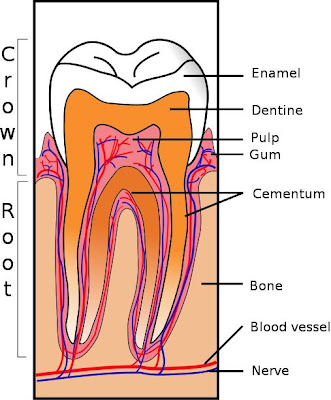
If you have not already done so, make sure you read Stephan's piece Reversing Tooth Decay. It is superb
Floating Bones

Floating Bones posted a really good comment on my post on Tensegrity.
Anatomytrains.com has a 20-page summary of the first edition
There are several very good papers on biotensegrity.com why the compression-based model is fundamentally inadequate to explain our musculoskeletal system. Levin has been studying this for his whole career as a MD.
Model-maker Tom Flemons has some great models on his site: tinyurl.com/toms-models .
I talk about floating compression models on my website floatingbones.com. Part of what I add to the structural conversation is the impact of our nervous system on our structure.
Sunday, April 5, 2009
New World Record Deadlift
1008.6lb or 457.5kg History as Nick says.
Andy Bolton's new world deadlift record of 457.5kg (which is 1008.6 lbs). 3rd lift at the South East Powerlifting Championships, promoted by the Gallery Gym, Windsor and held at the Thames Valley Athletics Club in Eton.
Discover Strength & functional training

.......one last one for tonight on High Intensity.
Here is an interesting looking gym - Discover Strength.
There is an interesting page on Strength Training for Distance Running:
Strength Training is a foundational component of a comprehensive distance running training program. The inclusion of a properly designed strength training program is important because the benefits of strength training are not achieved through running or cross-training alone.
The page includes a review of relevant research, including this on functional training:
Although the term "functional training" has become increasingly popular in the sport and fitness industry, the use of the term is somewhat deceiving. The intent of so called "functional training" is to perform movements that mimic movements performed during daily life. The thought is that these "functional" exercises carry over to our normal movements in daily living.So much for functional training.....this is what they do instead:
However, the scientific research in the area of motor learning and control definitively indicates that strength training movements that attempt to mimic everyday movements do NOT carry over to everyday movements. Stronger muscles make daily life easier, more efficient, etc. but the mimicking of these movements while training is not necessary.
Instead, exercisers should strengthen the muscles that are used to perform the specific movement in the most effective manner possible. Consider a running example: A functional training advocate would suggest that because running is an activity performed on one's feet, we should perform lunges (an exercise for the thighs and glutes) as they too are performed while standing. In truth, the runners goal should be to strengthen these muscles in the most effective means possible, which often involves sitting on a leg extension, leg curl or leg press machine. The movements are different from running (as the exerciser is clearly not on her feet) but the leg muscles are strengthened and this improved strength transfers to running - not the neuro-muscular pattern of the strength training exercise.
Unfortunately, functional training will continue to grow in popularity as many health club chains and fitness certification associations espouse the alleged benefits of this type of training.
(Other videos here)
I've always been a bit critical of things like the leg extension machine....couldn't see the point or the real life application.....but maybe?
High Intensity - Research from Wayne Westcott
Continuing the High Intensity theme, I have come across some other studies from Wayne Westcott. Westcott works for South Shore YMCA and is
Articles by Wayne Westcott
.....an internationally-renowned authority in the area of strength fitness. In addition to serving as our Fitness Research Director for the Quincy Branch Keeping Fit Programs, Dr. Wayne Westcott has authored more than 20 books and serves as a consultant for numerous national organizations such as the U.S. Military, the American Council on Exercise, the American Senior Fitness Association, and the National Youth Sports Safety Foundation. He is also editorial advisor for many well-known publications, including Prevention, Shape, and Club Industry magazines.There are a stack of good research articles on a wide range of things from training for Golf to the best repetition ranges.Dr. Westcott has been honored with numerous awards from prestigious fitness organizations across the nation. We are pleased to have him serving our South Shore YMCA members through his award-winning fitness programs.
Articles by Wayne Westcott
High Intensity - one set is enough
That interview with Doug McGuff got me thinking quite a bit about the whole High Intensity thing.
Here is a study which says that - for resistance training aimed at combating low back pain - there is no point in doing more than one set of an exercise. (Incidentally the same as was found in this review - The preponderance of resistance-training studies shows no difference in the gains in muscular strength, hypertrophy, power, or endurance as a result of performing a greater number of sets. )
Randomized trial comparing the effects of one set vs two sets of resistance exercises for outpatients with chronic low back pain and leg pain.
AIM: Progressive resistance exercises (PRE) are prescribed to reverse the deconditioning associated with chronic back pain. The spine rehabilitation program has utilized 2 sets of progressive resistance exercises during each session, with increased resistance between sets, and with successive sessions. Exercise literature has challenged the need for multiple sets of resistance exercises, with a single set producing similar functional benefits. The authors studied whether completing 1 versus 2 sets of resistance exercises would affect strength, pain and disability outcomes in subjects with chronic low back pain (CLBP).
METHODS: The study randomly assigned subjects with CLBP to perform either 1 set or 2 sets of progressive resistance exercises during otherwise identical spine rehabilitation programs. The patient sample included 100 subjects (36 male patients, 64 female patients, mean age 46 years) with chronic back pain referred to spine rehabilitation. Primary outcomes were back strength and progressive isoinertial lifting evaluation (PILE) at discharge. Secondary outcomes were Oswestry disability (0-100) and pain scores (0-10). Exercises consisted of Cybex back extension, rotary torso, pull downs, and multi-hip; lifting of crates from floor-to-waist (lumbar) and waist-to-shoulder (cervical) heights. The maximum levels of exercises were determined using a four repetition to maximum protocol, and the PILE.
RESULTS: At discharge, there was no significant difference in strength, disability or pain measures between subjects completing 1 versus 2 sets of resistance exercises.
CONCLUSION: These findings suggest that there were no added benefits for completing a second set of resistance exercises during therapy sessions for patients with CLBP.
Here is a study which says that - for resistance training aimed at combating low back pain - there is no point in doing more than one set of an exercise. (Incidentally the same as was found in this review - The preponderance of resistance-training studies shows no difference in the gains in muscular strength, hypertrophy, power, or endurance as a result of performing a greater number of sets. )
Randomized trial comparing the effects of one set vs two sets of resistance exercises for outpatients with chronic low back pain and leg pain.
AIM: Progressive resistance exercises (PRE) are prescribed to reverse the deconditioning associated with chronic back pain. The spine rehabilitation program has utilized 2 sets of progressive resistance exercises during each session, with increased resistance between sets, and with successive sessions. Exercise literature has challenged the need for multiple sets of resistance exercises, with a single set producing similar functional benefits. The authors studied whether completing 1 versus 2 sets of resistance exercises would affect strength, pain and disability outcomes in subjects with chronic low back pain (CLBP).
METHODS: The study randomly assigned subjects with CLBP to perform either 1 set or 2 sets of progressive resistance exercises during otherwise identical spine rehabilitation programs. The patient sample included 100 subjects (36 male patients, 64 female patients, mean age 46 years) with chronic back pain referred to spine rehabilitation. Primary outcomes were back strength and progressive isoinertial lifting evaluation (PILE) at discharge. Secondary outcomes were Oswestry disability (0-100) and pain scores (0-10). Exercises consisted of Cybex back extension, rotary torso, pull downs, and multi-hip; lifting of crates from floor-to-waist (lumbar) and waist-to-shoulder (cervical) heights. The maximum levels of exercises were determined using a four repetition to maximum protocol, and the PILE.
RESULTS: At discharge, there was no significant difference in strength, disability or pain measures between subjects completing 1 versus 2 sets of resistance exercises.
CONCLUSION: These findings suggest that there were no added benefits for completing a second set of resistance exercises during therapy sessions for patients with CLBP.
Thursday, April 2, 2009
COOLING INFLAMMATION
Asclepius sent me this link to look through and there is some fascinating stuff there.
COOLING INFLAMMATION
INFLAMMATION IS THE FOUNDATION FOR CANCER AND DEGENERATIVE/AUTOIMMUNE DISEASES. SMALL CHANGES IN DIET AND EXERCISE, E.G. OMEGA-3 OILS, LOW STARCH, PLANT ANTIOXIDANTS, AND MA INTAINING MUSCLE MASS, CAN DRAMATICALLY ALTER PREDISPOSITION TO DISEASE AND AGING, AND MINIMIZE THE NEGATIVE IMPACT OF GENETIC RISKS. BASED ON MY EXPERIENCE IN BIOLOGICAL RESEARCH, I AM TRYING TO EXPLAIN HOW THE ANTI-INFLAMMATORY DIET AND LIFESTYLE COMBAT DISEASE.
There are some really good posts on the blog and it will repay some study.
COOLING INFLAMMATION
INFLAMMATION IS THE FOUNDATION FOR CANCER AND DEGENERATIVE/AUTOIMMUNE DISEASES. SMALL CHANGES IN DIET AND EXERCISE, E.G. OMEGA-3 OILS, LOW STARCH, PLANT ANTIOXIDANTS, AND MA
INTAINING MUSCLE MASS, CAN DRAMATICALLY ALTER PREDISPOSITION TO DISEASE AND AGING, AND MINIMIZE THE NEGATIVE IMPACT OF GENETIC RISKS. BASED ON MY EXPERIENCE IN BIOLOGICAL RESEARCH, I AM TRYING TO EXPLAIN HOW THE ANTI-INFLAMMATORY DIET AND LIFESTYLE COMBAT DISEASE.There are some really good posts on the blog and it will repay some study.
Tom Kurz on functional training.
The great Tom Kurz (stretching fame) commented on the post Get Stronger then Apply it. It is worth reprinting:
"The idea is that skill training is really specific, so if you want to get better at a skill you have to practice that skill....exactly.”
Not very exactly.... A quote from Science of Sports Training:
Here is Tom at 50:
"The idea is that skill training is really specific, so if you want to get better at a skill you have to practice that skill....exactly.”
Not very exactly.... A quote from Science of Sports Training:
Right Resistance
The amount of resistance in sport-specific exercises has to ensure duplication of intermuscular and intramuscular coordination. If resistance is too great, the movement may resemble the external form of the technique, but it will require different coordination than the one that is best in the technique. For example, the intermuscular and intramuscular coordination in throwing a 1.5 kg (3.3 lb.) ball using the technique of a javelin throw without a prerun is the same as in throwing a 0.8 kg (1.75 lb.) javelin. In throwing a 4 kg (8.8 lb.) ball in the same fashion, the external form resembles the javelin throw, but the muscular coordination registered by an EMG (Electromyograph) is different. The throw with a 1.5 kg ball can be used as a sport-specific strength exercise, but the throw of a heavier ball—up to 4 kg depending on athletic level—may be used only as a directed strength exercise by javelin throwers below the stage of maximal realization of their potential (Wazny 1992b). In high jumping, vests with weights amounting to no more than 5% of the body weight are used in training forms of competitive exercises (Matveyev [Matveev] 1981). If the time, rhythm, or spatial form of a technique changes with a given amount of resistance, then the resistance is too great.
Here is Tom at 50:
Subscribe to:
Posts (Atom)