He now has a series of videos up which are worth watching. Here is the first, but the full set are here.

Wednesday, December 30, 2009
Monte on Video
I have previously interviewed Monte and put up a couple of other posts from him. (His site is here)
He now has a series of videos up which are worth watching. Here is the first, but the full set are here.
He now has a series of videos up which are worth watching. Here is the first, but the full set are here.


What is a scientific abstract?
I am bad for this - I skim abstracts and jump to conclusions.....
video from Brad of Eat Stop Eat (interviewed here by me if you are interested)
UPDATE - check out mc's comments on this
video from Brad of Eat Stop Eat (interviewed here by me if you are interested)
UPDATE - check out mc's comments on this
Tuesday, December 29, 2009
This is funny
This stuff is funny and so true if you read any of the body-building nutrition discussions. Credit Alan
How to shovel snow!

This video from Bill is appropriate to the UK at the moment. Here is a photo I took on a scary drive south last week. I wanted to get to my parents so that I could accompany them to a hospital appointment - more on that later maybe - but the state of the roads almost prevented that. After the first 30 odd miles things improved, but I almost turned back a couple of times.
Any way, here is the great Bill DeSimone on how to shovel snow properly!
Tuesday, December 22, 2009
Self Defence.....and political correctness
Some good thoughts from Mark Davies:
The law is an ass
The law is an ass
Politicians & the judicial system have got to get it into their heads that a victim DID NOT CHOOSE to be attacked or burgled. If a burglar gets killed in someones house it SHOULD be viewed as "tough luck Joe", as if the burglar HAD NOT chosen to break into the persons home they would not have placed themselves in the situation that got them killed. The person who gets set upon by a gang of chavs who want to kick him or her senseless for amusement, or who want to rob them SHOULD NOT have to worry about the ramifications of saving themselves from injury.
Sunday, December 20, 2009
The Eyes have it II
Following on from the piece I put up a couple of weeks ago after the seminar with mc, I found this article by Eric Cobb on Dragon Door.
Reflexive Lifting: How To Make Your Neural Reflexes Work With You And Not Against You!
The article is pretty interesting as Cobb applies this principle to lifts
Reflexive Lifting: How To Make Your Neural Reflexes Work With You And Not Against You!
In almost all sports, including lifting heavy weights, the eyes play a vital role. While a heavy deadlift doesn't require much in the way of great vision, it does require great eye position! Let me explain.
The muscles that surround the eyes, called the extraocular muscles, are all innervated by small nerve endings. These small nerve endings provide propioceptive (body awareness) input to various neuromotor sensors in the spinal cord and the brain. The primary reason for this is that the eyes and the inner ear work together to create balance and stability in virtually all of our movements.
How does this apply to your lifts? It's quite simple, really. The small nerve endings in the extraocular muscles actually create full body muscular responses to help guide movement. Practically speaking, what this means is that if your eyes are moved up, the small nerve endings in the extraocular muscles facilitate the extensor muscles of the body, creating a simultaneous inhibition of the flexor muscles. Conversely, the eyes down position will create flexor facilitation and extensor inhibition. Put simply, the eyes lead the body.
Make eye position your first priority. Understand that eyes up = extensor facilitation and that eyes down = flexor facilitation. Depending upon your personal challenges in your lifts, use the correct eye position to facilitate the movement you most need to make. It is important to play with these concepts in a variety of lifts to feel the effects.
The article is pretty interesting as Cobb applies this principle to lifts
Saturday, December 19, 2009
Edinburgh Evening News - Ketogenic Diet works!
 Positive Publicity for low carb diets! Whatever next?!
It was interesting to read this in tonight's local paper:
Consultant sheds 5 stone in 5 months ahead of Bupa race
FOR most people who struggle with their weight, losing a whopping five stone is likely to take years rather than months.
But Martin Kay, 38, who lives in Corstorphine, managed to shed more than that in as many months – thanks to a diet primarily used for children with epilepsy.
Now he plans to do the 5K Bupa Great Winter Run next month.
Mr Kay, who tipped the scales at 20st 4lbs in July, is now a more slender 15st 3lbs following the ketogenic diet over the last five months.
It is a high fat, low carbohydrate diet which mimics the body's response to starvation, and forces the body to burn fat round the clock by keeping calories low.
The diet was first developed for the treatment of seizures in children during the 1920s and 30s.
Mr Kay, who owns a recruitment consultancy business in Leith, said: "I was at a friend's wedding in Glasgow at the end of June and I looked at a photo of myself from the wedding, and stepped on the scales. I decided then that I had to do something about my weight.
"I had tried lots of things before to lose weight and nothing really worked for me. But the first week on this diet I lost ten-and-a-half pounds, which was a great incentive to keep going.
"It feels brilliant, it is just milestone after milestone now.
If I could get down to 14 stone by Easter, I would be delighted."
Mr Kay combined his strict diet, which involved eating ready-made meals from Leith-based Go Lower, with badminton and running.
He is now in training for the Great Winter Run on 9 January – on a route he has already completed as part of a Jogscotland event two years ago.
Mr Kay said: "I'm looking forward to it. The last time I did the route in 42 minutes, so this time I'm aiming to take a minimum of seven minutes off."
Mr Kay's previous attempt to do the 5K Bupa run was halted after he was involved in a motorbike accident in Edinburgh in April last year, which took him out of training for around four months.
"I went back to being big fat Martin," he said.
Mr Kay aims to be less than 15 stone by Christmas Eve, when he will go to the doctors for an official weigh-in.
Mr Kay said: "The week before I started the diet I went to Greggs and bought two pasties, two pies and two chocolate doughnuts for my lunch. It was mental!"
He added: "It's a wee bit like being a recovering alcoholic, you can stop but you have just got to make sure that you stay stopped!"
Friday, December 18, 2009
More Dairy = Less Inflammation?
Effects of dairy compared with soy on oxidative and inflammatory stress in overweight and obese subjects
Background: We recently showed that calcitriol increases oxidative and inflammatory stress; moreover, inhibition of calcitriol with high-calcium diets decreased both adipose tissue and systemic oxidative and inflammatory stress in obese mice, whereas dairy exerted a greater effect. However, these findings may be confounded by concomitant changes in adiposity.
Objective: The objective of this study was to evaluate the acute effects of a dairy-rich diet on oxidative and inflammatory stress in overweight and obese subjects in the absence of adiposity changes.
Design: Twenty subjects (10 obese, 10 overweight) participated in a blinded, randomized, crossover study of dairy- compared with soy-supplemented eucaloric diets. Two 28-d dietary periods were separated by a 28-d washout period. Inflammatory and oxidative stress biomarkers were measured on days 0, 7, and 28 of each dietary period.
Results: The dairy-supplemented diet resulted in significant suppression of oxidative stress (plasma malondialdehyde, 22%; 8-isoprostane-F2, 12%; P < 0.0005) and lower inflammatory markers (tumor necrosis factor-, 15%, P < 0.002; interleukin-6, 13%, P < 0.01; monocyte chemoattractant protein-1, 10%, P < 0.0006) and increased adiponectin (20%, P < 0.002), whereas the soy exerted no significant effect. These effects were evident by day 7 of treatment and increased in magnitude at the end of the 28-d treatment periods. There were no significant differences in response to treatment between overweight and obese subjects for any variable studied.
Conclusion: An increase in dairy food intake produces significant and substantial suppression of the oxidative and inflammatory stress associated with overweight and obesity. This trial was registered at clinicaltrials.gov as NCT00686426.
Background: We recently showed that calcitriol increases oxidative and inflammatory stress; moreover, inhibition of calcitriol with high-calcium diets decreased both adipose tissue and systemic oxidative and inflammatory stress in obese mice, whereas dairy exerted a greater effect. However, these findings may be confounded by concomitant changes in adiposity.
Objective: The objective of this study was to evaluate the acute effects of a dairy-rich diet on oxidative and inflammatory stress in overweight and obese subjects in the absence of adiposity changes.
Design: Twenty subjects (10 obese, 10 overweight) participated in a blinded, randomized, crossover study of dairy- compared with soy-supplemented eucaloric diets. Two 28-d dietary periods were separated by a 28-d washout period. Inflammatory and oxidative stress biomarkers were measured on days 0, 7, and 28 of each dietary period.
Results: The dairy-supplemented diet resulted in significant suppression of oxidative stress (plasma malondialdehyde, 22%; 8-isoprostane-F2, 12%; P < 0.0005) and lower inflammatory markers (tumor necrosis factor-, 15%, P < 0.002; interleukin-6, 13%, P < 0.01; monocyte chemoattractant protein-1, 10%, P < 0.0006) and increased adiponectin (20%, P < 0.002), whereas the soy exerted no significant effect. These effects were evident by day 7 of treatment and increased in magnitude at the end of the 28-d treatment periods. There were no significant differences in response to treatment between overweight and obese subjects for any variable studied.
Conclusion: An increase in dairy food intake produces significant and substantial suppression of the oxidative and inflammatory stress associated with overweight and obesity. This trial was registered at clinicaltrials.gov as NCT00686426.
Thursday, December 17, 2009
Straight leg deadlifts
From Sporto a natural bodybuilder:
The way I perform my straight leg deadlifts is like this. Yes, I am completely aware that my legs aren't locked entirely straight - that is on purpose. I have a slight bend in the knees similar to what a RDL is only I don't sit back as far and I don't stop just below the knees...I go straight down and all the way to the floor. That's why I label this as a hybrid. Either way, this completely fries my glutes and high hamstrings, so however it may look, it certainly works for me! I admit the quality is a little bad, but that's because it was taken with my phone at the time. Enjoy!
Another low carb study
Effects of a Low-intensity Intervention That Prescribed a Low-carbohydrate vs. a Low-fat Diet in Obese, Diabetic Participants
Low-carbohydrate diets have been associated with significant reductions in weight and HbA1c in obese, diabetic participants who received high-intensity lifestyle modification for 6 or 12 months. This investigation sought to determine whether comparable results to those of short-term, intensive interventions could be achieved over a 24-month study period using a low-intensity intervention that approximates what is feasible in outpatient practice. A total of 144 obese, diabetic participants were randomly assigned to a low-carbohydrate diet (<30 g/day) or to a low fat diet (≤30% of calories from fat with a deficit of 500 kcal/day). Participants were provided weekly group nutrition education sessions for the first month, and monthly sessions thereafter through the end of 24 months. Weight, HbA1c, glucose, and lipids were measured at baseline and 6, 12, and 24 months. Of the 144 enrolled participants, 68 returned for the month 24 assessment visit. Weights were retrieved from electronic medical records for an additional 57 participants (total, 125 participants) at month 24. All participants with a baseline measurement and at least one of the three other measurements were included in the mixed-model analyses (n = 138). The low-intensity intervention resulted in modest weight loss in both groups at month 24. At this time, participants in the low-carbohydrate group lost 1.5 kg, compared to 0.2 kg in the low-fat group (P = 0.147). Lipids, glycemic indexes, and dietary intake did not differ between groups at month 24 (or at months 6 or 12)
Low-carbohydrate diets have been associated with significant reductions in weight and HbA1c in obese, diabetic participants who received high-intensity lifestyle modification for 6 or 12 months. This investigation sought to determine whether comparable results to those of short-term, intensive interventions could be achieved over a 24-month study period using a low-intensity intervention that approximates what is feasible in outpatient practice. A total of 144 obese, diabetic participants were randomly assigned to a low-carbohydrate diet (<30 g/day) or to a low fat diet (≤30% of calories from fat with a deficit of 500 kcal/day). Participants were provided weekly group nutrition education sessions for the first month, and monthly sessions thereafter through the end of 24 months. Weight, HbA1c, glucose, and lipids were measured at baseline and 6, 12, and 24 months. Of the 144 enrolled participants, 68 returned for the month 24 assessment visit. Weights were retrieved from electronic medical records for an additional 57 participants (total, 125 participants) at month 24. All participants with a baseline measurement and at least one of the three other measurements were included in the mixed-model analyses (n = 138). The low-intensity intervention resulted in modest weight loss in both groups at month 24. At this time, participants in the low-carbohydrate group lost 1.5 kg, compared to 0.2 kg in the low-fat group (P = 0.147). Lipids, glycemic indexes, and dietary intake did not differ between groups at month 24 (or at months 6 or 12)
Wednesday, December 16, 2009
Fasting and mobility......something to do
This is a bit of a daft post....that probably just reveals my OCD side. I was thinking about both intermittent fasting and mobility work. I do practice intermittent fasting, often taking a 24 hour break from eating - as described in Brad Pilon's Eat Stop Eat. Other times I will simply miss breakfast. Kurt Harris describes the advantages of less frequent meals:
Incidentally that is pretty similar to Martin's Leangains approach - 16 hour fasting / 8 hour eating
Plus, if I am in a rush to get to work, I am sometimes just too busy in the morning.
Then there is mobility - Z Health, Intuflow or whatever. Since the seminar with mc I'm doing more and more mobility stuff each day.
Now the thing that I was thinking about was how both of these have something in common - they give me the sense that I am doing "something" even on days that I am not training.
I train Krav Maga one day a week and do a gym session another day - as prescribed by Doug McGuff basically - and walk alot. I don't train much....but fasting makes me feel like I have a task for that day or part of a day. Something to concentrate on. Similarly mobility work is a task, some easy work that loosens me up. Not training, not proper exercise, but at least I am doing something....
OCD as I said!
1) Enhanced metabolic training in the direction of fat metabolism
2) Lower insulin levels and fewer insulin related diseases (Metabolic syndrome, degenerative diseases, Alzheimer's, common cancers)
3) Greater tolerance for fasting makes it easier to tolerate not eating - this give you "metabolic headroom" -it makes you more functional and resilient - You are a Porsche with a 40 gallon gas tank instead of a truck running on lead acid batteries.
4) If you exercise while fasting, the lack of insulin in the fasting state improves the fat-mobilizing and insulin-sensitizing benefits of the exercise.
I eat around noon and again about 9 pm most days. So every 24 hours has a 15 hour fast and once in a while up to 18 hours.
Incidentally that is pretty similar to Martin's Leangains approach - 16 hour fasting / 8 hour eating
Plus, if I am in a rush to get to work, I am sometimes just too busy in the morning.
Then there is mobility - Z Health, Intuflow or whatever. Since the seminar with mc I'm doing more and more mobility stuff each day.
Now the thing that I was thinking about was how both of these have something in common - they give me the sense that I am doing "something" even on days that I am not training.
I train Krav Maga one day a week and do a gym session another day - as prescribed by Doug McGuff basically - and walk alot. I don't train much....but fasting makes me feel like I have a task for that day or part of a day. Something to concentrate on. Similarly mobility work is a task, some easy work that loosens me up. Not training, not proper exercise, but at least I am doing something....
OCD as I said!
Scotland - what a place
This is a bit off topic...this isn't me (it is Petesy) but I couldn't resist putting this video up. He is on the Grey Corries - just along from Ben Nevis - earlier this week....glorious
I was up there in the summer but it is great to see it in winter.
The account of his trip is here.
I was up there in the summer but it is great to see it in winter.
The account of his trip is here.
Tuesday, December 15, 2009
Learn a forward roll
He maybe milks this one a bit, but it is a decent enough tutorial
From Adam Steer (who did a guest post once on mobility)
UPDATE
I appreciate the first two comments below, from guys that really know what they are talking about. This probably is not the most practical way to roll and it is not how I have been taught. He breaks down this particular move well.....but there is a question as to whether this is actually a useful move.
From Adam Steer (who did a guest post once on mobility)
UPDATE
I appreciate the first two comments below, from guys that really know what they are talking about. This probably is not the most practical way to roll and it is not how I have been taught. He breaks down this particular move well.....but there is a question as to whether this is actually a useful move.
Hunter Gatherers

If you are interested in Primal / Paleo / Evolutionary Fitness you should read this article in the National Geographic on the Hadza
They grow no food, raise no livestock, and live without rules or calendars. They are living a hunter-gatherer existence that is little changed from 10,000 years ago. What do they know that we’ve forgotten?
The Hadza do not engage in warfare. They've never lived densely enough to be seriously threatened by an infectious outbreak. They have no known history of famine; rather, there is evidence of people from a farming group coming to live with them during a time of crop failure. The Hadza diet remains even today more stable and varied than that of most of the world's citizens. They enjoy an extraordinary amount of leisure time. Anthropologists have estimated that they "work"—actively pursue food—four to six hours a day. And over all these thousands of years, they've left hardly more than a footprint on the land.
I'd read the magazine at my girlfriend's parents' house on Sunday, but hat tip also to Open Water Chicago who has written about them before
The key takeaway here is to realize that, while your lifestyle may be drastically different from that of a hunter-gatherer, you are essentially the same human being. And when you deviate too extremely from the diet and activity patterns that have been ingrained into your genetics for over 50,000 years, you are likely to experience some “push back.” Unfortunately, this usually takes the form of such niceties as hypertension, impaired glucose tolerance, atherosclerosis, and type II diabetes.
Cholesterol and Alzheimer's
My Dad has started to get a wee bit confused and forgetful, so things like this are really interesting to me.
Tom Naughton pointed this out
The original article - The Clue to Why Low Fat Diet and Statins may Cause Alzheimer's - is definitely worth reading
Tom Naughton pointed this out
There is a clear reason why statins would promote Alzheimer’s. They cripple the liver’s ability to synthesize cholesterol, and as a consequence the level of LDL in the blood plummets. Cholesterol plays a crucial role in the brain, both in terms of enabling signal transport across the synapse and in terms of encouraging the growth of neurons through healthy development of the myelin sheath. Nonetheless, the statin industry proudly boasts that statins are effective at interfering with cholesterol production in the brain as well as in the liver.
Researchers are only recently discovering that both fat and cholesterol are severely deficient in the Alzheimer’s brain. It turns out that fat and cholesterol are both vital nutrients in the brain. The brain contains only 2% of the body’s mass, but 25% of the total cholesterol. Cholesterol is essential both in transmitting nerve signals and in fighting off infections.
High cholesterol is positively correlated with longevity in people over 85 years old, and has been shown to be associated with better memory function and reduced dementia. The converse is also true: a correlation between falling cholesterol levels and Alzheimer’s.
The original article - The Clue to Why Low Fat Diet and Statins may Cause Alzheimer's - is definitely worth reading
Be Realistic - links
I've been reading a few posts recently in different places that all build around the same theme - you need to be realistic about what your training can achieve in terms of muscle growth.
Biggest mistake we make with regards to building muscle is false expectations of what is actually possible - from Brad Pillon
Accepting your genetic limits - from Richard Winnett
There are genetic limits to how far you can get - from Doug McGuff
The Geeks shall inherit the earth - again from Doug
Biggest mistake we make with regards to building muscle is false expectations of what is actually possible - from Brad Pillon
Accepting your genetic limits - from Richard Winnett
I'm not writing this article so that all of us will become remarkably depressed about our genetic limitations to respond to exercise. I'm writing this article so that we all do some realistic assessments of our strengths and weaknesses and how we personally respond to exercise in order to fine-tune our exercise programs and create some reachable goals.
Indeed, if we acknowledge our genetic limitations and factor them into our training, they offer a clear ray of hope...Rather then following the 'conventional wisdom,' if we study alternatives and look for training methods that support how we -- with our known limitations -- can improve, we can uncover 'natural gifts' that might otherwise gone unnoticed.
There are genetic limits to how far you can get - from Doug McGuff
The Geeks shall inherit the earth - again from Doug
The bodybuilding/strength training field is the only field that judges the validity of an argument by the appearance of the person making the argument. This tendency is perpetuated by a field which has a vested interest in perpetuating the lie that “anyone can do it”. The people who possess the natural talent (consciously or not) perpetuate the myth that others can achieve massive muscles too (provided they keep up with the latest info in the muscle magazines and take the correct supplements), because if they did not perpetuate the myth then they would have to get a real job. This problem does not exist in sports that have spectator appeal because these athletes can make their money off this aspect of the sport. The less spectator appeal a sport has the more the “anyone can do it” myth is perpetuated by those that stand to make money in the field. Of all sports the strength and bodybuilding field has the least spectator appeal; after all, who wants to watch a bloated, bald, shaven gorilla prance around in it’s underwear?
Saturday, December 12, 2009
Follow up to Spark Post - Fit Teenage Boys Are Smarter But Muscle Strength Isn't the Secret, Study Shows

A couple of days ago I mentioned the book Spark that I had ordered, having read about it from Frank Forencich.
Bill De Simone commented on the post and summarised the argument:
the gist of his book is that running, swimming, etc. benefits creativity, concentration, mood, other brain aspects, more so than weight training and stretching, due to the increased blood flow to the brain. He doesn't devalue weight training/yoga/stretching, just draws a distinction between benefits. Increased heart rate alone, such as from blood pooling during weight training, isn't enough; there has to be the steady increased flow.
I just saw this study reported which seems to support that position:
In the first study to demonstrate a clear positive association between adolescent fitness and adult cognitive performance, Nancy Pedersen of the University of Southern California and colleagues in Sweden find that better cardiovascular health among teenage boys correlates to higher scores on a range of intelligence tests -- and more education and income later in life...
In every measure of cognitive functioning they analyzed -- from verbal ability to logical performance to geometric perception to mechanical skills -- average test scores increased according to aerobic fitness.
However, scores on intelligence tests did not increase along with muscle strength, the researchers found.
"Positive associations with intelligence scores were restricted to cardiovascular fitness, not muscular strength," Pedersen explained, "supporting the notion that aerobic exercise improved cognition through the circulatory system influencing brain plasticity."
UPDATE - Donny passed on the link to th full study
Interesting stuff indeed.
 On another, related, tack, I've not been doing much "cardio" (dodgy phrase) recently and felt it yesterday on a hill walk. A section that normally takes me 30 minutes took about 32.....Still the view was worth it!
If I am in the hills like this, I still need some training specific to this.
Wednesday, December 9, 2009
Spark.....
I saw this mentioned by Frank Forencich and it looks interesting, so I ordered the book (extract here).
The author's blog has some nice stuff.
In Spark, John J. Ratey, MD, takes the listener on a fascinating journey through the mind-body connection, presenting startling new research to prove that exercise is truly the best defense against everything from mood disorders to ADHD to addiction to menopause to Alzheimer's. He explains that the brain works just as muscles do-growing with use, withering with inactivity-and shows why getting your heart and lungs pumping can mean the difference between a calm, focused mind and a harried, inattentive self.Anyway it ties in with some of the ideas that I was thinking of after speaking to mc. It fits in with Kelly Lambert's ideas too.
Here is how Frank applies the ideas...it comes down to moving being healthy.
"SPARK" your brain with Exuberant Animal from Lauren Muney on Vimeo.
Tuesday, December 8, 2009
Too Clean
Matt and Seth have been posting interesting things recently on the so-called hygiene hypothesis
Here is another study
Think again about keeping little ones so squeaky clean
I had all this explained to me recently by an immunologist and it is more complicated than it sounds in terms of balancing immune responses....but the overall picture is that we were not designed to live in such sterile conditions. I've heard of a doctor who is quite happy when his toddler licks the conveyor belt at the supermarket checkout.
Here is another study
Think again about keeping little ones so squeaky clean
"Contrary to assumptions related to earlier studies, our research suggests that ultra-clean, ultra-hygienic environments early in life may contribute to higher levels of inflammation as an adult, which in turn increases risks for a wide range of diseases," said Thomas McDade, lead author of the study, associate professor of anthropology in Northwestern's Weinberg College of Arts and Sciences and a faculty fellow at the Institute for Policy Research.
Relatively speaking, humans only recently have lived in such hyper-hygienic environments, he stressed.
I had all this explained to me recently by an immunologist and it is more complicated than it sounds in terms of balancing immune responses....but the overall picture is that we were not designed to live in such sterile conditions. I've heard of a doctor who is quite happy when his toddler licks the conveyor belt at the supermarket checkout.
Back Pain...TMS or Z...or both?
I've posted some stuff in the past about back pain, particularly looking at TMS - the pain being real but a physical manifestation of something going on psychologically. Your mind creating real pain in your body to distract you from subconscious worries and anger and other emotions. Your mind is giving you real physical pain to distract you from what is really stressing you....
My interviews with Monte and Adam explain this all in more detail.
Then I was at that workshop with mc last week and she was talking about how the body reacts unconsciously to threat....health is about threat modulation....Emotions effecting, causing something physical.....now something physical can affect emotions.....
Things connect...that there are emotional factors at play, even at an unconscious level.
In my interview with Frank Forencich he alluded to something similar:
mc has discussed back pain more in a new post:
Thoughts on Low Back Pain
My interviews with Monte and Adam explain this all in more detail.
Then I was at that workshop with mc last week and she was talking about how the body reacts unconsciously to threat....health is about threat modulation....Emotions effecting, causing something physical.....now something physical can affect emotions.....
Things connect...that there are emotional factors at play, even at an unconscious level.
In my interview with Frank Forencich he alluded to something similar:
Depression is epidemic. The World Health Organization forecasts that, by 2020, “depression will be second only to heart disease in terms of disability or disease burden.”
To me, this is even more shocking than our epidemics of heart disease, obesity and diabetes. This is a disease state that’s psychospiritual as well as physical. There are many explanations, but I like the work of Kelly Lambert. She’s a neuroscientist who’s traced reward centers in the brain. She’s discovered a strong association between areas that coordinate movement and those that deliver a sense of satisfaction. I call this “the ancestral reward system.”

mc has discussed back pain more in a new post:
Thoughts on Low Back Pain
The big take away seems to be that especially chronic low back pain is frequently not about the joints - pain is way more interesting and intriguing it seems than that, but it does make sense that the low back is where so much chronic pain gets filtered.
Recovery methods
you read a lot about how to speed recovery - stretching, contract baths.....
According to this study neither works any better than doing nothing.
Effect of Postexercise Recovery Procedures Following Strenuous Stair-climb Running.
According to this study neither works any better than doing nothing.
Effect of Postexercise Recovery Procedures Following Strenuous Stair-climb Running.
This study compared the effects of hot/cold water immersion, static stretching, and no recovery (control) interventions on leg strength, rowing performance, and indicators of muscle soreness/damage in the 72 hours following strenuous stair-climb running. Club (n = 14) and elite (Sports Institute) (n = 6) rowers performed the training run on three separate occasions. After each run, participants completed a randomly assigned 15-minute recovery treatment, either hot/cold, static stretching, or control, which were repeated at 24 and 48 hours postrun. No significant strength or performance differences existed between the three recovery treatments for either group. Muscle soreness for both groups remained significantly elevated (p < 0.05) above baseline at 72 hours postrun. At 48-hours postrun serum creatine kinase levels had returned to baseline and at 72 hours postrun were below baseline in both groups. In conclusion, neither hot/cold nor static stretching accelerated recovery at 72 hours beyond that achieved by the control condition.
Sunday, December 6, 2009
Muscular Strength and body fat
Interesting study:
Muscular Strength Is Inversely Related to Prevalence and Incidence of Obesity in Adult Men
Muscular Strength Is Inversely Related to Prevalence and Incidence of Obesity in Adult Men
The purpose of the study was to determine the relation between quintiles of muscular strength after adjustment for age and body weight, and excessive body fat (EBF) and excessive abdominal fat (EAF) when controlling for cardiorespiratory fitness (CRF) and other potential confounders. A two-phased cross-sectional and longitudinal study was conducted assessing the prevalence and incidence of EBF and EAF across quintiles of muscular strength. The sample included 3,258 men (mean age = 42.2 +/- 8.9; weight (kg) = 81.2 +/- 11.0; BMI = 25.3 +/- 2.9; %fat = 19.4 +/- 5.8; waist girth (cm) = 91.2 +/- 9.0) who completed at least two clinical examinations as part of the Aerobics Center Longitudinal Study (ACLS). Muscular strength was assessed with tests of upper and lower body muscular strength using rack-mounted weights with participants placed into strength quintiles. CRF was measured by a modified Balke treadmill test, %fat via underwater weighing or seven-site skinfold measurements, and waist girth measured at the level of the umbilicus. EBF was defined as >/=25% and EAF was defined as >102 cm. There was a strong inverse gradient across quintiles of muscular strength for prevalence and incidence of EBF and EAF (P trend <0.01, each). With the lowest quintile serving as the referent, reductions in risk of EBF and EAF exceeded 70% for the highest strength quintile. Evidence suggests muscular strength may provide protection from EBF and EAF and their related comorbidities.
Thursday, December 3, 2009
you don't have to move fast to develop enhanced explosive capability
Just to add to the controversy
Effects of strength training with eccentric overload on muscle adaptation in male athletes
Effects of strength training with eccentric overload on muscle adaptation in male athletes
The enhanced eccentric load apparently led to a subtly faster gene expression pattern and induced a shift towards a faster muscle phenotype plus associated adaptations that make a muscle better suited for fast, explosive movements.So the negatives - not "fast" moves - worked towards making the athletes faster....
Wednesday, December 2, 2009
Barefooting
I've posted a few things before (e.g. here) about the benefits of being barefoot. (Something mc has written about too)
Here is an interesting video of a guy running barefoot. It is informative to watch his gait - how he lands on the forefoot. Natural.
Here is an interesting video of a guy running barefoot. It is informative to watch his gait - how he lands on the forefoot. Natural.
Fasting and muscle.....

Way back I pointed out something about fasting - that fasting "turns on" autophagy.
Autophagy is described by this article:
Autophagy is a cellular process that occurs during states of low energy such as that seen with fasting. Autophagy literally means self consumption. During low energy states the cell actually eats itself and the internal material is recycled and used to fuel other cellular processes. It’s basically cellular energy management. So during states of fasting, autophagy takes place to reduce the number of cells, reuse and recycle the materials from the cell for fuel. The neat thing is that newer younger cells are much more adept to this process compared to older cells, which is why older cells end up accumulating, and contributing to aging. This means that regular states of fasting would keep your cells younger and more efficient.
I also pointed to research that weight training promoted autophagy.
Anyway, I saw this today that says that autophagy is essential to maintaining muscle strength:
To Keep Muscles Strong, the 'Garbage' Has to Go
In order to maintain muscle strength with age, cells must rid themselves of the garbage that accumulates in them over time, just as it does in any household, according to a new study in the December issue of Cell Metabolism. In the case of cells, that waste material includes spent organelles, toxic clumps of proteins, and pathogens.
The researchers made their discovery by studying mice that were deficient for a gene required for the tightly controlled process of degradation and recycling within cells known as autophagy. Those animals showed profound muscle atrophy and muscle weakening that worsened with age.
Researchers knew before that excessive autophagy could also lead to muscle loss and disease. The new findings highlight the importance of maintaining a normal level of autophagy to clear away the debris and keep muscles working properly.
Tuesday, December 1, 2009
Bone Rhythm
Another thing from the weekend is the idea of bone rhythm.
This is explained a bit in this video
The idea as I understand it relates to thinking about the femur as a lever. There is a hinge at the knee and hip. To move efficiently you want both ends of the lever to be moving as the same speed. For example in a squat your knee and hip should start moving and finish moving at the same time. That makes the lever more efficient? If the knee locks but the hip keeps going for example or vice versa then the lever is not operating as efficiently as it could do with matched speeds.
mc explains it thus:
I wonder.
I am pondering how /if this fits with Bill DeSimone's approach in Moment Arm Exercise. Bill uses some limited ranges of motion to address the levers, focussing on matching maximum moment arm with the position of the muscles maximum strength. I wonder if you could see the limited range of motion as facilitating better bone rhythm?
Levers.....moment arms
This is explained a bit in this video
The idea as I understand it relates to thinking about the femur as a lever. There is a hinge at the knee and hip. To move efficiently you want both ends of the lever to be moving as the same speed. For example in a squat your knee and hip should start moving and finish moving at the same time. That makes the lever more efficient? If the knee locks but the hip keeps going for example or vice versa then the lever is not operating as efficiently as it could do with matched speeds.
mc explains it thus:
Bone rhythm effectively means that one gets the top and bottom of a prime mover bone move at the same speed in an action. In a push up, we see this when the shoulder and the elbow finish the move together - both in the press up and in the descent. This move tune alone is worth the price of admission. In the DVD both upper and lower body drills are taught, as well as how to cue another person to get the ryhthm.
I wonder.
I am pondering how /if this fits with Bill DeSimone's approach in Moment Arm Exercise. Bill uses some limited ranges of motion to address the levers, focussing on matching maximum moment arm with the position of the muscles maximum strength. I wonder if you could see the limited range of motion as facilitating better bone rhythm?
Levers.....moment arms
The eyes have it.....
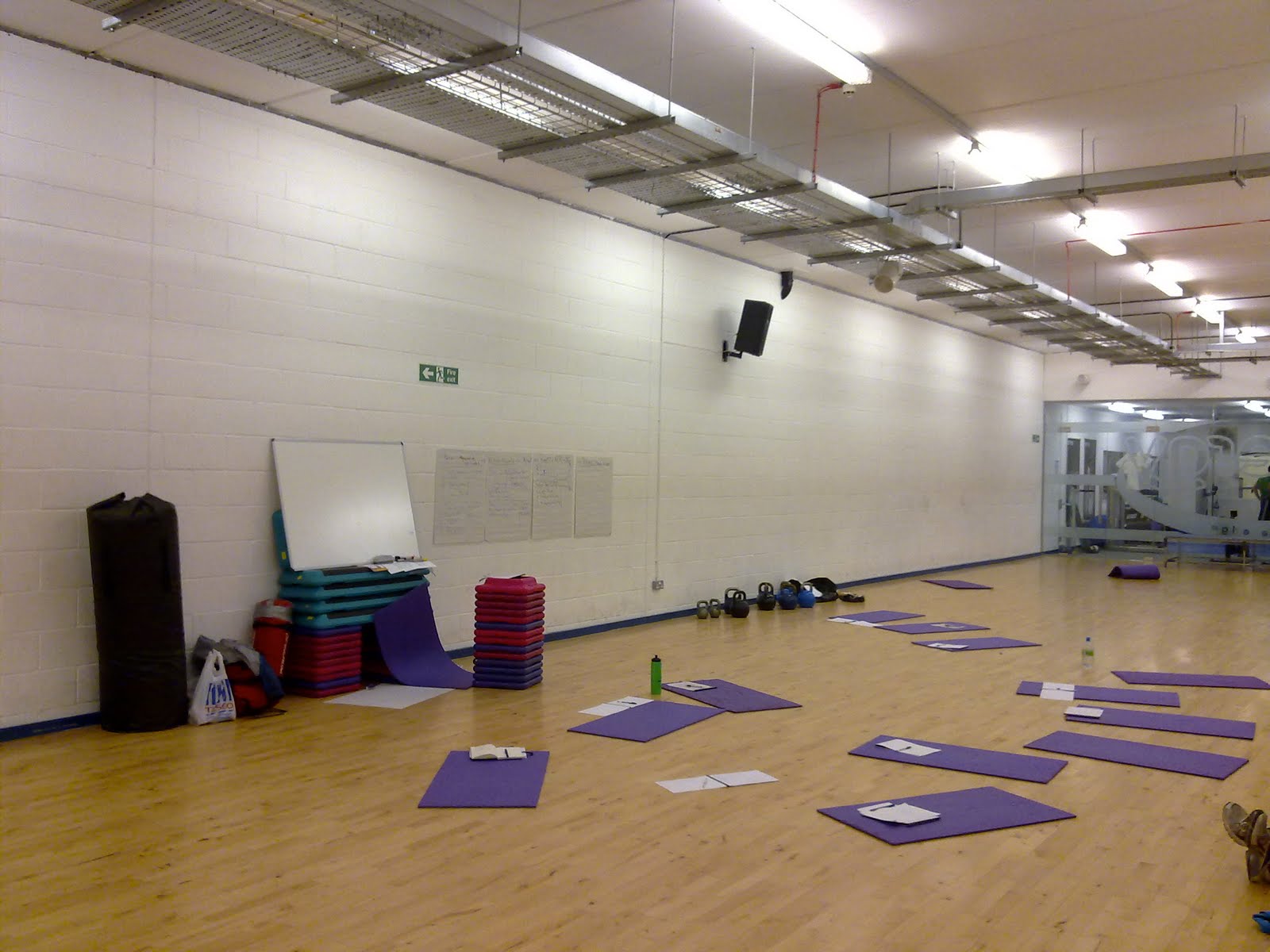
This also follows on from Sunday's seminar.
One of the things I had read about concerning zhealth was that it makes a big thing of eye movements, the visual system.
We spoke about the nervous system acting in terms of THREAT or NO THREAT. One of the ideas of the threat state was that the body will seek to fold in on itself - to go into a foetal position to some degree. As Rannoch said on sunday - you try to protect the soft sensitive parts with the hard bony bits. You curl up and bring your arms in front of you as you flinch, protecting your face, gut and genitals with your shoulders and arms.
In that post on Sunday I also talked about Rif / Chek's take on this:
- going foetal is basically about flexion - everything flexes: biceps, abs, hamstings, pecs.
- The opposite is going erect - the extensors work - the quads, the lats, the triceps, the lower back, the glutes. It is about extension.
Now another thing that mc mentioned on Sunday was about the impact of your eye direction, where you are looking. She goes into this more in a post today
eye movements connect with actions: up for extension; down for flexion.
If you are performing an extension - a push, a press for example - you will be stronger if your eyes - not your head - look up. If you are flexing - a pull, curl, row etc - you will be stronger if your eyes look down.
Try it for yourself, experiment. Strangely it works
Think about it in terms of posture. When people are threatened and they start to curl up - where do their eyes go? They look down, they look submissive, it accompanies flexion..... Confident, fully extended people are look up. The actions naturally go together. When you go with what is natural, you are reinforcing things perhaps?
Just some rambling but it all seems consistent.
'you are what you do' and 'practice makes perfect'

This follows on from the post I had up on motor learning a couple of days ago.
ASCLEPIUS has just posted this today which is really worth reading
I have just finished reading Daniel Coyle's 'The Talent Code'. It adds some biology to the idea that 'you are what you do' and 'practice makes perfect'. It is no revelation that our brains are plastic and can adapt throughout life - but Coyle digs a little deeper.
I encourage you to read more
Subscribe to:
Posts (Atom)