Hat tip to Recover your stride

Thursday, July 30, 2009
Born to Run
I've mentioned this book before. Highly recommended. Here is the author explaining more.
Hat tip to Recover your stride
Hat tip to Recover your stride


Wednesday, July 29, 2009
Pool Jump
I like vertical jumps
this is an interesting variation. Jumping out of a pool......
update
someone just pointed me to this one!
this is an interesting variation. Jumping out of a pool......
update
someone just pointed me to this one!
Consistent Winning - nature's numbers.....
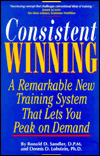
A few days ago on a blog I saw an old book mentioned that looked interesting. As I tend to do, I had a look on Amazon and ordered it and it has been a fascinating read that I am mulling over to see how I can test out or apply some of its ideas.
The focus of the book is about planning your training and rest so that you don't end up burnt out, ill or injured. Rather your training builds you up not tears you down. You need to rest and recover.
So far so good, but the template that the book develops are pretty interesting, particularly if you think about some of the premises of DeVany's Evolutionary Fitness.
DeVany in his essay talks about Power Laws as the pattern of human movement:
9. An evolutionary activity pattern is mixed and varied. It contains brief, in-
termittent episodes of highly intense physical action mixed with languid pe-
riods and play. Healthy activities mimic the patterns of wild animals and
contain elements of chaos and order. Power laws that are typical of self-
organized, far-from-equilibrium, dynamic systems, describe such patterns.
10. Power law training, which is developed in the book, mimics the ancestral
activity pattern and promotes hormone drives that counter hyperinsulemia
and build lean body mass.
So power laws describe the "natural" way we move - "brief, intermittent episodes of highly intense physical action mixed with languid periods and play". I mentioned this recently.
Anyway, the picture that seems to come across is to keep things random. But what does that mean?
OK - keep that idea for a minute.
Fibonacci Numbers
Consistent Winning builds its argument, its pattern for training and rest on the basis of what is called the Fibonacci sequence of numbers.
This is a sequence that apparently occurs a lot in nature. You can build the sequence as follows:
start with 0
then 1
now the next number in the sequence is the sum of the previous 2, so the third number is 1 (0+1)
then next will be 2 (1+1)
the next will be 3 (2+1)
then 5
then 8
then 13 etc
0,1,1,2,3,5,8,13,21,34,55 etc
There is a lot about this here.
The fascinating thing is that these numbers crop up again and again in nature. This video explains it
or here
So this pattern is everwhere. It is also a power law....
Now the authors of Consistent Winning apply this pattern to training and rest days. The authors noticed that athletes tended to get injured and to peak after certain consistent periods of training:
After three weeks of training, he hit a peak then caught a cold. After another five weeks of training he peaked and then was injured. Exactly 3 more weeks of training ended with a peak performance. Athletic performance evidently did conform to a mathematical structure and was predictable."(notice that 3 and 5 are fibonacci numbers).
Elliott Waves
It is not just the fibonacci sequence that is of interest to this book though....they are use the related idea of the Elliott Wave.
The Elliott wave principle is a form of technical analysis that attempts to forecast trends in the financial markets and other collective activities. It is named after Ralph Nelson Elliott (1871–1948), an accountant who developed the concept in the 1930s: he proposed that market prices unfold in specific patterns, which practitioners todaycall Elliott waves. Elliott published his views of market behavior in the book The Wave Principle (1938), in a series of articles in Financial World magazine in 1939, and most fully in his final major work, Nature’s Laws – The Secret of the Universe (1946).[1] Elliott argued that because humans are themselves rhythmical, their activities and decisions could be predicted in rhythms, too.
You can read more on the idea on wikipedia but you get the idea - there are waves in terms of performance. Things improve, fall back a bit, then improve even further. Notice that the peaks of the waves are fibonacci numbers! There are 1, 3, 5,13, 21 etc.
Anyway, the Elliott Wave translates the fibonacci sequence into a graph:
We can correlate the advancements or upward movements to trainin peridos and the corrections or downward movements to rest periods....or if rest is not taken, to periods when you will be prone to illness or injury.
So, your performance will tend ot go up and down to a predictable pattern. When it goes down....take a rest period.
The book goes into some complex training sequences with periods of rest followed by traiing periods all built around these waves. For example if you want to peak next week he recommends a 3 day cycle:
- active rest - e.g. very easy jog
- rest - 30 min easy walk maximum - preferably total rest
- rest - 30 min easy walk maximum - preferably total rest
- train easy
- train easy/moderate
- Peak
Conclusion
It is a very interesting read.
I suppose what I find intriguing is how this apparently natural pattern can be built into our activities to promote rest and better, healthier performance.
Lots of questions!
- How does this relate to the "random" activity pattern described by DeVany?
- If this sequence is so universal, how can we use it more in training?
Low carb and healthy blood vessels
So it seems that a low carb diet beats a low fat diet when it comes to healthy blood vessels.....
Effects of dietary carbohydrate restriction vs low-fat diet on flow-mediated dilation.
We previously reported that a carbohydrate-restricted diet (CRD) ameliorated many of the traditional markers associated with metabolic syndrome and cardiovascular risk compared with a low-fat diet (LFD). There remains concern how CRD affects vascular function because acute meals high in fat have been shown to impair endothelial function. Here, we extend our work and address these concerns by measuring fasting and postprandial vascular function in 40 overweight men and women with moderate hypertriacylglycerolemia who were randomly assigned to consume hypocaloric diets ( approximately 1500 kcal) restricted in carbohydrate (percentage of carbohydrate-fat-protein = 12:59:28) or LFD (56:24:20). Flow-mediated dilation of the brachial artery was assessed before and after ingestion of a high-fat meal (908 kcal, 84% fat) at baseline and after 12 weeks. Compared with the LFD, the CRD resulted in a greater decrease in postprandial triacylglycerol (-47% vs -15%, P = .007), insulin (-51% vs -6%, P = .009), and lymphocyte (-12% vs -1%, P = .050) responses. Postprandial fatty acids were significantly increased by the CRD compared with the LFD (P = .033). Serum interleukin-6 increased significantly over the postprandial period; and the response was augmented in the CRD (46%) compared with the LFD (-13%) group (P = .038). After 12 weeks, peak flow-mediated dilation at 3 hours increased from 5.1% to 6.5% in the CRD group and decreased from 7.9% to 5.2% in the LFD group (P = .004). These findings show that a 12-week low-carbohydrate diet improves postprandial vascular function more than a LFD in individuals with atherogenic dyslipidemia.
On similar subject, check out Stephan's post
Effects of dietary carbohydrate restriction vs low-fat diet on flow-mediated dilation.
We previously reported that a carbohydrate-restricted diet (CRD) ameliorated many of the traditional markers associated with metabolic syndrome and cardiovascular risk compared with a low-fat diet (LFD). There remains concern how CRD affects vascular function because acute meals high in fat have been shown to impair endothelial function. Here, we extend our work and address these concerns by measuring fasting and postprandial vascular function in 40 overweight men and women with moderate hypertriacylglycerolemia who were randomly assigned to consume hypocaloric diets ( approximately 1500 kcal) restricted in carbohydrate (percentage of carbohydrate-fat-protein = 12:59:28) or LFD (56:24:20). Flow-mediated dilation of the brachial artery was assessed before and after ingestion of a high-fat meal (908 kcal, 84% fat) at baseline and after 12 weeks. Compared with the LFD, the CRD resulted in a greater decrease in postprandial triacylglycerol (-47% vs -15%, P = .007), insulin (-51% vs -6%, P = .009), and lymphocyte (-12% vs -1%, P = .050) responses. Postprandial fatty acids were significantly increased by the CRD compared with the LFD (P = .033). Serum interleukin-6 increased significantly over the postprandial period; and the response was augmented in the CRD (46%) compared with the LFD (-13%) group (P = .038). After 12 weeks, peak flow-mediated dilation at 3 hours increased from 5.1% to 6.5% in the CRD group and decreased from 7.9% to 5.2% in the LFD group (P = .004). These findings show that a 12-week low-carbohydrate diet improves postprandial vascular function more than a LFD in individuals with atherogenic dyslipidemia.
On similar subject, check out Stephan's post
Interesting thoughts on food....
I saw this study today which - if I am reading it right - seems to indicate that - if you want to avoid a fat belly - you should eat:
and avoid
BACKGROUND: Previous studies on the association between macronutrient intake and the development of abdominal obesity, which carries an increased health risk, have not shown a consistent pattern, possibly due to mixed effects of other aspects of the food intake.
OBJECTIVE: This study investigated the association between intake from 21 food and beverage groups and the subsequent 5-year difference in waist circumference.
METHODS: The study population consisted of 22,570 women and 20,126 men, aged 50 to 64 years at baseline, with complete data on baseline and follow-up waist circumference, baseline diet (192 items food frequency questionnaire), body mass index, and selected potential confounders (eg, smoking status, sport activities, and intake of alcoholic beverages). Multiple linear regression analyses were performed.
RESULTS: For women, 5-year difference in waist circumference was inversely related to intake from red meat, vegetables, fruit, butter, and high-fat dairy products, whereas intake from potatoes, processed meat, poultry, and snack foods was positively associated. For men, red meat and fruit intakes were inversely associated with 5-year difference in waist circumference, whereas snack foods intake was positively associated. Sex differences occurred for vegetables, high-fat dairy products, and processed meat.
CONCLUSIONS: The results suggest that a diet low in fruits and red meat and high in snack foods was associated with larger waist circumference gains in both sexes. Furthermore, in women a diet low in vegetables, butter, and high-fat dairy products, and high in poultry, potatoes, and processed meat were likely determinants of subsequent gain at the waist.
- red meat ;
- vegetables;
- fruit;
- butter; and
- high-fat dairy products
and avoid
- snack foods;
- poultry;
- potatoes; and
- processed meat
BACKGROUND: Previous studies on the association between macronutrient intake and the development of abdominal obesity, which carries an increased health risk, have not shown a consistent pattern, possibly due to mixed effects of other aspects of the food intake.
OBJECTIVE: This study investigated the association between intake from 21 food and beverage groups and the subsequent 5-year difference in waist circumference.
METHODS: The study population consisted of 22,570 women and 20,126 men, aged 50 to 64 years at baseline, with complete data on baseline and follow-up waist circumference, baseline diet (192 items food frequency questionnaire), body mass index, and selected potential confounders (eg, smoking status, sport activities, and intake of alcoholic beverages). Multiple linear regression analyses were performed.
RESULTS: For women, 5-year difference in waist circumference was inversely related to intake from red meat, vegetables, fruit, butter, and high-fat dairy products, whereas intake from potatoes, processed meat, poultry, and snack foods was positively associated. For men, red meat and fruit intakes were inversely associated with 5-year difference in waist circumference, whereas snack foods intake was positively associated. Sex differences occurred for vegetables, high-fat dairy products, and processed meat.
CONCLUSIONS: The results suggest that a diet low in fruits and red meat and high in snack foods was associated with larger waist circumference gains in both sexes. Furthermore, in women a diet low in vegetables, butter, and high-fat dairy products, and high in poultry, potatoes, and processed meat were likely determinants of subsequent gain at the waist.
Tuesday, July 28, 2009
Sunday, July 26, 2009
Lyle on Tabata
I noticed recently that "Tabata has gone mainstream".
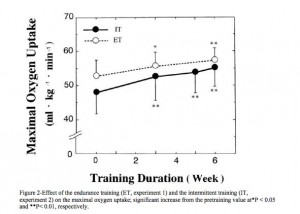
Lyle MacDonald has an excellent piece de-constructing the (in)famous study behind the protocol.

Worth the read for sure.
High-intensity interval training and the Tabata protocol specifically are one tool in the toolbox but anybody proclaiming that intervals can do everything that anyone ever needs to do is cracked. That’s on top of the fact that 99% of people who claim to be doing ‘Tabatas’ aren’t doing anything of the sort.
Because 8 sets of 20″ hard/10″ easy is NOT the Tabata protocol and body-weight stuff or the other stuff that is often suggested simply cannot achieve the workload of 170% VO2 max that this study used. It may be challenging and such but the Tabata protocol it ain’t.
Thursday, July 23, 2009
Healthy Fat?
Just to point this out if you miss it:
Healthy fat link to bowel disease
People have a phobia about perfectly healthy natural saturated fat - read Mark or Stephan for the truth - yet they stuff themselves with unnatural manufactured products - margarine! - which are novel to the human diet and have all sorts of unpleasant effects.
Pass me the butter! (and the fish oil)
Healthy fat link to bowel disease
A high intake of polyunsaturated fat in the diet, while good for the heart (er maybe, maybe not), may lead to inflammatory bowel disease, say researchers.
People have a phobia about perfectly healthy natural saturated fat - read Mark or Stephan for the truth - yet they stuff themselves with unnatural manufactured products - margarine! - which are novel to the human diet and have all sorts of unpleasant effects.
Pass me the butter! (and the fish oil)
Wednesday, July 22, 2009
Impossible is nothing
Coach Sommer pointed this one out. In terms of pure strength few can compete with gymnasts.
French Olympian Danny Rodrigues, the first athlete in history to compete what many considered an impossible strength element on the still rings; the Victorian. In fact he is so incredibly strong, that he has two variations of the Victorian in his routine. Be prepared for a little drama in the middle of the clip.
the carbohydrate-reduced diet - more beneficial with respect to cardiovascular risk factors
Here is another study on a low carbohydrate diet and its impact on weight loss and alleged cardiovascular risk factors. The full text is available too.
A randomized controlled trial on the efficacy of carbohydrate-reduced or fat-reduced diets in patients attending a telemedically guided weight loss program
Background
We investigated whether macronutrient composition of energy-restricted diets influences the efficacy of a telemedically guided weight loss program.
Methods
Two hundred overweight subjects were randomly assigned to a conventional low-fat diet and a low-carbohydrate diet group (target carbohydrate content: >55% energy and <40%>
Results
In both groups, energy intake decreased by 400 kcal/d compared to baseline values within the first 6 months and slightly increased again within the second 6 months. Macronutrient composition differed significantly between the groups from the beginning to month 12. At study termination, weight loss was 5.8 kg (SD: 6.1 kg) in the low-carbohydrate group and 4.3 kg (SD: 5.1 kg) in the low-fat group (p=0.065). In the low-carbohydrate group, triglyceride and HDL-cholesterol levels were lower at month 6 and waist circumference and systolic blood pressure were lower at month 12 compared with the low-fat group (P=0.005-0.037). Other risk markers improved to a similar extent in both groups.
Conclusion
Despite favourable effects of both diets on weight loss, the carbohydrate-reduced diet was more beneficial with respect to cardiovascular risk factors compared to the fat-reduced diet. Nevertheless, compliance with a weight loss program appears to be even a more important factor for success in prevention and treatment of obesity than the composition of the diet.
Drink your milk - updated

Dairy is one of those things that is somewhat controversial on a paleo diet, but most low carb people are quite happy with it - Barry Groves for example thinks minimally processed milk is great
I just spotted this new research
Research undertaken by the Universities of Reading, Cardiff and Bristol has found that drinking milk can lessen the chances of dying from illnesses such as coronary heart disease (CHD) and stroke by up to 15-20 %.
UPDATE here is the abstract:
REVIEW
The Survival Advantage of Milk and Dairy Consumption: an Overview of Evidence from Cohort Studies of Vascular Diseases, Diabetes and Cancer
Objectives: To conduct a detailed evaluation, with meta-analyses, of the published evidence on milk and dairy consumption and the incidence of vascular diseases and diabetes. Also to summarise the evidence on milk and dairy consumption and cancer reported by the World Cancer Research Fund and then to consider the relevance of milk and dairy consumption to survival in the UK, a typical Western community. Finally, published evidence on relationships with whole milk and fat-reduced milks was examined.
Methods: Prospective cohort studies of vascular disease and diabetes with baseline data on milk or dairy consumption and a relevant disease outcome were identified by searching MEDLINE, and reference lists in the relevant published reports. Meta-analyses of relationships in these reports were conducted. The likely effect of milk and dairy consumption on survival was then considered, taking into account the results of published overviews of relationships of these foods with cancer.
Results: From meta-analysis of 15 studies the relative risk of stroke and/or heart disease in subjects with high milk or dairy consumption was 0.84 (95% CI 0.76, 0.93) and 0.79 (0.75, 0.82) respectively, relative to the risk in those with low consumption. Four studies reported incident diabetes as an outcome, and the relative risk in the subjects with the highest intake of milk or diary foods was 0.92 (0.86, 0.97).
Conclusions: Set against the proportion of total deaths attributable to the life-threatening diseases in the UK, vascular disease, diabetes and cancer, the results of meta-analyses provide evidence of an overall survival advantage from the consumption of milk and dairy foods.
Key words: milk, dairy, heart disease, stroke, diabetes, cancer, survival
Tuesday, July 21, 2009
More on stress and well being.
I've put up things previously about the impact that emotional factors can have on health, particularly the idea that much back pain is actually driven by psychological factors.
My interview with Monte discussed this and Adam also did a guest post.
Here is a new study which looks at how stress can make us sick.
My interview with Monte discussed this and Adam also did a guest post.
Here is a new study which looks at how stress can make us sick.
ABSTRACT—How do stressful events and negative emotions influence the immune system, and how big are the effects? This broad question has been intensely interesting to psychoneuroimmunology researchers over the last 3 decades. Many promising lines of work underscore the reasons why this question is still so important and pivotal to understanding and other advances. New multidisciplinary permutations provide fresh vistas and emphasize the importance of training psychologists more broadly so that they will be central and essential players in the advancement of biomedical science.I've got hold of the full article and it is interesting stuff. Eureka makes some comments:
The field of psychoneuroimmunology (PNI) investigates how stress and negative emotions (such as depression and anxiety) affect our health. Over the past 30 years, researchers in this field have uncovered a number of ways that stress adversely affects our health, and specifically, how stress can damage our immune system. Numerous studies have shown that stressed individuals show weaker immune responses to vaccines, and as Kiecolt-Glaser observes, "The evidence that stress and distress impair vaccine responses has obvious public health relevance because infectious diseases can be so deadly." Stress and depression have been shown to increase the risk of getting infections and also result in delayed wound healing.
Inflammation is the body's way of removing harmful stimuli and also starts the process of healing, via release of a variety of chemicals known as proinflammatory cytokines (e.g., interleukin-6). However, too much inflammation can be damaging and has been implicated in the development of many age-related diseases, including Alzheimer's Disease, Parkinson's disease, arthritis, and Type II diabetes. Negative emotions and psychological stressors increase the production of proinflammatory cytokines. A recent study revealed that men and women who serve as caregivers to spouses with dementia (and thus are under constant stress) have a four times larger annual rate of increase in serum interleukin-6 levels compared to individuals without caregiving responsibilities.
Monday, July 20, 2009
We are conditioned to this inappropriate habitat?
 "Conditioning Research".
When I started this blog my idea was to highlight academic research related to athletic conditioning. There you go, (athletic) Conditioning (scientific) Research.
However, there are other blogs that do that much better than I (check Lyle out or - for diet - Stephan). While I have done some courses to teach weightlifting and weight training and have read about the field voraciously for 20 odd years, my formal academic training is in Economics, Management and Philosophy.
This blog has in fact become something else - a repository for all the weird and interesting bits of information that I come across related to health and fitness; ultimately things that are filtered to find that which interests me. That others find these things interesting and useful too is rewarding.
The material also reveals I think my own prejudices and preferences with respect to diet and exercise.
Eating and Moving as you were meant to.
Evolutionary / Primal / Paleo I suppose is an underlying theme in terms of both diet (low carb basically with some intermittent fasting added) and exercise (lots of easy stuff, occasional bouts of high intensity and lots of fun and play). Things like the importance of sleep (do as I say not as I do on that one), social interaction, stress minimisation, proper posture and minimal shoes have also been thrown into the mix - again natural stuff.
One of the things that Erwan of MovNat and Frank of Exuberant Animal got me thinking about was the whole context of modern life - routine work, chronic stresses, lots of sitting, the tyranny of possessions and competition, the lack of a tribe.
We have become what Erwan calls zoo-humans, living in what is actually a foreign habitat. As Frank says, our bodies are designed for a world that no longer exists.
Conditioning
However, we rarely notice that because we have become conditioned to it! We have learned how to respond , how to act, how to think in this habitat. The habitat trains us and conditions us to live within its confines, even though it is often unhealthy and harming us.
Sometimes I think that when we are discussing fitness we are really re-discovering ways of subverting this conditioning. We are identifying ways to escape the zoo and to reinstate hints of a natural habitat - be that through going barefoot, fasting, playing, sprinting or spending time in the hills.
Conditioning Research?
Researching how to provide an antidote to the conditioning of the zoo, civilisation.....
(I am not into the rewilding stuff totally - I like many of the benefits of modern life - but am looking for the balance)
I hope that makes sense......

Skyler's big jump
You know that I can rarely pass the opportunity to put up a video of a big jump! Here is Skyler - who writes a superb blog - with a 55" box jump. (the still shows the vid sideways, but it plays normal.)
All in Vibrams too
All in Vibrams too
55" Box Jump from Skyler Tanner on Vimeo.
The Case for minimalist footwear

Just a couple of great resources if you are interested in finding out more about the benefits of going barefoot .... or almost barefoot:
Damien has a great series which includes a video
John has a written a definitive guide to going barefoot.
Also check out the Antidote!
Sunday, July 19, 2009
Wednesday, July 15, 2009
"functional" training - it is all specific!
This is an interesting study that goes back to some of the issues that I discussed with Doug and Luke.
Luke explained:
The skills are very specific. If you want to get better at say punching....them punch. Punching while holding a weight will not help - it is a different movement.
Similarly if you want to get better at swinging a standard bat.....then swing a standard bat...not a heavier one. Sure train to get stronger so you can swing harder....but swinging a heavier bat is a different skill.
Perhaps that is what this study is saying:
Effect of Warm-up With Different Weighted Bats on Normal Baseball Bat Velocity.
Traditionally, baseball players have used a heavy bat for warm-up before competition. Because bat velocity is an essential component to hitting a baseball, and because players warm up differently, there is a need to investigate the best way to maximize post warm-up bat velocity. The purpose of this study was to determine the effects of warm-up with different weighted bats on normal baseball bat velocity. Nineteen recreational male baseball players (age, 24.5 +/- 3.9 years; height, 181.1 +/- 8.4 cm; body mass, 87.9 +/- 18.4 kg) participated in this study. Three different randomized warm-up conditions were completed and analyzed for velocity and for their effect on post warm-up normal baseball bat velocity. Subjects were instructed to perform 5 maximal swings with each of 3 different weighted bats-light (LB = 9.6 oz), normal (NB = 31.5 oz), and heavy (HB = 55.2 oz)-followed by 30-second rest and then 5 swings of the NB. Analysis of variance revealed that warm-up velocity of the LB (63.57 +/- 3.58 mph) was significantly (p < style="font-weight: bold;">it is suggested that when preparing to hit, 5 warm-up swings with either a light or normal bat will allow a player to achieve the greatest velocity of their normal bat.
Luke explained:
If you want to get better at jumping, you need to strengthen the muscles involved in jumping according to their biomechanical and anatomical function. Secondly, you need to practice jumping. It is that simple. Of course, the strengthening portion is not "simple" - simple to understand, not simple to actually perform.
The skills are very specific. If you want to get better at say punching....them punch. Punching while holding a weight will not help - it is a different movement.
Similarly if you want to get better at swinging a standard bat.....then swing a standard bat...not a heavier one. Sure train to get stronger so you can swing harder....but swinging a heavier bat is a different skill.
Perhaps that is what this study is saying:
Effect of Warm-up With Different Weighted Bats on Normal Baseball Bat Velocity.
Traditionally, baseball players have used a heavy bat for warm-up before competition. Because bat velocity is an essential component to hitting a baseball, and because players warm up differently, there is a need to investigate the best way to maximize post warm-up bat velocity. The purpose of this study was to determine the effects of warm-up with different weighted bats on normal baseball bat velocity. Nineteen recreational male baseball players (age, 24.5 +/- 3.9 years; height, 181.1 +/- 8.4 cm; body mass, 87.9 +/- 18.4 kg) participated in this study. Three different randomized warm-up conditions were completed and analyzed for velocity and for their effect on post warm-up normal baseball bat velocity. Subjects were instructed to perform 5 maximal swings with each of 3 different weighted bats-light (LB = 9.6 oz), normal (NB = 31.5 oz), and heavy (HB = 55.2 oz)-followed by 30-second rest and then 5 swings of the NB. Analysis of variance revealed that warm-up velocity of the LB (63.57 +/- 3.58 mph) was significantly (p < style="font-weight: bold;">it is suggested that when preparing to hit, 5 warm-up swings with either a light or normal bat will allow a player to achieve the greatest velocity of their normal bat.
Monday, July 13, 2009
Review - The Primal Blueprint

About a month ago I promised a review of Mark Sisson's new book "The Primal Blueprint".
I've been chewing over what to say about the book. I've read it and re-read sections. I've smiled at parts, been stimulated, learned things and been refreshed by the simple wisdom. The sort of things I've been writing about here for the last couple of years - adequate sleep, intermittent fasting, sprints/intervals, walking, weights, a low carb diet, minimal chronic stress, play - are pulled together into a meta narrative, a big story that makes sense of fitness, food, stress and more.
I don't want to be accused of sycophancy (again) but this really is a great book - accessible without being dumbed down. If someone wanted to read something that would sum up what I think is the cutting edge in health and fitness, this is where I'd point them.
The science is there - I think Mark expects intelligent readers - but it is well presented and explained so that you can make sense of what he is talking about.
After introducing the Ten Primal Blueprint Laws in Chapter 1, Mark gives us a parable of the laws and how far we have departed from this great Torah. We meet Grok and his modern antithesis - Korg. Grok naturally follows the laws..he has to, they define his life. Korg of course has departed far from that way of life. His food and movement is fundamentally unnatural.
Then Mark exlains the laws in detail - how to eat, how to exercise, to rest. Yes the rationale is doing what Grok would have done....but naturally we find that this is also what is healthy.
Lots of the material is on Mark's website, but here it is drawn together, integrated into a convincing and compelling argument that is difficult to challenge.
A nice thing as well is that this book is fun! Eating and moving like this is not work, it is play. It is doing what you were built for, what you were designed for. And when you do that you will be having fun!
Highly recommended!
David Morgan crushes Kong
This is great. Hat tip to Nick McKinless
David Morgan is a 5 times Commonwealth Games Olympic Weightlifting Champion, 3 time Olympian and current Masters World Record Holder....44 years of age.
Kong is a crossfit workout - 3 rounds of a single rep with a 455lb deadlift, 2 muscle ups on rings, 250lb squat clean for 3 reps and 3 handstand pushups. David increased the barbell to 500lbs for the deadlift and 275lbs for the squat clean.
Glenfinnan

I've just been away for a few days climbing hills up north. Absolutely superb.
The sort of weather that doesn't happen often. Hot, clear and with a gentle breeze. Of course on Sunday it poured with rain and we were trudging through cloud and rain, but that is Scotland for you!
There are more photos and a full account here.

Over my left shoulder there you can see the island of Rum, floating on a calm blue sea that looked Mediterranean!
What a day
Monday, July 6, 2009
Clarence Bass expounds the power law....

That may not be the way in which he would present it, but I have just read a really interesting piece by the great Clarence Bass, which I think illustrates on of Art Devany's principles about physical training: the power law.
 Art Devany explains it thus: The power law shown here (frequency is on the y axis and intensity on the x axis....so you have a high frequency of low intensity stuff, while you have a low frequency of high intensity stuff) is the signature of nature's strategy of organization and one humans followed for millenia. It is one I follow today. Note the frequency versus intensity scaling and the lack of a central tendancy. The mean is not a good indicator of the typical activity, in fact the mode is over at the far left where languid ease is the rule. The variance is infinite, which is the same thing as saying it does not exist. Constant variation but within a pattern of constrained novelty is the human condition until very recently.
Mix brief, intermittent episodes of highly intense physical action with languid periods and play.
Art Explains more in the essay
Clarence is commenting on the apparent contradiction between the high intensity crowd - e.g. Doug McGuff - and those that favour long easy aerobics, like Phil Maffetone. (both athletes and writers that I really respect and incidentally, both trainers who favour a low carb diet).
It is really worth reading Clarence's article - McGuff’s Brief Muscular Effort and Maffetone’s Slow Aerobics, Never the Twain Shall Meet? - you can combine the two he concludes.
"If you took McGuff’s ideas and combine them with Maffetone’s ideas, you would perform one extremely hard anaerobic workout every seven to ten days, and the rest of the time would be very low intensity aerobic workouts,” Dr. Johnston suggested in an email message. Far fetched as it sounded at the time, I believe he’s on to something. Maffetone is off base on high-intensity training, and McGuff is out of the strike zone on aerobic exercise. The combination of the two, however, may very well be a home run.
One commonality that comes to mind is that McGuff and Maffetone are both risk averse. Both claim that their system prevents injury. Low intensity aerobic exercise and slow lifting are both about preventing wear and tear on muscles and joints. That’s one for a combined system.
My earlier suggestion (two months back) that McGuff’s Big-5 workout might work well with a walking program now makes even more sense. Consider doing the Big-5 workout on day 1, walk on days 3, 4, and 5, rest on days 2 and 6, and then repeat. That would be an upgrade on either system alone. Recovery from the 12-minutes of strength training would be enhanced by walking, and walking during the week would build aerobic fitness and lower the risk of cardiovascular disease and early mortality. Sounds like a win-win to me.
It is the power law again.....lots of low intensity easy stuff, coupled with a few brief, infrequent really hard sessions. It is natural.....
It is also Mark Sisson's approach summed up in 3 of his primal laws:
- Primal Blueprint Law #3: Move Frequently at a Slow Pace
- Primal Blueprint Law #4: Lift Heavy Things
- Primal Blueprint Law #5: Sprint Once in a While
CR Interviews
I thought I would just put up a post which listed some of the interviews I've done so far this year. I am amazed to have been able to get in touch with these guys and to have been able to learn directly from them.
Some of these guys seem quite different and come from different perspectives. However, interestingly, they have each been really helpful, open and willing to share their experience. I think they also share a common fascination for and love of movement and physical training, of the benefits of training the body and the mind.
Evolutionary / Paleo Interviews
Frank Forencich - Founder of Exuberant Animal
Erwan Le Corre - the athlete behind MovNat
Tamir Katz - a medical doctor who writes on hunter gatherer diet and exercise
Intermittent Fasting
Brad Pilon - the Author of Eat Stop Eat, an accessible but scientific book in intermittent fasting
General Fitness Training
Rannoch Donald - a top kettlebell trainer and conditioning expert from here in Edinburgh
High Intensity Training
Doug McGuff
and
John Little authors of the great Body by Science
Luke Carlson - with whom I discussed the various misconceptions about "functional training"
Back pain / Tensions Myositis Syndrome
Monte Hueftle - runner and expert on the way our emotions can cause physical pain.
Mindblowing Tumbling
I think this is the most amazing tumbling / parkour video that I have ever seen. Hat tip to the Extreme Human Performance blog - which is carrying an interview with this guy (Damien Walters)
Mind-Body Conditioning...
Last week I posted an interview with Monte Hueftle, a runner and writer who specialises in running injuries generated by emotional factors, following in the teaching of Dr John Sarno
There are other writers that have traced their own pain to emotional factors too. This is a guest post from one of them - Adam Rostocki. Adam is a martial artist who has battled with pain and finally conquered it through following Sarno's approach. I am convinced that much pain is emotional at its root.
Mind Body Conditioning
Physical Conditioning vs Psychological Conditioning
I welcome the opportunity to speak to you about conditioning.
As a serious martial artist for over 34 years I am well aware of the demands we all place on our bodies. In the course of training, I learned to use physical conditioning to make my body strong and increase my endurance and overall physical abilities. However, the type of conditioning I want to share with you today has nothing at all to do with the body. Instead, I would like to share some thoughts on psychological conditioning, specifically how it relates to physical performance and especially the generation of pain. A tremendous amount has already been written on this topic, so I hope to provide some intimate knowledge on the subject by relating my own personal experiences on how the mind can cause physical pain.

A Student of Chronic Pain
I am a student of chronic pain. I suffered from a variety of physical ailments as a child and teen, including wrist pain (blamed on my fanatical pursuit of drumming perfection), headaches and an ultra-sensitive stomach. None of these conditions were really more than annoyances, but they were ever present in my young life. I was a sensitive and independent child, the product of a broken home and I became a vegetarian at age 4, despite the protests of my family. Doctors had no real explanation for why these painful symptoms never went away, but I was too concerned with being a kid to care much about them…
The beginning
At 16, I was working hard in school, with my band and in a part time job. My family was poor and I felt that stress terribly as I readied myself for college. I knew I needed a full scholarship or I was simply out of luck. Within a few months, I developed horrific back pain completely out of the blue. The symptoms were in the lumbo-sacral junction and were linked to movement of my neck. I could not sit at all without burning, searing pain. Being completely naïve to the ways of medical and complementary medicine at this point, I visited a chiropractor after weeks of suffering and was diagnosed with degenerative disc disease, muscle imbalances and scoliosis. I entered treatment and so began my 18 years of tortuous agony with chronic back pain…
I suffered with recurrent bouts of acute back spasms and continued to suffer stomach concerns for my entire young adult life. None of these symptoms stopped me from doing what I wanted, since I was an extremely driven, perfectionistic, stoic, self-critical and achieving person. If I was in misery, I just coped with it. My love for martial arts led me to achieve various degrees of black belt ranking in 4 separate styles of Karate, Judo and Jiu-Jitsu, as well as instructor certification in Tai Qi Quan. I developed my own system under my instructor’s tutelage and opened my own martial arts school. However, as I got older, my pain became worse and worse, evolving into a chronic pattern of daily torment.
Nothing worked…then hope!
To make a long story short about my back pain experience, I tried virtually everything to cure the suffering. I was treated with chiropractic, injection therapy, pharmaceutical therapy, TENS, acupuncture, massage, physical therapy, Traditional Chinese medicine, Reiki, traction, dietary therapy and activity addition and avoidance. I was recommended as an ideal candidate for surgery by many doctors and was even threatened with my continuing functionality if I did not acquiesce to surgical intervention by at least several noted orthopedic surgeons. Eventually, I began to discover the same path that other incredibly frustrated back pain sufferers find as a last hope…knowledge therapy.
Dr. Andrew Weil was my first exposure to a medical practitioner using the mind as a causative explanation for physical maladies. His brilliant writings led me to explore further, leading me to Dr John Sarno, Dr. Candace Pert, Dr. Marc Sopher and others. I never would have even
 considered the idea that my back pain, as well as all the other chronic physical concerns I endured, were the result of a mindbody process. They just seemed so physical and had structural anatomical explanations provided to me by my trusty care givers. This was my mistake and is also the number one reason why people DO NOT recover from chronic pain.
The beginning of recovery
As I became well versed in mindbody medicine, I realized how much it all made sense. I had studied the mindbody connection my entire life and was an expert in certain aspects of it, but was completely ignorant about others. I learned that the mind could make my body do incredible things in martial arts training. I could literally will my body to perform anatomically impossible tasks using internal energy. I just never realized that this ability also reflected the subconscious mind’s capacity to make the body do what it wanted, as well. I knew who I was personality wise, but did not realize the effects my very nature had on my body. The way I was wired emotionally made me particularly susceptible to mindbody conditions which stem from emotional issues, but are expressed in the physical body. This was the beginning of my recovery…
It is obvious to all that the mind controls the body in many ways. Hypnosis, sexual arousal, fear, fight or flight response, anxiety, stress and happiness all cause noticeable reactions in our bodies. However, even though these facts are well documented and accepted in medical literature, doctors still do not credit the mind for being able to cause pain in the body. Instead, they blame a plethora of structural scapegoats throughout the anatomy. When it comes to back pain, the spine is the typical target pariah. Doctors will be happy to do a battery of diagnostic testing and tell you all the seemingly horrible abnormalities you have in your spine. However, they will not tell you that practically everyone has these same issues, including themselves, but not everyone suffers pain from them. Scientific evidence clearly shows that there is little relationship between the most common spinal diagnoses, including degenerative disc disease, herniated discs, osteoarthritis and spinal stenosis, and the occurrence of chronic pain.
Conditioning
So, finally, we come around to conditioning… Conditioning occurs constantly in our minds. We perceive events and relate them to feelings and experiences we have. This is life. However, when it comes to pain, we rely heavily on conditioning. Our drives to succeed and our inner desires to avoid sensitive and painful emotional issues place a huge burden on our subconscious. The subconscious fears the conscious acknowledgment of these emotional concerns and pressures, so it looks for a way out. Physical pain is the answer.
The subconscious uses the autonomic system, and other bodily systems, to create pain anywhere in the physical body. However, statistics clearly show that the mind will target areas known to be sites of former injury or regions with an obvious and known abnormality, in order to make the pain seem more “physical”, more convincing, if you will. We are conditioned to accept the structural nature of these aches and pains every time we experience them in conjunction with an otherwise innocent activity, such as sitting or bending. These are typically things our bodies have done countless times in the past, but are now agonizing and it is no surprise that these painful activities are most often linked to things we MUST do for work or family responsibility…
We never even consider the source of the pain as being anything except the part of our body which hurts. We also do not question our diagnosis, even if the symptoms presented do not correspond exactly with the expectations from a particular diagnosed condition. I encourage all of you to discount the body as the cause of most chronic pain. Consider that fact that medicine is extremely efficient and successful at curing structural issues with the body. If you have not enjoyed relief from ANY chronic bodily pain, despite a wide range of seemingly appropriate treatments, there is a very good chance that the source of your discomfort is not residing in our body, but instead, in your mind.
It is up to you to cure yourself
This simple philosophy literally saved my life and has put me on a new path. I have dedicated my life to helping others see the truth about how the mind and body are equal parts of the human entity and work together to create ALL conditions of health and disease. I have written exhaustively about this topic in my books, articles and websites and encourage interested readers to continue to study these ideas in order to find true health and comfort in life. The mind can make the body feel pain logically or illogically. The subconscious mind will also use its influence over the consciousness to make you think and believe the pain is anatomical. It is up to you to learn why the scientific model of chronic pain DOES NOT make sense. It is up to you to investigate how and why millions have recovered from disabling pain syndromes, including dorsopathy, fibromyalgia, TMD, carpal tunnel syndrome and plantar fasciitis, using only emotional and psychological therapies. It is up to you to cure yourself.
Knowledge Therapy
I leave you with a final thought… Many doubt the theory of how the mind can enact pain.
 Objectively, medical science is adamant in their Cartesian beliefs, but abysmal in their curative results. Knowledge therapy is highly effective and flexible in application. Would you rather follow the accepted norm and continue believing in a myth while in pain or embrace the truth and find relief? After all, the world was flat for thousands of years…
Sensei Adam Rostocki is the author of 3 books and maintains of huge database of dorsopathy information on his Back Pain website, Cure-Back-Pain.Org. Interested readers are encouraged to find all of Sensei’s writings by searching Google using his name. Sensei would like to thank Chris Highcock for this opportunity to share this article with his readers.
Thursday, July 2, 2009
Interviewing an Exuberant Animal!
 Previously on this blog I've featured some material from Frank Forencich - author of "Play as if you life depends on it" and founder of Exuberant Animal. My friend Rannoch Donald of Simple Strength is bringing Frank to Edinburgh to do a seminar in September and I thought it would be a good time to interview Frank to find out more about his approach and what we can look forward to at the seminar. I've read Frank's books and lots of his articles and they have inspired, refreshed and excited me.
It has been good to interview him and learn a little more of his thinking and background. There is some great stuff in here, from the placebo effect to the need for a tribe! Read on.....

1. Frank could you tell the readers something of your background in health and fitness?
Actually, I got into this more than 30 years ago and back then, there really wasn’t a “fitness industry” to speak of. I was doing martial art (karate), which completely turned me on. I was fascinated by the culture, the mythology and the romance, even though it was really just a shopping mall dojo. I trained really hard and loved it.
At the same time, I was studying human evolution at Stanford and I kept wondering how my training methods might have relevance to human history. Later, I began training in aikido and spent a year in massage school. This in turn led to studying various physical therapy practices and the functional approach, especially as taught by Vern Gambetta and Gary Gray. Finally, I met Stuart Brown at the National Institute for Play. He turned me on to the vital importance of play in all domains.
2. I can’t remember where I first came across your name but it was a few years ago(maybe here). I bought “Play as if your life depends on it!” and I remember devouring the book, loving it. Could you explain the premise of the book for those that have yet to read it?
My main idea is that physical training ought to be “primal, practical and playful.” In other words, it’s got to have some relevance to our ancestral origins, it’s got to be functional, and it’s got to be fun.
At the time, I was simply working the language, but the triad has proven to be extremely rich; each concept feeds the other. No matter where we start, one practice leads into the others: playful movements tend to be functional, functional movements are ideal for life outdoors.
It’s my version of a holistic practice. I feel very fortunate to have stumbled across this combination.
3. How did you arrive at this philosophy?
I never felt comfortable with any mono-discipline; I’m always looking for checks, balances and confirmations. Plus, I like to mix and match training practices to make things richer.
I’ve always believed that physical training can be an entry point into a wider education. Yes, train the body hard, but use that experience to explore other domains. The ancients were all about seeking a well-rounded practice of physicality and knowledge. My sensei was big on this: he never allowed us to concentrate exclusively on physical training. The idea was to branch out whenever possible and keep reaching for new ideas and experiences.
4. One of the things that I remember feeling as I read your book was a great sense of freedom. So much of modern training and conditioning – even the word smacks of psychological experiments - seems regimented and focussed, driven by formulae and theory. Structures. You seem to give permission to just have fun? Just to move. Is that fair?
Yes, play is vital, but I still believe in the fundamentals of sweat, rigor, discipline and hard work.
The neat thing is that we can combine these two perspectives into a single training process. The trick lies in creative oscillation–moving between the poles of discipline and freedom. This requires lots of judgment, attention and a sense of timing, but the payoff can be immense.
Neuroscience backs this up, by the way. We know that the human nervous system thrives under conditions that alternate between serious effort and playful messing around. Reach and rest, strive and relax. Unfortunately, not too many people build this oscillation into their practices; we tend to specialize in one style or another.
5. One thing that you do not discuss much in the book in any detail is the idea of diet. How do you eat? Do you try to replicate the diet of our hunter-gatherer ancestors as well as their activity patterns?
It’s taken me some time to formulate an opinion on nutrition. The problem is that there was probably a lot of diversity in primal diets and we can be sure that nutrition varied a lot between tribes and bioregions.
The one constant however, is that they all ate real food, minimally processed, and they had to work pretty hard to get it.
The Paleolithic rhythm was simple: locomote, then eat, locomote, then eat, etc. This alternating pattern is surely fundamental to our physiology.
The other problem–one that no one seems to talk about–is that our experience with food is massively influenced by placebo effects. If you believe that your diet is the right one, it will probably be better for you! You’ll probably absorb more nutrients and make better use of what you do eat. Psychological factors may very well outweigh minor differences in actual food content.
This is why I’m reluctant to get involved in strident debates about food. In any case, I like Michael Pollan and Mark Bittman on nutrition. I’ve recently been reading Richard Wrangham’s book, Catching Fire. According to Wrangham, cooking made all the difference in human history. Heat makes food easier to digest and surely made a survival difference for many people and tribes. More cooking means more calories and protein, and over time, a smaller gut and in turn, a bigger brain.
Like everything else, the extremes of processing are problematic. Raw food is natural, but it takes forever to chew and it doesn’t deliver as many nutrients. Hyper-processed food is easy to chew, swallow and digest, but also promotes disease. The sweet spot is in the middle: lightly cooked and processed food is best.
At any rate, I try to stick to real food and avoid the “edible food-like substances,” especially trans-fats and high-fructose corn syrup. I try to eat like my grandparents. Not exactly Paleo, but pretty tasty and sustainable.
6. Modern society seems to be sad! I keep hearing of friends or family members who are depressed or suffering anxiety attacks. How much of this stress and dissatisfaction do you think comes from our “modern” lifestyles?
Depression is epidemic. The World Health Organization forecasts that, by 2020, “depression will be second only to heart disease in terms of disability or disease burden.”
To me, this is even more shocking than our epidemics of heart disease, obesity and diabetes. This is a disease state that’s psychospiritual as well as physical. There are many explanations, but I like the work of Kelly Lambert. She’s a neuroscientist
 who’s traced reward centers in the brain. She’s discovered a strong association between areas that coordinate movement and those that deliver a sense of satisfaction. I call this “the ancestral reward system.”
We move vigorously in search of a goal, usually food, and then we feel a sense of satisfaction for having done so. In contrast, modern society offers us only abstract striving (with computers) and even many of our rewards are non-physical and intangible. Consequently, we experience a sort of neurological black hole of non-reward. A huge percentage of our circuitry goes unused and dormant. I believe that an enormous amount of depression stems from inactivity. The human body thrives on action.
7. What can we do about it?
This puts our physical training in a new light.
As trainers and educators, we are doing a lot more than building muscle, cardio or skill. We’re actually pumping up the reward circuitry in our brains and delivering a sense of satisfaction and resilience.
Movement is thus highly protective against depression. Sooner or later, people are going to figure this out. The way to counter the epidemic of depression is to get people moving again. Any movement is good, but locomotion is probably the best place to begin. Long walks, or running if people can manage it, are ideal.
Mimic the experience of travelling the grassland and you’ll get a good outcome.
8. Do you think that the social aspect to exercise is important? I enjoy a run on my own, or time in the gym, but there is something special about walking with friends or sparring at a martial art class. Have we missed something? Do we need a tribe to be fit and healthy?
The research is pretty clear on this. People learn better in groups and they tend to be healthier as well. Social isolation is dangerous to mind and body across the board.
This is completely consistent with what we know about human evolution. Obviously, the ancestral environment was thick with danger, especially in the form of predators. The key to staying alive was to stick with the group; loners tended to become cat food.
Consequently, we are hyper-social animals and we need one another in order to thrive. So, instead of setting up gyms with “stations” and rows of machines, we ought to be focusing instead on group classes. But drop-in classes aren’t really the solution either.
What we really need is a culture of social experience in which people spend more time together, moving their bodies over the course of months and years. The martial art dojo is a perfect model for this: start as a white belt and stick with the tribe for a few years. This experience fosters cohesion, mutual support and a sense of community.
9. Another aspect of you book that I really enjoyed was your work on walking – you have a chapter on Being a Better Biped, which is fascinating. Do you think we have forgotten how to walk properly?
Absolutely. Modern athletic shoes are a catastrophe, especially the marshmallow trainers that we wear to “cushion the shock.”
When kids wear these shoes from an early age, they never really learn how to engage the ground on its own terms. They never learn the sensory-motor connection. Plus, most of our modern “terrain” is flat, smooth and level. Thus, there’s no diversity of challenge and no reason for the sensory-motor system to adapt. We wind up with one style of gait – a recipe for injury and ineffectiveness.
Primal hunters probably had hundreds of gait combinations for various terrain; their ankles, knees and hips were smart. In contrast, most modern people need remedial education in walking.
This is something I’ve learned over the last couple of years: as I’ve increased my barefoot time, I’ve realized how much skill goes into simple walking. This is an immensely rich discipline in its own right.
10. How are your ideas developing? Are there any new concepts and games that have recently entered the Exuberant Animal programme?
 The primal-practical-playful combination continues to yield new ideas.
One of the most promising is “partner-resist.” This is a unique physical relationship in which one person acts as “athlete” while the other acts as “coach.” The coach selects a functional movement and then provides smooth resistance by hand as the athlete executes. It takes some learning and leadership to get it going, but the whole thing is immensely promising. Not only can you build some strength, you can also make your body smarter in the face of constantly shifting resistance. Plus, it’s a lot of fun. The physical negotiation in partner-resist is fascinating and we’re only now just scratching the surface. You can find examples of partner-resist training in the new collection, The Exuberant Animal PlayBook
1. I saw a video of a lecture that you did - "A Body Centered Curriculum", subtitled "The Primate's Predicament" where you explained very well your proposal that our bodies are designed for a world that no longer exists. Sometimes in those who recommend a paleo / hunter-gatherer diet and exercise approach I detect a romantic, almost utopian view of the life of our ancestors. However, I for one am grateful for many of the comforts and benefits of 21st century life. How can we combine the best of today’s technology, food and medicine with the lessons of our Hunter Gatherer ancestors?
Yes, great point. Many of us romanticize the Paleo life, but it must have been brutally hard at times. I think the best way to look at modern comfort is “the dose makes the poison.”
Yes, the soft bed, hot food and easy transport is great, but only up to a point. If we imbibe too much, it makes us sick. So, I like to take intentional trips awa
 y from modernity. A few climbing trips each year seems to do the trick.
 Deprive yourself of comfort and you really begin to appreciate it. Another approach is to set intentional limits on modern comfort.
I never take an escalator, for example. I wrote that one off my list years ago.
12. Generalist or specialist? It is fun to get good at physical skills but I get the impression that you would prefer us to be generalists. Is that fair? Do you think that we suffer from specialising as athletes?
The problem with specialization is that it tends to inflame tissue with excess repetition and lead to “ruts” in the nervous system.
It’s exciting to develop a single capability to its full potential, but there’s danger there as well. The generalist won’t develop spectacular skills, but will probably have a longer training career. And even among specialists, diversity is essential.
The conventional wisdom these days is that it takes 10 years or 10,000 hours of training to develop a complete talent or world-class athlete. But no one can sustain such long-term effort without some side trips. So, even if you want to excel at a specialization, branching out is still a good idea.
13. I was interested in your view of the pull up or chin up in the book. You indicate that this would not be a normal natural move for us “in the wild”. Could you expand on that idea?
That’s easy. Would you ever climb a tree without using your feet? Maybe, but if I had a lion chasing me, I’d be using every appendage possible.
When I observed the chimps at Gombe, I noticed that they used their feet constantly, in spite of having immense upper body power. If you’re a hunter-gatherer, you might be forced into an arms-only pull-up, but that would be rare.
Better to become an accomplished full-body climber. With that in mind, I modify my movements. I still do pull-ups, but I use my feet–either one or both. Rock climbing gyms are ideal for this. You can do thousands of pulling combinations that involve whole body integration. Or better yet, you can practice real climbing in real trees.
14. Have you any thoughts about sleep?
This one is really fascinating.
When I was in Gombe, I learned that the chimps went to bed at sundown and pretty much slept all night. But a recent book by anthropologist Frances Burton suggests that fire shifted our circadian life dramatically.
(See Fire: The Spark that Ignited Human Evolution)
The excess light of the campfire altered our melatonin cycles and suddenly we
 began staying up later into the night. It seems likely that this development opened the way to an oral tradition, storytelling and later, art and culture. I know some people who advocate for “sleep at dark,” but I think that staying up a bit later is natural.
In any case, sleep is profoundly important and massively underrated. If you want to build memories and promote learning, you’ve got to sleep as much as possible.
15. I understand that you have recently been doing some work with Erwan Le Corre of MovNat. His videos on YouTube and the articles on his approach in magazines seem to be switching people on to this way of training. Do you think that these concepts will ever catch on in the mainstream?
Great question. In the great battle of sex appeal v. function, sex usually wins. But word is getting around. More and more people are talking about core training, function and the importance of the nervous system. And even more importantly, serious people are talking about the virtues of outdoor experience and contact with nature.
The science is pretty conclusive and is getting more compelling all the time. And even more encouraging, it’s now possible to talk about evolution in public. The evidence for a human history is now so overwhelming that it is impossible to deny our past. More and more people will start thinking in these terms. Eventually, the fitness industry will get the message.
16. Another name that I have seen associated with you recently is Barefoot Ted. From what I read in the excellent Book – Born to Run - he seems to be a real character! Any stories to tell?

Ted is a wonderful person and capable of intense focus. Once he gets his attention into a project, watch out! After working with him on some projects, I can see how he can run long distances barefoot. He’s got the mind for it and his body is incredibly capable.
 Another great personality is Mick Dodge, “The Barefoot Sensei.” Mick has been barefoot for over 15 years and has worked up an entire philosophy and mythology of the barefoot experience. He’s currently on a 1,000 mile walk across the Pacific Northwest, carrying the message on health.
17. In September I understand that you are coming to Edinburgh to do a seminar with my friend Rannoch of Simple Strength / Kettlebells Scotland. What can we expect from your seminar?
We are going to have a blast! As usual, I’ll alternate between scholarship and
 movement. We’ll talk about the human predicament and the state of the animal, then we’ll get down to some functional games. Then back to the classroom and a discussion of human origins and primal lifeways. Then more movement and so on. We’ll do lots of partner-resist and a little bit of martial art.
I’m assuming some pretty robust and motivated participants, so we’re going to make a vigorous go of it. You’ll learn lots of new movements as well as get some interesting new ideas for expanding your training.
18. Thanks for taking the time to do this interview Frank. I hope to be able to meet you in September!
If you are interested in attending the seminar in September (5th and 6th) get in touch with Rannoch - rannoch@simplestrength.com
Subscribe to:
Posts (Atom)