Head Hair Reduces Sweat Rate During Exercise Under the Sun

Tuesday, August 31, 2010


Sunday, August 29, 2010
Martial Arts is bad for your muscles?
Interesting. The physiological and psychological stress of sparring creates a hormonal response which is catabolic. Testosterone goes done....cortisol goes up.
So by all means train in martial arts, but be careful of the level of stress - physical and psychological - that you are using.
Hormonal response to Taekwondo fighting simulation in elite adolescent athletes
Exercise training efficiency depends on the training load, as well as on the athlete’s ability to tolerate it. The aim of the present study was to evaluate the effect of fighting simulation (3 fights, 6 min each, 30 min rest between fights) on anabolic (IGF-I, LH, FSH, estradiol, and testosterone) and catabolic hormones (cortisol) in elite, male (n = 10) and female (n = 10) adolescent (12–17 years) Taekwondo fighters. Blood samples were collected before the first and immediately after the third fight. The fighting simulation practice led to significant (p < 0.05) decreases in IGF-I (males −27.1 ± 25.6, females −22.4 ± 36.3 ng/ml), LH (males −0.7 ± 1.2, females −2.3 ± 3.3 U/L), and FSH (males −0.9 ± 0.5, females −1.5 ± 1.1 U/L), and to a significant increase (p < 0.05) in cortisol (males 141.9 ± 30.1, females 64.1 ± 30.6 mcg/dL) in both genders. Fighting simulation decreases in testosterone (males −1.9 ± 1.6, females −0.02 ± 0.06 ng/mL), and free androgen index (males −20.1 ± 21.5, females −0.3 ± 0.5) were significant (p < 0.05) only in male fighters. Exercise had no significant effect on estradiol, sex-hormone-binding globulins or thyroid function tests. Our data demonstrate that the physiologic and psychologic strain of a Taekwondo fighting simulation day led to a catabolic-type circulating hormonal response.
So by all means train in martial arts, but be careful of the level of stress - physical and psychological - that you are using.
Hormonal response to Taekwondo fighting simulation in elite adolescent athletes
Exercise training efficiency depends on the training load, as well as on the athlete’s ability to tolerate it. The aim of the present study was to evaluate the effect of fighting simulation (3 fights, 6 min each, 30 min rest between fights) on anabolic (IGF-I, LH, FSH, estradiol, and testosterone) and catabolic hormones (cortisol) in elite, male (n = 10) and female (n = 10) adolescent (12–17 years) Taekwondo fighters. Blood samples were collected before the first and immediately after the third fight. The fighting simulation practice led to significant (p < 0.05) decreases in IGF-I (males −27.1 ± 25.6, females −22.4 ± 36.3 ng/ml), LH (males −0.7 ± 1.2, females −2.3 ± 3.3 U/L), and FSH (males −0.9 ± 0.5, females −1.5 ± 1.1 U/L), and to a significant increase (p < 0.05) in cortisol (males 141.9 ± 30.1, females 64.1 ± 30.6 mcg/dL) in both genders. Fighting simulation decreases in testosterone (males −1.9 ± 1.6, females −0.02 ± 0.06 ng/mL), and free androgen index (males −20.1 ± 21.5, females −0.3 ± 0.5) were significant (p < 0.05) only in male fighters. Exercise had no significant effect on estradiol, sex-hormone-binding globulins or thyroid function tests. Our data demonstrate that the physiologic and psychologic strain of a Taekwondo fighting simulation day led to a catabolic-type circulating hormonal response.
Heat grows muscles!?
This is weird! Comments please?
Responses of muscle mass, strength and gene transcripts to long-term heat stress in healthy human subjects
The present study was performed to investigate the effects of long-term heat stress on mass, strength and gene expression profile of human skeletal muscles without exercise training. Eight healthy men were subjected to 10-week application of heat stress, which was performed for the quadriceps muscles for 8 h/day and 4 days/week by using a heat- and steam-generating sheet. Maximum isometric force during knee extension of the heated leg significantly increased after heat stress (~5.8%, P < 0.05). Mean cross-sectional areas (CSAs) of vastus lateralis (VL, ~2.7%) and rectus femoris (~6.1%) muscles, as well as fiber CSA (8.3%) in VL, in the heated leg were also significantly increased (P < 0.05). Statistical analysis of microarrays (SAM) revealed that 10 weeks of heat stress increased the transcript level of 925 genes and decreased that of 1,300 genes, and gene function clustering analysis (Database for Annotation, Visualization and Integrated Discovery: DAVID) showed that these regulated transcripts stemmed from diverse functional categories. Transcript level of ubiquinol-cytochrome c reductase binding protein (UQCRB) was significantly increased by 10 weeks of heat stress (~3.0 folds). UQCRB is classified as one of the oxidative phosphorylation-associated genes, suggesting that heat stress can stimulate ATP synthesis.
These results suggested that long-term application of heat stress could be effective in increasing the muscle strength associated with hypertrophy without exercise training.
Responses of muscle mass, strength and gene transcripts to long-term heat stress in healthy human subjects
The present study was performed to investigate the effects of long-term heat stress on mass, strength and gene expression profile of human skeletal muscles without exercise training. Eight healthy men were subjected to 10-week application of heat stress, which was performed for the quadriceps muscles for 8 h/day and 4 days/week by using a heat- and steam-generating sheet. Maximum isometric force during knee extension of the heated leg significantly increased after heat stress (~5.8%, P < 0.05). Mean cross-sectional areas (CSAs) of vastus lateralis (VL, ~2.7%) and rectus femoris (~6.1%) muscles, as well as fiber CSA (8.3%) in VL, in the heated leg were also significantly increased (P < 0.05). Statistical analysis of microarrays (SAM) revealed that 10 weeks of heat stress increased the transcript level of 925 genes and decreased that of 1,300 genes, and gene function clustering analysis (Database for Annotation, Visualization and Integrated Discovery: DAVID) showed that these regulated transcripts stemmed from diverse functional categories. Transcript level of ubiquinol-cytochrome c reductase binding protein (UQCRB) was significantly increased by 10 weeks of heat stress (~3.0 folds). UQCRB is classified as one of the oxidative phosphorylation-associated genes, suggesting that heat stress can stimulate ATP synthesis.
These results suggested that long-term application of heat stress could be effective in increasing the muscle strength associated with hypertrophy without exercise training.
Astronaut conditioning research

I saw this in the New Scientist - How to survive the long haul in space - it is about how to tackle some of the health problems associated with being in space.
It turns out that maintaining the strength of muscle and bone is really important.....and is also a real challenge when weights are weightless.
In terms of High Intensity Interval Training (HIIT) there are a few interesting ideas being tried out:
Short bursts of high-intensity resistance training, at around 70 per cent of the muscles' maximum capacity for 15 minutes, twice a day, should help, says Fitts. A range of studies in animals and volunteers confined to bed rest suggest this will protect muscles better than long periods of low-intensity aerobic exercise. It may also guard against bone loss. Dan Bikle of the University of California, San Francisco, who has studied bone loss in rats whose hindquarters are suspended off the ground, recommends intense weight-bearing exercise for 1 second in 10, for a few minutes each dayWhat also caught my eye though was the idea of using resistance bands. They have been using what NASA call an Interim Resistive Exercise Device (IRED):

There has been a bit published on the studies which they have done with the device. Interestingly while it helped preserve muscle it did nothing for the bone density.
Scientists found that the only way they could reverse this process was by using exercises that deformed the bone cells (think of them squishing, like a tennis ball you’re standing on). This, they found, slowed bone mineral reabsorption (a natural process in the body that weakens bones) and increased bone density. They thought the iRED would accomplish this. But it didn’t work.That is from this interesting commentary which has a few key principles of the sort we might be familiar with here:
“The elastic bands simply didn’t provide enough resistance,” says Garcia. “And the resistance they did provide wasn’t consistent enough to affect the bone mass of the astronauts.”

Rule 1: Use heavy weights (at least 80 percent of your max).I don't know where I am going with this, but it is an interesting bunch of stuff to read. Train hard, less frequently, with slow negatives using heavy weights. Arthur Jones, John Little and Doug McGuff would be proud of NASA!
“In order to sufficiently work muscle and bone fiber to the point where the aging process is slowed,” says Spiering, “people can’t just run and play sports.” In space, the NASA astronauts experienced accelerated atrophy — even if they ran on treadmills. Heavy lifting — rather than static loading, as during a jog — was the only way, NASA scientists found, to deform the bone cells enough to grow cortical bone. To achieve this effect on Earth, Spiering found that resistance training — exercises such as squats, bench presses, and dead lifts — at 80 to 85 percent of the maximum amount you can lift is the optimum way to stop bone and muscle deterioration.
Rule 2: Slow down. Lifting weights isn’t nearly as critical as how you lower them.
The iRED revealed that the fluctuating resistance due to its elastic webbing limited eccentric forces — the resistance generated by lowering a weight — by 60 percent. Although iRED users were able to gain some muscle strength from the machine, their bone density decreased rapidly. Schneider assumed that the machine’s inability to generate eccentric force was the culprit. So in 2003 she put a group of men on a steady diet of exercises with free weights, which increase eccentric force when lowered slowly. (This theory had been out there before. In the early 2000s, many fitness buffs began clinging to an exercise program called Super Slow, which promised to increase metabolism and lower bad cholesterol. It seemed to work — though people weren’t sure why — and soon after many people replaced it with more functional training like CrossFit.) After 16 weeks, she tested the men’s bone mineral density and found that it had improved dramatically from their pre-program levels.
Rule 3: Drop the number of reps (keep the intensity high).
Earlier this year Scott Trappe, the director of the Human Performance Lab at Ball State University, in Muncie, Indiana, used NASA’s data from nine astronauts aboard the ISS to conduct and publish a study about weightlessness and exercise in the Journal of Applied Physiology. Using MRIs and biopsies to measure muscle fibers, he concluded that intense movements, like sprinting, jumping, and throwing (see the exercises at right), along with lifting heavy weights, resulted in better muscle size, a key element to protecting bones and thus keeping them from aging too quickly. The discovery wasn’t exactly surprising, but Trappe’s study did bust one misconception about the amount people exercise. “Most people think that more is better,” he says. “But our study showed that exercise should be done much less frequently than conventional wisdom suggests — but with much greater intensity.” Says Garcia: “The most recent space flight research indicates that doing six to eight reps — not the typical 10 — best maintains muscle function and strength.” In a recent study, Trappe found that elderly men who had been training three days a week, at 80 percent of their maximum loads, were able to maintain their muscle mass with just one high-intensity workout a week.
I'm not sure what it says about resistance bands though, if anything.
Friday, August 27, 2010
100 rep challenge

Check out the new website for the 100 rep challenge. This is an initiative from my pal Rannoch - interviewed here.
The One Hundred Rep Challenge is……..Join them on Facebook too.
A simple practice designed to establish an re-enforce positive, enduring habits
Suitable for everyone, young & old, active & sedentary, everyone can benefit by using 100 reps to work on the areas of their mental & physical wellbeing that require attention. We approach everything as scalable” – rather than one size fits all, the 100 Rep Challenge helps participants find the best route for themselves
The Challenge is a personal one, about accountability and the value of consistent effort. It can work as an individual or group effort but the focus remains a personal one. The Challenge can be used by teachers, coaches, trainers, athletes, families and groups of any kind who require a starting point for a simple daily practice.
Almost any physical activity can be adapted to the Challenge. 100 is simply a number, a starting point, a catalyst. The drills themselves can be about anything that promotes a sense of ownership regarding our health and wellbeing. Mindfulness breathing, stretching and mobility, strength training, rehabilitation –- all of these modalities have their place.
Some time ago it became obvious to some of us that we were sending people on a journey without a map. They knew where they wanted to go, …they just didn’t have a compass. Anyone can learn the basics of getting fit, eating sensibly, taking better care of themselves but without a regular daily practice to re-enforce these habits it is HARD. Why is it bad habits are so difficult to break when good habits are so easy to give up?!
We all need simple rituals, a practice in our lives, that amidst the chaos allows us a little time to breath, move, take charge, focus and relax. The studies on the benefits of regular physical activity are numerous. Mentally, physically, emotionally, we can all benefit from a little movement and perhaps a little stillness. And once a regular practice takes hold the bigger challenges we face suddenly don’t seem quite so intimidating.
In some ways it reminds me of Joel's site.
Thursday, August 26, 2010
Exercise and brain function
This was interesting. I've pointed to similar things before - e.g. the post on Spark and the follow up one.
There is more in the report here and the full study (pdf) is available from the link below:
Plasticity of brain networks in a randomized intervention trial of exercise training in older adults
moderate exercise – in this case walking at one's own pace for 40 minutes three times a week – can enhance the connectivity of important brain circuits, combat declines in brain function associated with aging and increase performance on cognitive tasks.
The higher the connectivity, the better the performance on cognitive tasks, especially the ones we call executive control tasks – things like planning, scheduling, dealing with ambiguity, working memory and multitasking," Kramer said. These are the very skills that tend to decline with aging, he said.
There is more in the report here and the full study (pdf) is available from the link below:
Plasticity of brain networks in a randomized intervention trial of exercise training in older adults
Some more low carb research
Effects of a Low-intensity Intervention That Prescribed a Low-carbohydrate vs. a Low-fat Diet in Obese, Diabetic Participants
Low-carbohydrate diets have been associated with significant reductions in weight and HbA1c in obese, diabetic participants who received high-intensity lifestyle modification for 6 or 12 months. This investigation sought to determine whether comparable results to those of short-term, intensive interventions could be achieved over a 24-month study period using a low-intensity intervention that approximates what is feasible in outpatient practice. A total of 144 obese, diabetic participants were randomly assigned to a low-carbohydrate diet (<30 g/day) or to a low fat diet (≤30% of calories from fat with a deficit of 500 kcal/day). Participants were provided weekly group nutrition education sessions for the first month, and monthly sessions thereafter through the end of 24 months. Weight, HbA1c, glucose, and lipids were measured at baseline and 6, 12, and 24 months. Of the 144 enrolled participants, 68 returned for the month 24 assessment visit. Weights were retrieved from electronic medical records for an additional 57 participants (total, 125 participants) at month 24. All participants with a baseline measurement and at least one of the three other measurements were included in the mixed-model analyses (n = 138). The low-intensity intervention resulted in modest weight loss in both groups at month 24. At this time, participants in the low-carbohydrate group lost 1.5 kg, compared to 0.2 kg in the low-fat group (P = 0.147). Lipids, glycemic indexes, and dietary intake did not differ between groups at month 24 (or at months 6 or 12) (ClinicalTrials.gov number, NCT00108459).
Low-carbohydrate diets have been associated with significant reductions in weight and HbA1c in obese, diabetic participants who received high-intensity lifestyle modification for 6 or 12 months. This investigation sought to determine whether comparable results to those of short-term, intensive interventions could be achieved over a 24-month study period using a low-intensity intervention that approximates what is feasible in outpatient practice. A total of 144 obese, diabetic participants were randomly assigned to a low-carbohydrate diet (<30 g/day) or to a low fat diet (≤30% of calories from fat with a deficit of 500 kcal/day). Participants were provided weekly group nutrition education sessions for the first month, and monthly sessions thereafter through the end of 24 months. Weight, HbA1c, glucose, and lipids were measured at baseline and 6, 12, and 24 months. Of the 144 enrolled participants, 68 returned for the month 24 assessment visit. Weights were retrieved from electronic medical records for an additional 57 participants (total, 125 participants) at month 24. All participants with a baseline measurement and at least one of the three other measurements were included in the mixed-model analyses (n = 138). The low-intensity intervention resulted in modest weight loss in both groups at month 24. At this time, participants in the low-carbohydrate group lost 1.5 kg, compared to 0.2 kg in the low-fat group (P = 0.147). Lipids, glycemic indexes, and dietary intake did not differ between groups at month 24 (or at months 6 or 12) (ClinicalTrials.gov number, NCT00108459).
Wednesday, August 25, 2010
World Record Squat
So someone squatted 1175lb on Monday.
I know it is not Raw - wraps, suit, belt etc - but it is very impressive!
I know it is not Raw - wraps, suit, belt etc - but it is very impressive!
Wholegrains and cancer
This is an interesting one - and the whole paper is available.
Intake of wholegrain products and risk of colorectal cancers in the Diet, Cancer and Health cohort study
Take a look through and see what you think, but at first glance it seems that (at least for women) there is no justification to saying that eating whole grains gives a better chance of avoiding gut cancer. Even for men the effect seems limited and there look to be a few confounding variables.
It might just be me or maybe the hype about wholegrains continues to be unjustified.
Tuesday, August 24, 2010
On line training

A couple of weeks ago I put up an interview that I had done with Fred Fornicola. He is a good guy. After I did the interview I found out that he is a friend of my pal here in Edinburgh Colin who runs Edinburgh Deep Tissue Massage. Colin spoke very highly of him. Small world.
Anyway, Fred has started a new service, offering On-Line Training.
If you are looking to improve your training it might be worth your while getting in touch with Fred.
WHAT TO EXPECT
• In-Depth Consultation
• Health History Evaluation
• Goal Setting
• Exercise Selection and Equipment Recommendations
• Personalized Exercise Program
ADDITIONAL SERVICES
• Review of Training Video Performance
• Email Inquiries
• And much, much more.
If you are interested, Fred Fornicola can be contacted at 908.433.4542 or via email at fredfornicola@gmail.com. For more information about Fred and Premiere Personal Fitness, visit www.PremierePersonalFitness.com.
PRICING
Initial Consultation (by appointment) - $40.00
Hour Phone Session (by appointment) - $75.00
30 Minute Follow up (by appointment) - $30.00
Additional emails inquiries and video performance evaluation extra.
“Fred has always gone above and beyond to help me with any health, nutrition and training related questions or assistance I needed, whether I am there in person or if we work together online. He is always available and always willing to share all that he has to offer.” – Vicki A.
“Fred Fornicola is a trainer. Wait, you say. You knew that. No, Fred Fornicola IS a REAL trainer. Fred is constantly thinking about how to make workouts effective given constraints thrown at him that might come with each individual. He's one trainer I would trust to train my kids. And, for me, that's a big deal. Safety while being effective is always part of his equation.” – Bill Piche
Friday, August 20, 2010
More from Konstantinov
Deadlift training,IPF bar ,350kg(771lb) on the box 11sm(4,5inch)
personal record,132kg BW
Wednesday, August 18, 2010
Brief Links
Just to point out a few things of interest I've spotted recently:
Artificial meat? Food for thought by 2050 - Leading scientists say meat grown in vats may be necessary to feed 9 billion people expected to be alive by middle of century
I find that whole idea very disturbing
Moderate drinking, especially wine, associated with better cognitive function
I think the comment that
Land on your toes - save your knees.
This is applied to jumping but I wonder about the application to running. Barefoot style is a forefoot strike.
Artificial meat? Food for thought by 2050 - Leading scientists say meat grown in vats may be necessary to feed 9 billion people expected to be alive by middle of century
I find that whole idea very disturbing
Moderate drinking, especially wine, associated with better cognitive function
I think the comment that
It has long been known that "moderate people do moderate things." The authors state the same thing: "A positive effect of wine . . . could also be due to confounders such as socio-economic status and more favourable dietary and other lifestyle habits.is interesting. I've cut back on the booze. I don't have a problem, but was finding it easy to go form a glass of wine with dinner to 2 glasses a night.....
Land on your toes - save your knees.
This is applied to jumping but I wonder about the application to running. Barefoot style is a forefoot strike.
Sunday, August 15, 2010
Misha Koklyaev exhibition in Glasgow. 13/8/2010
Some amazing stuff here from the Russian Strongman who was in Glasgow last week. (read more at aussiestrength)
Colin sent me these videos. Scary stuff. The no hands squat is unbelieveable.
- 270kg jerk from behind the neck (a new pb)
- 400kg deadlift x 3reps.
- 290kg no-hands squat (world record)
- 190kg snatch (25kg more than ever been snatched on Scottish soil before).
Colin sent me these videos. Scary stuff. The no hands squat is unbelieveable.
- 270kg jerk from behind the neck (a new pb)
- 400kg deadlift x 3reps.
- 290kg no-hands squat (world record)
- 190kg snatch (25kg more than ever been snatched on Scottish soil before).
Thursday, August 12, 2010
Study on the use of resistance bands
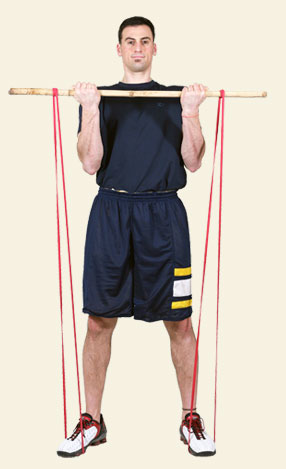
Resistance bands - e.g. these - are always an interesting option for training, especially if the aim is muscle fatigue rather than grunting up the weights.
Here is a study I spotted about the use of bands:
A Comparison of Elastic Tubing and Isotonic Resistance Exercises
The aim of this study was to assess effects of a short-term resistance program on strength in fit young women using weight machines/free weights or elastic tubing. 42 physically fit women (21.79±0.7 years) were randomly assigned to the following groups: (i) the Thera-Band® Exercise Station Group (TBG); (ii) the weight machines/free weights group (MFWG); or (iii) the control group (CG). Each experimental group performed the same periodised training program that lasted for 8 weeks, with 2-4 sessions per week and 3-4 sets of 8-15 submaximal reps. A load cell (Isocontrol; ATEmicro, Madrid, Spain) was used to test the evolution of the Maximum Isometric Voluntary Contraction (MIVC) in 3 different exercises: Vertical Rowing (VR), Squat (S) and Back Extension (BE). A mixed model MANOVA [group (CG, TBG, MFWG) x testing time (pre-test, post-test)] was applied to determine the effect of the different resistance training devices on strength. The only groups to improve their MIVC (p<0.005) were TBG and MFWG, respectively: VR 19.87% and 19.76%; S 14.07 and 28.88; BE 14.41% and 14.00%. These results indicate that resistance training using elastic tubing or weight machines/free weights have equivalent improvements in isometric force in short-term programs applied in fit young women.
Interesting conclusions:
These results indicate that resistance training using elastic tubing or weight machines/free weights have equivalent improvements in isometric force in short-term programs applied in fit young women.
So, bands worked just as well in this experiment
Wednesday, August 11, 2010
It is about muscle fatigue
Here is an interesting report, for those of us with an interest in High Intensity Training (HIT).
Building muscle doesn't require lifting heavy weights: study
Low-Load High Volume Resistance Exercise Stimulates Muscle Protein Synthesis More Than High-Load Low Volume Resistance Exercise in Young Men
It reminds me of Clarence Bass recent reports that the important thing is effort - Forget Heavy, Think Effort - which Matt discussed here, following up here and here. (incidentally the final link actually points to the original study I started with above).
Building muscle doesn't require lifting heavy weights: study
"Rather than grunting and straining to lift heavy weights, you can grab something much lighter but you have to lift it until you can't lift it anymore," says Stuart Phillips, associate professor of kinesiology at McMaster University. "We're convinced that growing muscle means stimulating your muscle to make new muscle proteins, a process in the body that over time accumulates into bigger muscles."The report points to a recent study:
Low-Load High Volume Resistance Exercise Stimulates Muscle Protein Synthesis More Than High-Load Low Volume Resistance Exercise in Young Men
The study used light weights that represented a percentage of what the subjects could lift. The heavier weights were set to 90% of a person's best lift and the light weights at a mere 30% of what people could lift. "It's a very light weight," says Phillips noting that the 90-80% range is usually something people can lift from 5-10 times before fatigue sets in. At 30%, Burd reported that subjects could lift that weight at least 24 times before they felt fatigue.
"We're excited to see where this new paradigm will lead," says Phillips, adding that these new data have practical significance for gym enthusiasts but more importantly for people with compromised skeletal muscle mass, such as the elderly, patients with cancer, or those who are recovering from trauma, surgery or even stroke.
It reminds me of Clarence Bass recent reports that the important thing is effort - Forget Heavy, Think Effort - which Matt discussed here, following up here and here. (incidentally the final link actually points to the original study I started with above).

Monday, August 9, 2010
Barefoot is best for kids
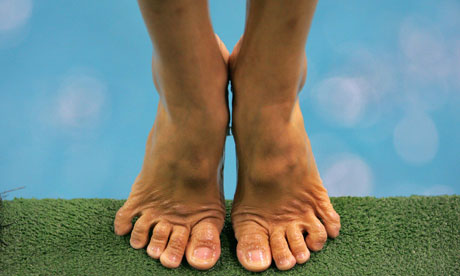
Interesting article here in the Guardian: Some experts now believe that all shoes are best avoided in childhood
From a functional perspective, shoes shouldn't be necessary," says O'Neill. "In fact, there are more likely to be disadvantages and problems from wearing shoes than not wearing them - among them, deformation caused by a poor fit, ingrown toenails, and athlete's foot. But you have to consider the environment the child is in. Let's be honest. Do you want your child walking on the streets or in the park barefoot, where there might be dog poo, dirt and possible hazards like glass?"
Sunday, August 8, 2010
Stress makes you sore.
Here is one for Monte.
here is the paper:
Neural sensitivity to social rejection is associated with inflammatory responses to social stress
Although stress-induced increases in inflammation have been implicated in several major disorders, including cardiovascular disease and depression, the neurocognitive pathways that underlie inflammatory responses to stress remain largely unknown. To examine these processes, we recruited 124 healthy young adult participants to complete a laboratory-based social stressor while markers of inflammatory activity were obtained from oral fluids. A subset of participants (n = 31) later completed an fMRI session in which their neural responses to social rejection were assessed. As predicted, exposure to the laboratory-based social stressor was associated with significant increases in two markers of inflammatory activity, namely a soluble receptor for tumor necrosis factor-α (sTNFαRII) and interleukin-6 (IL-6). In the neuroimaging subsample, greater increases in sTNFαRII (but not IL-6) were associated with greater activity in the dorsal anterior cingulate cortex and anterior insula, brain regions that have previously been associated with processing rejection-related distress and negative affect. These data thus elucidate a neurocognitive pathway that may be involved in potentiated inflammatory responses to acute social stress. As such, they have implications for understanding how social stressors may promote susceptibility to diseases with an inflammatory component.
......... it seems social rejection could trigger diseases linked to inflammation.
Psychologist George Slavich of the University of California, Los Angeles, and colleagues asked 124 volunteers to give speeches and perform mental arithmetic in front of a panel of dismissive observers. Saliva analysis showed they exhibited elevated levels of two inflammation markers. A quarter of the volunteers then played a computer game in which other players were instructed to exclude them.
here is the paper:
Neural sensitivity to social rejection is associated with inflammatory responses to social stress
Although stress-induced increases in inflammation have been implicated in several major disorders, including cardiovascular disease and depression, the neurocognitive pathways that underlie inflammatory responses to stress remain largely unknown. To examine these processes, we recruited 124 healthy young adult participants to complete a laboratory-based social stressor while markers of inflammatory activity were obtained from oral fluids. A subset of participants (n = 31) later completed an fMRI session in which their neural responses to social rejection were assessed. As predicted, exposure to the laboratory-based social stressor was associated with significant increases in two markers of inflammatory activity, namely a soluble receptor for tumor necrosis factor-α (sTNFαRII) and interleukin-6 (IL-6). In the neuroimaging subsample, greater increases in sTNFαRII (but not IL-6) were associated with greater activity in the dorsal anterior cingulate cortex and anterior insula, brain regions that have previously been associated with processing rejection-related distress and negative affect. These data thus elucidate a neurocognitive pathway that may be involved in potentiated inflammatory responses to acute social stress. As such, they have implications for understanding how social stressors may promote susceptibility to diseases with an inflammatory component.
Wednesday, August 4, 2010
Natural Physiques
I saw someone had posted this video on their blog today. Say what you want about their form or their old school bodybuilding, I think this is pretty inspiring. Guys who have made their own weights and equipment and are training hard in a difficult and poor part of the world. These guys would be somewhat bemused with all the introspection that we indulge in about training and the sectarian warfare that goes on.
The other thing to note is that these guys will be unlikely to have access to the drugs that pollute much western bodybuilding. What you see in these physiques is probably at the upper end of what is possible naturally for most.
The other thing to note is that these guys will be unlikely to have access to the drugs that pollute much western bodybuilding. What you see in these physiques is probably at the upper end of what is possible naturally for most.
GI / GL is pointless
I spotted this today:
The glycemic response is a personal attribute.
Interesting to see this study just now. Others have been saying similar things before:
Barry Groves exaplains:
Emma also had a good post way back:
The glycemic response is a personal attribute.
The absolute magnitudes of the glycemic responses are important for individuals trying to control blood sugar and/or body weight, but using published GI lists as a guide to control the glycemic response is not fully informative. This is because in calculating the GI, individual glycemic responses to glucose are normalized to 100. GI values are, therefore, relative and are not necessarily a reliable guide to the person's actual individual AUC when consuming a food. Without knowledge of the person's characteristic blood glucose responses, reliance only on the GI may be misleading
Interesting to see this study just now. Others have been saying similar things before:
Barry Groves exaplains:
What matters as far as your body is concerned is not the GI of a carbohydrate, but the total amount. A hundred grams of carbohydrate is a hundred grams of carbohydrate whatever its GI is.
Emma also had a good post way back:
I’ve been griping about the GI diet for a long time now – partly because of Dr. Bernstein’s evidence, but mainly because it encourages the consumption of foods that do bad things to your body. A low fat, low animal protein diet encourages the consumption of plant foods, particularly energy-rich ones like beans and grains in order to replace missing calories. Plants grow very fast and they are always one step ahead of us in evolutionary terms, particularly when it comes to protecting their seeds. Beans and grains contain lectins, phytates, phytoestrogens, goiterogens, coumarins, oxalates, salicylates, protease inhibitors, and cyanogens, all designed to prevent them from being eaten. Each one of these substances contributes and causes different problems, from autoimmune diseases, to mineral deficiencies, to thyroid problems, to sex hormone imbalances, to uncontrolled bleeding.
Tuesday, August 3, 2010
Impressive pushups
Three things impress me here:
- The pushup form. Note the full extension at the top as described in Zach's article (which Rusty found on this blog)
- The ease with which she gets the plate onto her back.
- Those legs!
Monday, August 2, 2010
Planks.....
Not the most exciting video (or music) ever, but quite an achievement - 20 plank variations for 15 seconds each....
Read about the approach here.
Comments?
And the winner is

Well, I fired up an Excel spreadsheet and put an =RANDBETWEEN(1,43) function into a cell and the winner was Joe from Montreal.
Thanks for everyone that entered.
Even if you haven't won, I'd still recommend the book.
Barefoot research
I spotted this on Drew Baye's Facebook:
THE WONDER OF THE BARE FOOT ON NATURALLY DEPOSITED GROUND and BETTER SHOES FOR MAN MADE CONDITIONS
A fascinating overview of research about the benefits of barefoot training.
Incidentally, the barefoot / minimalist shoe movement that the doctor complains about:
....continues. I saw today that Merrell are bringing out a new line to cash in:
Merrell Goes Barefoot For 2011
Maybe I'm being cynical about cashing in. I like inov8 shoes though - a really nice fit that I use for the hills.
THE WONDER OF THE BARE FOOT ON NATURALLY DEPOSITED GROUND and BETTER SHOES FOR MAN MADE CONDITIONS
A fascinating overview of research about the benefits of barefoot training.
Incidentally, the barefoot / minimalist shoe movement that the doctor complains about:
Running in both minimalist shoes and racing flats does not resemble barefoot running. If used on naturally deposited ground, the ideal condition for barefoot locomotion, these shoes essentially eliminate plantar surface (bottom of foot) localized deformations and shear stress, mechanical forces applied to the plantar surface which produce sensory feedback. These sensations are responsible for the mechanics of barefoot running. If used on outdoor man made surfaces, such as concrete and asphalt,, that allow minimal localized plantar deformation, these shoes will minimize shear stress thereby reducing sensory feedback to levels seen in any shoe.
....continues. I saw today that Merrell are bringing out a new line to cash in:
Merrell Goes Barefoot For 2011
We've saved the most interesting development till last, Merrell is launching a range of minimalist outdoor shoes called 'Barefoot' which they've developed in partnership with Vibram.
There are six models in the range – priced between £80 and £90 – all of which use the same Vibram sole unit with minimal support and cushioning. The theory, based on bare-foot running, is that removing cushioning and stiffening allows the foot to move more naturally and encourages forefoot striking rather than heel landing, which is only possible because of mid-sole cushioning.
Merrell says that the result is lower impact and a more efficient and aligned gait plus stimulated muscles increasing core strength, improving ability and building 'the body's ability to burn more calories'.
It's interesting stuff and the first barefoot shoes we've seen designed for general outdoors walking rather running. Intriguingly, the other advocate of minimal, barefoot footwear at the show was inov-8, arguably about as far away from Merrell as you can get.
Maybe I'm being cynical about cashing in. I like inov8 shoes though - a really nice fit that I use for the hills.
Stretching and joint mobilisation.....
I find discussion of joint mobilization fascinating. The seminar I went to lat year with mc (interviewed here) was full of interesting ideas on which I am still reflecting.
This looks relevant - getting call centre workers to do some brief - 10-min daily - exercise sessions.
They ended up feeling better with less fatigue and discomfort. Ok there are limitations to this study and its style, but I think it comes back to movement being good. In any case, at the least sitting on your behind all day is depressing. Movement makes you feel better and think better - as in the book Spark.
Anyway, the full text of the study is here:
Stretching and Joint Mobilization Exercises Reduce Call-Center Operators’ Musculoskeletal Discomfort and Fatigue
This looks relevant - getting call centre workers to do some brief - 10-min daily - exercise sessions.
they performed 10 different sets of exercises, including stretching (hamstrings, spinal column, forearms, and shoulders), joint mobilization (hands, wrists, shoulders, column, hips, knees and ankles) and relaxation.
They ended up feeling better with less fatigue and discomfort. Ok there are limitations to this study and its style, but I think it comes back to movement being good. In any case, at the least sitting on your behind all day is depressing. Movement makes you feel better and think better - as in the book Spark.
Anyway, the full text of the study is here:
Stretching and Joint Mobilization Exercises Reduce Call-Center Operators’ Musculoskeletal Discomfort and Fatigue
Body by Science Competition Update
I said I'd announce the winner of the Body By Science Question and Answer Book competition on the 1 August. However........ I was away at the weekend and am at work today, so I will pick a winner - at random - tonight and then get in touch.
Subscribe to:
Posts (Atom)